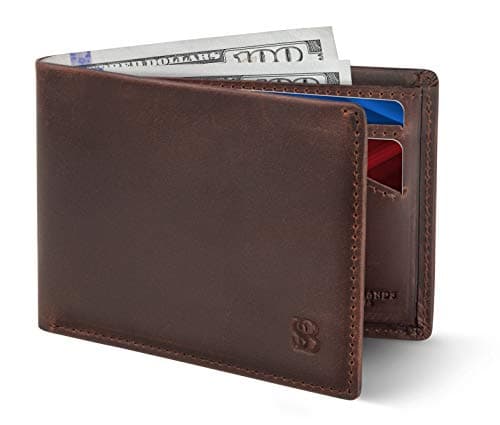
No — and the question is pointing at something real that it has mislabelled. The bifold is still the default shape of a wallet and is not going anywhere; what fell out of favour is the fat bifold — eight slots, a photo sleeve, a lining, half an inch thick empty and an inch loaded. The format responded by getting thinner, and in one branch by rotating. If you want a current-shaped bifold, the Serman Brands Elite Slim Bifold is ours: full-grain leather in a front-pocket profile, which is the combination that used to cost three times as much.
What actually changed, in published numbers
“Out of style” is unfalsifiable, so here is the version of the claim that can be checked. The bifold did not get replaced; it got re-engineered in three directions, all of which are visible in what sellers now publish.
It got thinner, by removing things
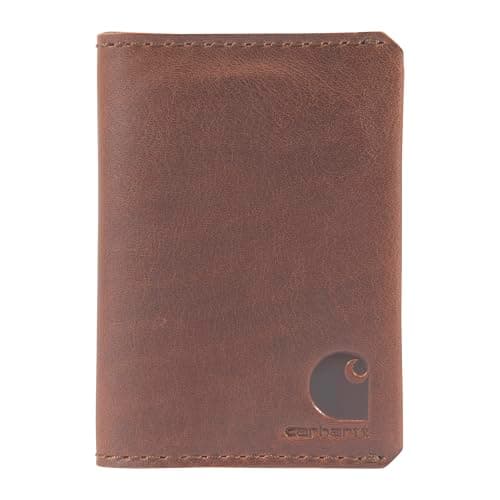
The thinnest fold in this site's registry publishes a quarter of an inch closed, and the listing explains exactly how: one piece of leather, two card pockets, no lining, no ID window. That is a bifold, and it is thinner than most card holders. Ten years ago the published figure for a leather billfold was closer to half an inch before anything went in it. The format did not lose; it lost its lining.
It got rotated
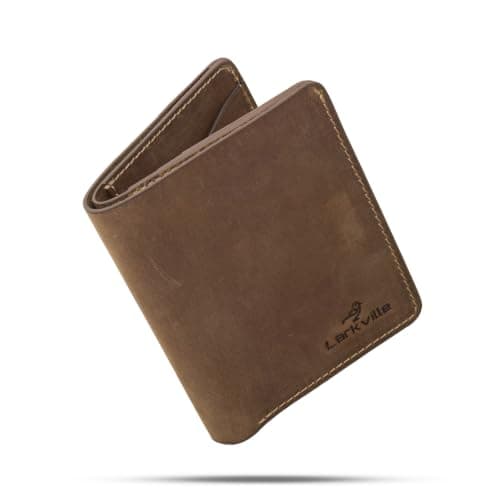
The vertical bifold — same fold, card slots turned ninety degrees — is the genuinely new shape in this category, and it is new enough that sellers mostly cannot describe it. We built a whole roundup on the finding that most listings advertising “vertical” publish a conventional bifold footprint. The one pick that publishes which figure is the width and which is the height — 3.5 in wide by 4.3 in tall by 0.5 in thick — is on this page for that reason.
It gave up on being the only wallet
The real shift is not in the leather, it is in what people carry. Payment moved to phones, so the bifold stopped needing to hold six payment cards. That is the change driving all of this, and it is the subject of our guide on whether you still need one.
What genuinely did lose ground: the trifold
“Are trifold wallets out of style” sits in the same autocomplete block and deserves a less comfortable answer, because the honest one is more than the bifold did.
The trifold solves capacity by adding a panel, and three panels of leather plus their linings is the bulkiest way to carry the same cards. When bulk stopped being acceptable, the format that is bulky by construction took the hit. We still rank them on the trifold page because there is a real reader for them — somebody carrying twelve cards who wants a shorter body — and the comparison sets out the trade properly. But if the question is which format the market moved away from, it is this one.
Two others from the same block, briefly. The long wallet never was mainstream in the US and has a specific, enduring use that has nothing to do with fashion: it is the only format that keeps a note flat, which is the entire argument on the cash-capacity page and the checkbook page. And the chain wallet is a functional object dressed as a subculture — we rank them on whether the chain actually ships with the wallet, because the function is tether, not look.
“Bifold” and “billfold” are not the same word
This comes up in the same searches and the answer is short and genuinely useful, because the two words describe different things and get used interchangeably everywhere.
- Bifold describes the fold: two panels, one crease. It is a statement about geometry.
- Billfold describes the compartment: a full-length channel that takes a banknote unfolded end to end. It is a statement about function.
So they overlap but they are not synonyms, and three consequences follow. A trifold is also a billfold, because it has the channel. A card holder is neither, because it has no channel and no fold. And a slim bifold with only a slot for a folded note is a bifold that is not really a billfold — which is a distinction worth having a word for, because it is exactly the trade a slim wallet makes. A US note is 6.14 inches long and a full channel has to be at least that; that number is where the standard bifold size comes from.
What to look for in a current bifold
A published closed thickness
The single most useful number and the one most listings omit. “Slim” is a word; 0.25 in and 0.5 in are facts. Where a figure is published, check whether it describes the wallet empty — it almost always does, and loaded is a different wallet. Our thickness guide does the arithmetic: a payment card is 0.03 in, so eight cards add roughly a quarter of an inch on top of whatever the box says.
A slot count you will not grow into
Slots are an invitation. If you want a slim wallet to stay slim, buy one whose ceiling is close to your actual carry, because a twelve-slot wallet will hold twelve cards within a year and then it is the old fat bifold again under a new brand name.
A leather grade in the bullets
The one genuine quality improvement at this end of the market is that full-grain leather in a slim bifold is now affordable, which was not true a decade ago. If the listing names a grade, that is checkable; the grade explainer covers what each word means, and the full-grain roundup ranks the ones that say it.
An honest view of the ID window
The photo sleeve is the part of the old bifold that genuinely went away, and the clear film panel is the only component on a leather wallet that cannot age well — it clouds while the leather improves. Keep one if you show a licence often, because the alternative is pinching a card out of a slot at a counter. Skip it if you do not. Our ID-window roundup covers the trade.
If style is genuinely the question
We are a specification site rather than a fashion one, so here is the least speculative version of the style answer we can give.
Nobody sees your wallet. It lives in a pocket and appears for four seconds at a counter. The visible attributes in those four seconds are whether the leather looks cared for and whether the wallet is so overloaded that it will not close. Both of those are free to fix: conditioner for the first and twenty minutes of sorting for the second.
A worn-in wallet reads better than a new one. This is the one aesthetic claim this site will make, because it has a material basis: oiled and waxed full-grain hides darken and develop a patina with handling, so a five-year-old wallet in those leathers looks deliberately good rather than old. The patina guide explains the mechanism. A coated genuine-leather wallet does the opposite — it wears flat — which is the real argument for grade.
Formal and casual is a real distinction, and it is about thickness. A wallet under a suit should not create a bulge, which is a thickness question and not a format question. The dress-trouser page handles that case specifically.
Do not replace a wallet over this
Three things worth saying because they cost us a sale each.
A sound bifold is not obsolete. If the stitching is intact and the fold has not cracked, the wallet is fine. There is no version of this category where a functioning leather bifold is the wrong object to be carrying in 2026.
If it feels dated, it is probably full. The thing that makes a bifold look like an old wallet is the shape it takes when it is holding eleven cards and a folded receipt. Empty it and look at it again before you shop.
If you want the modern feeling, the cheap version of it is a card holder. Carrying four cards in a sleeve for a month is the lowest-cost way to find out whether you actually want the slim life or just want a tidier bifold. Our minimalist switching guide has the two-week drawer test, and the honest finding is that plenty of people run it and go back to a bifold — which is a result, not a failure.
Prices, and what we earn
Prices are read from the live price layer and stamped with the date they were read. Buy links are affiliate links. See the editorial policy.