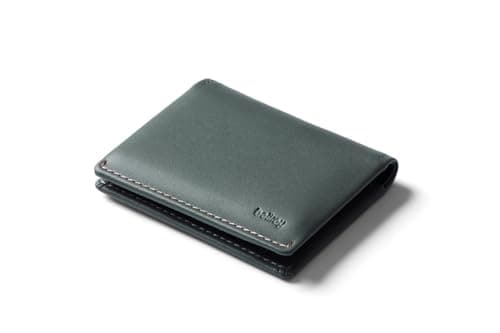
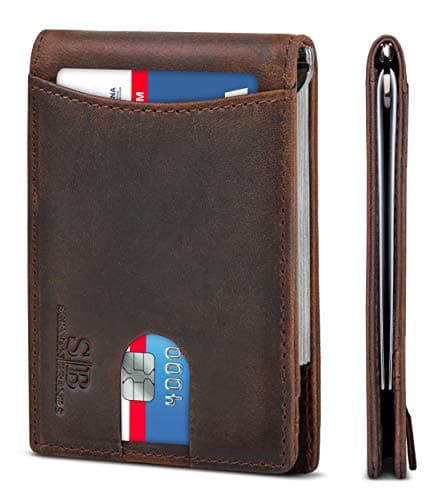
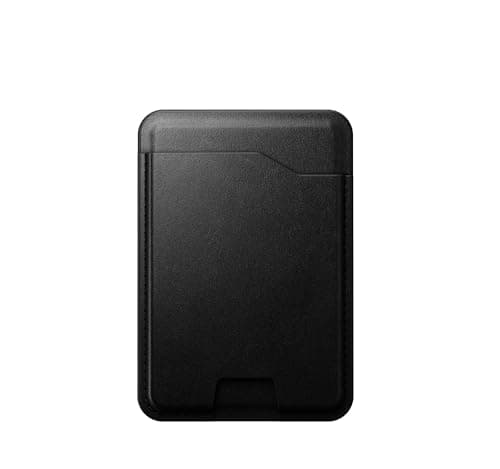
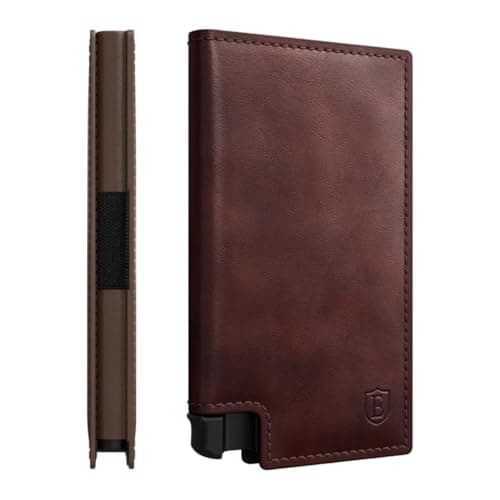
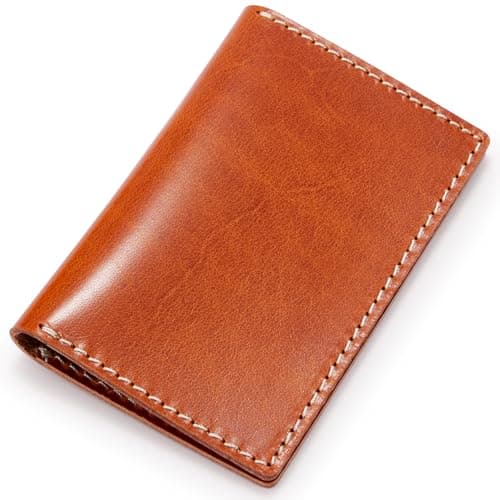
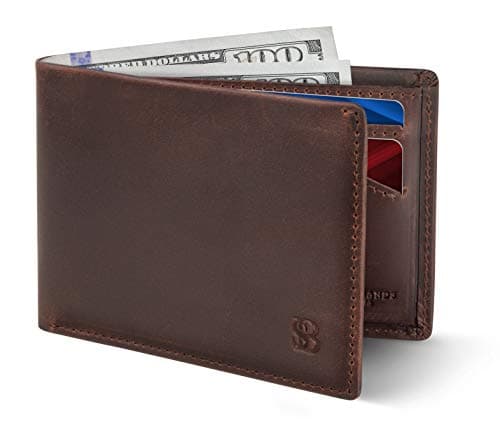
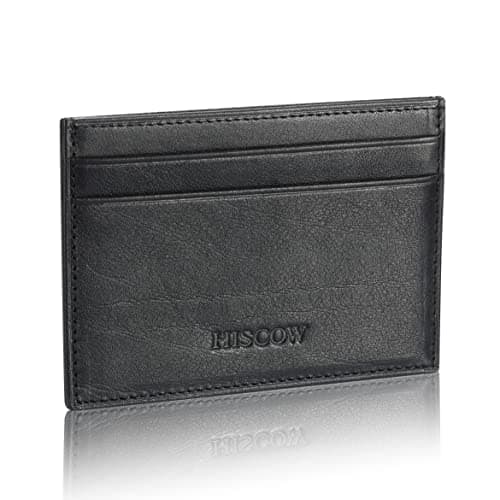
The first question to answer is not which wallet — it is how you want to carry cash. That single choice sorts this whole category. If you still carry folded bills, you want a slim bifold that hides them, like the Bellroy Slim Sleeve or the Note Sleeve. If you have mostly gone cashless, a cardholder or a pop-up cardholder is thinner still, because it does not reserve space for money you rarely use. And if your phone is already the thing you never leave home without, a MagSafe holder like the Nomad turns it into your wallet.
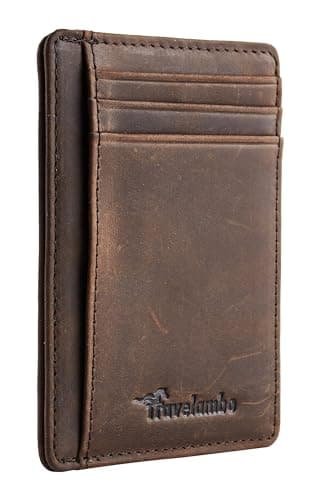
The second question is leather grade, and it is where most of the price difference lives. A $10 Travelambo and a $95 Bellroy both hold your cards; what you are paying for at the top is leather that ages instead of wearing out, real stitching, and a warranty. Budget wallets use genuine leather — the lowest grade that can legally be called leather — which looks its best on day one and slowly goes flat. A wallet in top-grain or full-grain leather looks better every year. Neither is wrong; they are different jobs at different budgets, and we rank both honestly.
The mistake buyers make is chasing thinness by buying a wallet too small for the cards they actually carry, then jamming it full so it splays and wears out at the seams. Count your everyday cards before you buy. Four to six cards fits almost anything here; eight to twelve means you want a Note Sleeve, a Hide & Seek or a pop-up cardholder rather than the slimmest sleeve on the list. Every pick below prints its published card capacity, its leather grade and whether it blocks RFID, so you can match the wallet to your carry instead of guessing.
One last thing worth doing before you spend: the cost-to-own math. A $95 top-grain wallet that lasts a decade costs about a dollar a month; a $15 genuine-leather wallet you replace every two years costs nearly the same, plus the hassle of replacing it. The cheap wallet is the right call to try the slim format; if it sticks, buying once and buying well is usually the better deal.
Two spokes sit under this hub for readers the general ranking does not serve well. Best minimalist wallets for men is the pocket-carry version of the question, and best minimalist leather wallets for women is the one we were missing: it ranks the slim end of the category for a carry that is as often a bag as a trouser pocket, and it says plainly that the best slim wallet for most women is a unisex one.
Two more pages answer the questions this ranking cannot. At the floor of the category, best wallets for two or three cards exists because below about four cards capacity stops mattering and the retention mechanism takes over — a sewn leather slot holds one card as well as four, while a friction cage needs about three in it to hold anything. And how to use a minimalist wallet is the switch itself as a process: what comes out of the old wallet, which of the three cash mechanisms to choose before you buy, and the two-week test that tells you whether you edited too hard.
Added October 2026, and the question this hub exists to answer honestly: do you still need a wallet? Payment is solved — a phone does it better than the card it replaced — so the page starts by conceding that and then sets out the four jobs a phone structurally cannot do: be handed to somebody, work with a dead battery, be read by a machine that has to see the card, and hold cash. What is left is a three-or-four-slot holder with a document window, which is why the answer is usually a much smaller wallet rather than none.
Newest here, and the one page in this hub that asks you to buy nothing: what not to keep in your wallet. Most versions of that list are ranked by bulk; this one is ranked by what losing it actually costs you, which moves cash near the bottom and puts your Social Security card a long way out in front — replacements are capped by federal rule at three a year and ten a lifetime, and the replacement carries the same number. A small wallet is the enforcement mechanism that keeps the purge permanent, not the fix.