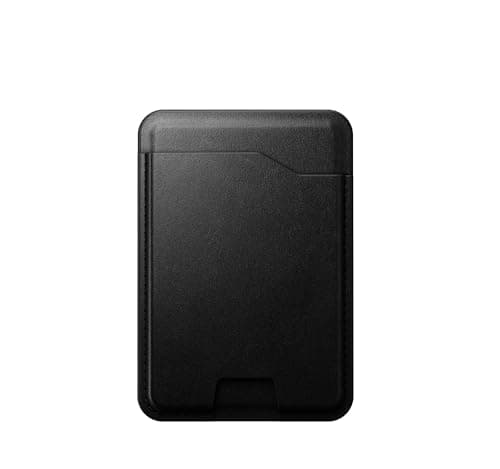
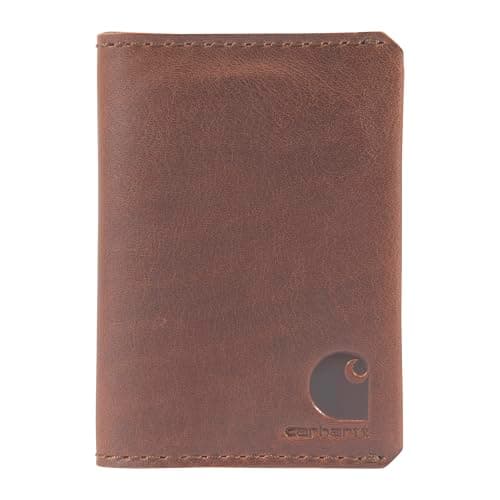
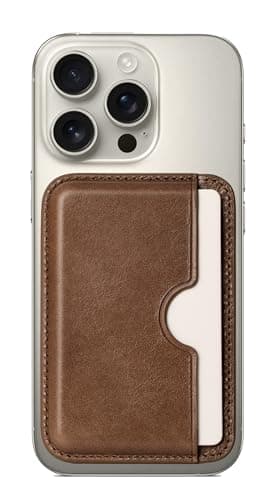
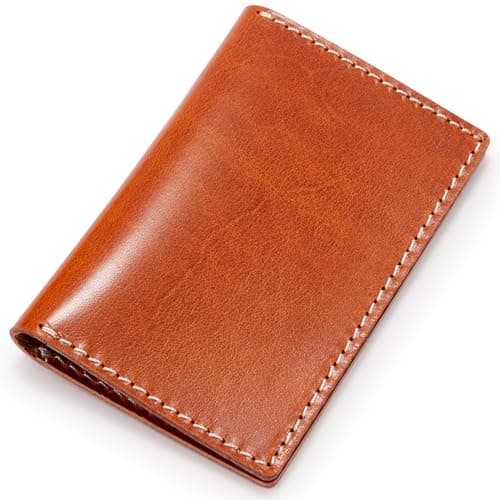
The pick for most two-and-three-card carries is the HISCOW vegetable-tanned card holder — a plain sewn sleeve in full-grain veg-tan, which is the one construction that holds two cards exactly as securely as it holds six. If the two cards are going on the back of a phone you already carry, the Nomad Horween MagSafe wallet replaces the wallet entirely. And if you want a published number rather than a judgment, the Carhartt Craftsman is the only pick here whose listing publishes a closed thickness — a quarter of an inch — and it earns that figure by holding exactly two pockets of cards.
The rule for getting on this page
One mechanical condition: the wallet's published card provision has to top out at about four. Two pockets, four slots, “up to 3 cards”, “2 cards” — the number comes from the listing's own feature bullets, never from the title and never from us. That rule excludes almost everything we rank, including every pick on the slim wallet roundup, which is mostly six-to-eleven card sleeves, and all of the minimalist hub's bifolds. Those are better wallets. They are not wallets for three cards, and putting three cards in an eight-slot sleeve gives you a floppy wallet with five empty slots in it.
Why the mechanism matters more than the count down here
This is the finding that makes the page worth writing, and it inverts what people expect. Above about six cards, capacity is the spec that decides a wallet. Below four, capacity is irrelevant and retention is everything — and the two common retention mechanisms behave in opposite directions.
A sewn leather slot has no minimum
A slot cut and stitched into leather grips by friction against the leather itself. One card in it is held by the same two faces that hold four. It is the least impressive mechanism in the category and the only one that is indifferent to how little you carry, which is why three of the five picks here are plain sleeves and why the top pick is the plainest of all.
A friction cage has a published minimum
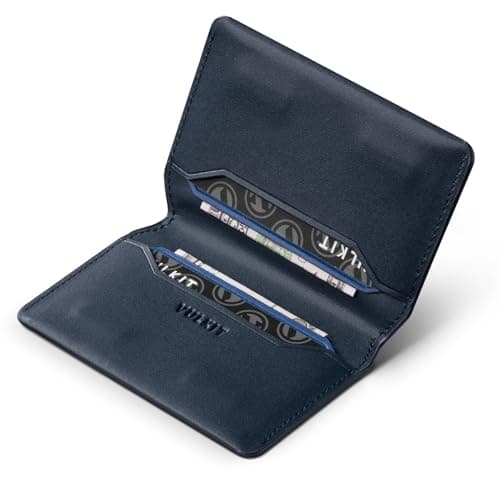
A metal or sprung cage grips the stack, not the card, so an under-filled cage lets cards go. VULKIT publishes the figure on its own metal case — “at least 3 cards are needed for secure retention” — which is the most useful sentence any seller in this category has written and the reason every pop-up holder we rank is excluded from this page. If you are carrying two cards, a mechanism with a three-card floor is the wrong object, however good it is. The full derivation is in how many cards fit in a card holder, and the pop-up format itself is ranked on the pop-up roundup.
A magnet holds the wallet, not the cards
On the two MagSafe picks the retention problem splits in two: the magnet holds the wallet to the phone and a slot or a spring clip holds the cards in the wallet. Le Pelle publishes a two-card ceiling and a 0.26 inch body, which is the thinnest published figure anywhere in our record; Nomad publishes up to three in Horween. Both are genuinely two-or-three card objects by design rather than by compromise. What a magnet will and will not hold is in why a MagSafe wallet falls off.
The number nobody publishes, and what it costs
The top pick on this page publishes no card count at all, and that is the honest shape of this end of the market rather than an oversight. A sewn sleeve's capacity is a consequence of how thick you are willing to let it get, not a design parameter, so the good makers decline to name a figure. Where a listing does name one we have printed it; where it does not, the spec table says so with a dash. A payment card is about 0.03 inches thick at the ISO specification, so three cards is roughly a tenth of an inch of card inside whatever the leather adds — the arithmetic is in the wallet thickness guide.
Is a three-card wallet actually what you want?
Often not, and it is worth being honest about before you spend anything. People search for a two-card wallet at the moment they have decided to carry less, and the decision usually does not survive the first time they need the card they took out. If you are not sure the new carry will stick, buy the cheapest pick here and find out; the process, including the two-week test that tells you whether it worked, is in how to use a minimalist wallet.
Where the cash goes
Three of the five picks have no cash provision at all, and that is the real cost of this end of the category rather than a defect. A note is 6.14 inches long, so it has to fold twice to live inside a card sleeve, and folded cash in a slot competes with the cards for the same friction. The carry we would actually recommend is a sleeve plus a bare money clip: slimmer than any combined product, cheaper than most of them, and it earns us nothing to say so. If cash is a daily part of the carry, the cash-and-cards roundup is the right page and this one is not.
What we left off, and why
Every pop-up and metal cage, for the three-card minimum above. Every six-to-eleven card sleeve, because a page about carrying three cards should not recommend a wallet built for eight — those are on the slim roundup and the front-pocket hub. And every coin wallet, because coins plus three cards is a different and much better served problem: the coin-pocket roundup ranks the mechanism properly.
Prices, and what we earn
Prices come live from the Amazon Product Advertising API, stamped with the date they were read, which is why no dollar figure appears in this prose. Buy links are affiliate links and the ranking does not depend on them — the editorial policy says how.