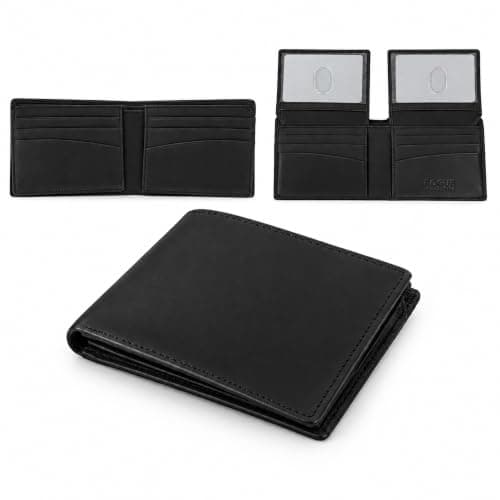
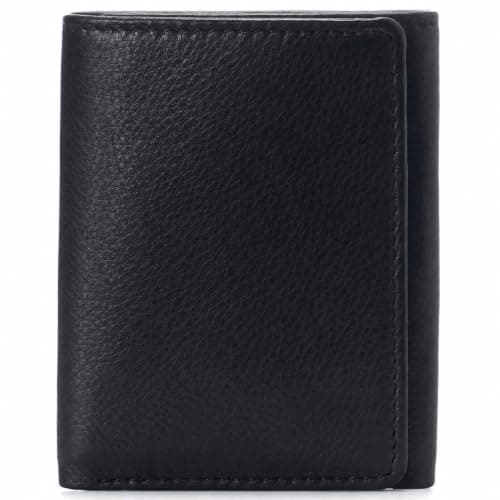
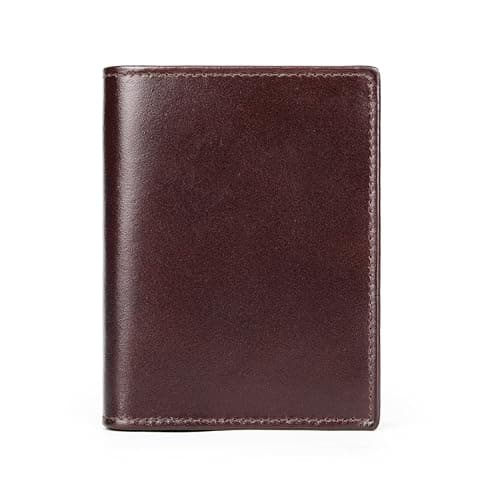
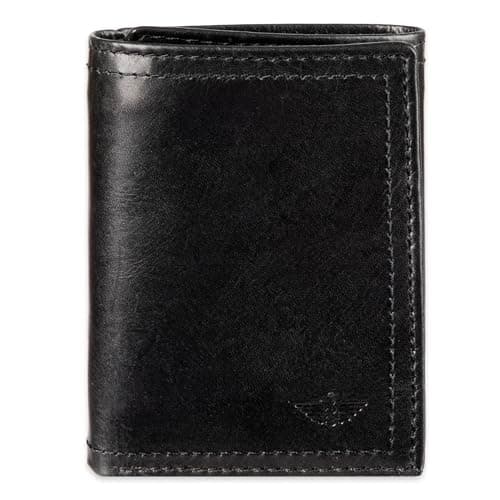
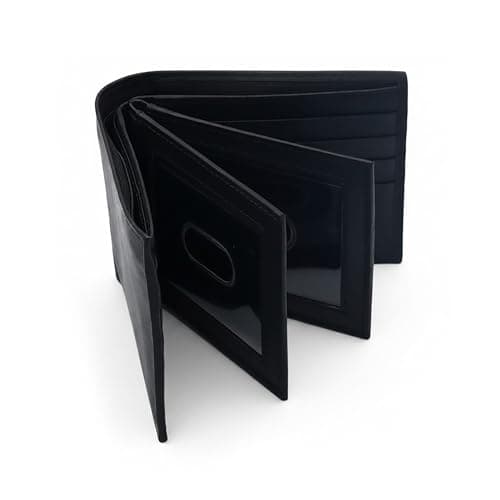
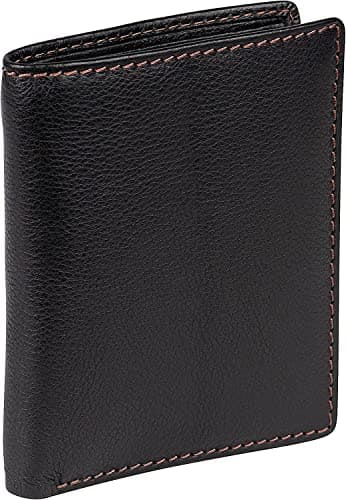
The pick for most people carrying a lot of cards is the Theodore Vertical Bifold — ten published slots in full-grain napa, which is the best capacity-to-leather-grade trade on this page by a clear margin. If you want the most published layout detail and two ID windows, the Rogue twelve-slot RFID bifold publishes nearly everything including its own thickness. And if the answer is simply “as many as possible”, the NIUCUNZH sixteen-slot vertical is the ceiling here — at a leather claim you cannot check and a thickness that arrives with the cards.
The rule for getting on this page
Two mechanical conditions. First, the listing has to publish ten or more card slots in its own feature bullets — not a vague “multi-card”, not a range starting at six, and not a count we worked out from a photograph. Second, the wallet has to keep a full-length bill compartment. That second rule is what makes this page different from the large-capacity card organizers, which reach twenty-one and twenty-six slots precisely by giving up the cash channel. If your answer to “where does cash go” is “nowhere”, that page beats this one on slots and you should read it instead.
Those two rules sort the registry into six wallets across three formats, and the spread is itself the finding: half of them are vertical bifolds. Rotating the slots ninety degrees is the only way to fit ten of them inside a normal footprint without adding a third panel, which is why the format exists and why it dominates this particular search. The format is ranked on its own terms on the vertical bifold roundup; here it is one answer among three.
The headline slot count is the least reliable number in the category
Every page on this site that touches capacity ends up saying this, and this is the page where it costs the most. Three specific failure modes, all of them visible on the listings above.
The title and the bullets disagree
Theodore's own listing says ten card slots in the title and up to sixteen cards in the second bullet. Both cannot describe the same wallet. We have ranked it on the lower, countable figure and you should buy on that one; the gap between the two numbers is cards doubled up in a slot, which is also the thing that stretches leather permanently.
The headline is a sum of separate compartments
The accordion and zip-case designs reach their numbers by adding a detachable or zipped card case to a billfold. Twenty-one slots where eleven are sealed inside a zip pouch is not a twenty-one slot wallet; it is a ten-slot wallet and a card case that travel together. We have kept those off this page for exactly that reason, and said so on the page that does rank them.
The published thickness is measured empty
This is the one that surprises people. NIUCUNZH publishes 4.62 by 3.72 by 0.75 inches and is unusually honest that the figure is folded and empty. Sixteen payment cards at the ISO thickness of about 0.03 inches each add roughly another half inch, so the wallet you carry is not the wallet in the specification. The one listing that publishes its loaded figure is the A|G triple-ID bifold, which states it expands to about 1.5 inches filled, and that is more candor than this category usually manages. Its reward is the lowest score on the page, because a 1.5 inch wallet is a brick.
Which format for ten slots?
The three formats fail in different directions and the choice is really about where the wallet lives.
A flat bifold like the Rogue keeps a familiar footprint and gets its slots by stacking them, which is why it publishes 0.8 inches before you load it. It is a hip-pocket or bag wallet and the listing says so. A vertical bifold rotates the slots so each card is retained along its long edge; it is the most space-efficient answer and it reads strange in the hand until you have used one for a week. A trifold adds a third panel, which buys slots cheaply and is the thickest format there is once loaded — bifold versus trifold has the full comparison, and the trifold roundup ranks that format on its own.
Do you need ten slots, or have you stopped sorting your wallet?
We have to ask, because the honest answer is often the second one and it costs us a sale. Ten slots is the right spec for a genuine ten-card carry: a license, two or three payment cards, a work badge, an insurance card, a transit pass and two loyalty cards that are actually used. It is the wrong spec for a wallet that has accumulated expired cards, receipts and two coffee stamp cards with one stamp on them. Half an hour with the wallet-organizing guide is free and frequently removes the problem; the deeper argument about how many cards are worth carrying is in how many cards a wallet should hold.
What ten slots costs you
Thickness, and then leather grade. Thickness is arithmetic: at the ISO card specification of about 0.03 inches, ten cards is roughly 0.3 inches of card before the leather, the lining and the stitching, and a lined slot adds a little more per card than an unlined one. The leather grade is a market fact rather than a physical one and it is visible in the ranking above: once you go past ten slots, every pick in our record drops to genuine leather, coated leather or an unverifiable top-grain claim. The one wallet that holds its grade at ten slots is why the Theodore is first.
Carrying in a back pocket
Most ten-slot wallets end up there, because they are too thick for a front trouser pocket. That is a real carry with real consequences for the wallet and for the cards — what actually fails, and which construction survives it, is on the back-pocket roundup. If the bulk is the thing you want to solve rather than accommodate, slim wallet versus bifold is the argument for the other direction.
Prices, and what we earn
Every price is read live from the Amazon Product Advertising API and stamped with the date, which is why there is no dollar figure in this prose. Buy links are affiliate links; the ranking is score-ordered and would be identical if they paid nothing. See the editorial policy.