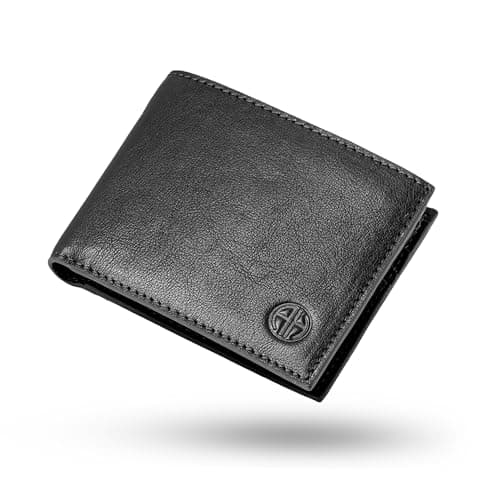
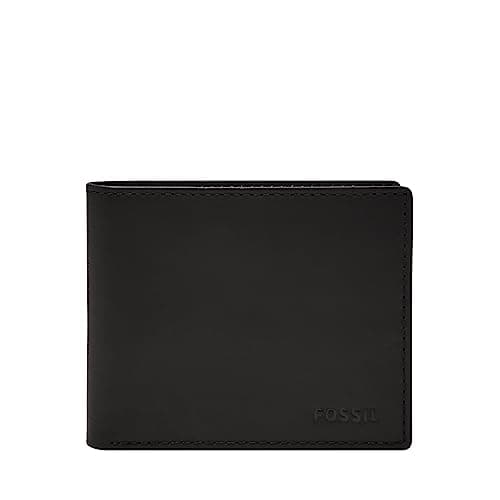
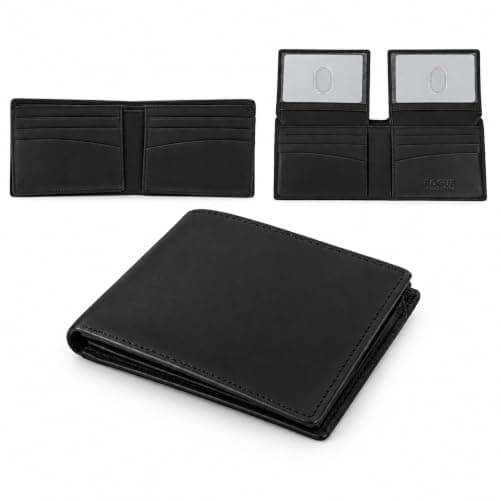
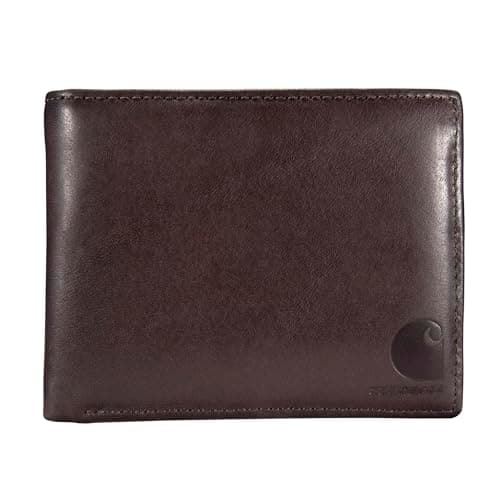
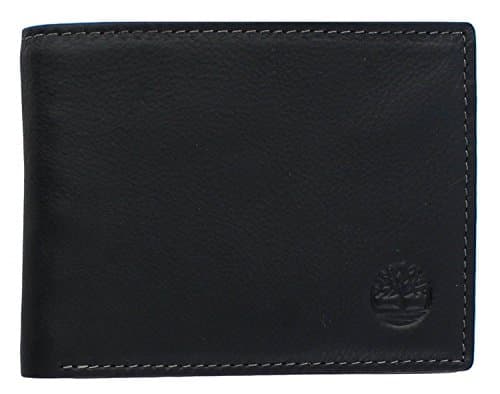
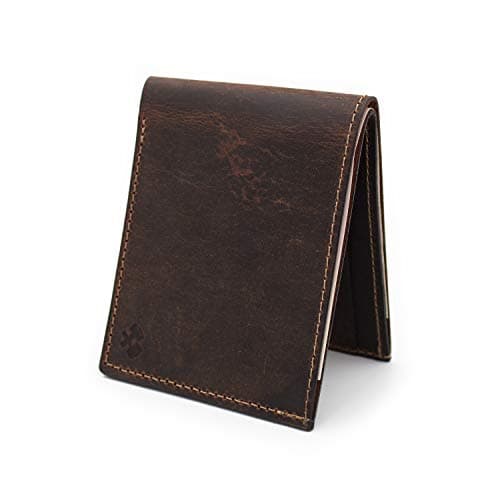
The best wallet for back-pocket carry is the Main Street Forge Bifold: full-grain, made in the USA, six slots and no lining stack to deform — the combination that takes the abuse of this carry position and keeps its shape. For two ID windows and a waxy finish that hides the wear, the AZURAHIDE full-grain bifold is the value pick. And if you are carrying a full card load, Rogue's twelve-slot RFID bifold is the one wallet here its maker explicitly builds flat for a back pocket.
One thing first, because it would be dishonest to sell you this page without it: we think you should carry in your front pocket. It is better for your cards, much better against pickpocketing, and it is what front versus back pocket concludes. Plenty of people are going to carry in the back anyway — because the trousers have no useful front pocket, because that is where the hand goes — and telling that reader nothing is worse than ranking the wallets that handle it.
What actually fails in a back pocket
Not the leather, usually. Three failure modes, in the order they show up.
Cards bend, and then they crack
This is the real one, and it is the reason back pocket wallet that won't bend cards is a search people type. Sitting on a wallet applies a sustained bending load across the whole stack, and a payment card is a rigid chip module set in flexible PVC — a stress concentration by construction. Cards fail at the corner of the chip or along the embossing. Payment cards are certified against far more flex than this: the dynamic bending method in ISO/IEC 10373-1 runs 20 mm deflection on the long axis at thirty cycles a minute, and the figures usually cited for chip cards are 250 bends in each of four directions with the chip still working. So ordinary sitting is not what kills a card. What kills it is a wallet thick enough to force a curve, plus the levering that comes from prying a card out of a tight slot. The mechanics are worked through in do card holders damage cards.
The wallet takes the shape of the chair
A lined, multi-layer bifold under body weight for eight hours a day will hold whatever curve it was pressed into. You see it as a banana-shaped wallet that no longer closes flat and as stretched, slack card slots. The wallets that resist it are the ones with fewer interior layers and a firmer hide — which is why the full-grain picks lead this ranking and the softest, most heavily lined options do not.
One face wears out before the other
Back-pocket carry abrades one side against the trouser seam and the chair while the other side stays pristine. On a pigmented or corrected surface that shows as a shiny, then a bald, patch. On full-grain and on waxy finishes like crazy horse it shows as a patina you may actually want — the mechanism is explained in the patina guide, and it is a genuine argument for spending more on the hide in this carry position specifically.
The rule for getting on this page
A pick qualifies if it is real leather, if it is flat — a conventional billfold footprint, not cut on a curve for a front pocket — and if it has a full-length cash channel, because the reason to accept a back-pocket wallet's bulk is that it carries everything. Ranking is on the three failure modes above: interior layer count, stated leather grade, and how the finish handles one-sided wear.
That axis is deliberately different from the bifold hub, which ranks the same format on overall quality and capacity, and from the front-pocket roundup, which ranks on shape and thinness. A wallet can be the best bifold we rank and still be the wrong one to sit on.
Thinner is still better, even here
The arithmetic does not change because the pocket did. Ten wallets we rank publish a closed thickness, and against their published slot counts those figures climb by roughly 0.035 to 0.040 in per slot — about what a 0.030 in payment card costs. Every one of those slots you do not fill is bulk you sit on for nothing, and bulk is what forces the curve that bends cards.
So the single best upgrade for a back-pocket carrier is not a wallet at all: it is carrying fewer layers. Cash is not the problem — a US note is 0.0043 in thick, so ten folded bills add under 0.09 in. Receipts and unused loyalty cards are. The method is in how to organize your wallet, and the derivation is in the thickness guide.
Two things this page will not tell you
We will not make a medical claim. There is a large search cluster around sitting on a wallet and back, hip and leg pain, and we are a wallet review site with no clinical expertise. We are not going to diagnose anything or imply that a purchase treats it. If carrying a wallet in your back pocket hurts, the useful advice is free and obvious — take it out of your back pocket, which is what this guide is about — and anything beyond that belongs to a clinician.
We also will not claim a card-protection feature that no listing publishes. Several wallets are marketed as protecting cards from bending; none of the six here publishes a stiffener, a panel or any tested figure for it, so we rank on layer count and hide firmness, which we can verify, rather than on a claim we cannot.
What we left off, and why
Curved front-pocket wallets, which are shaped for a different pocket and sit badly in a flat one — they are on the front-pocket roundup. Metal cage wallets, because a rigid box under your body weight is the one construction that makes the card-bending problem worse rather than better. Card holders, which have no cash channel and are the answer to the opposite question. And chain wallets, which solve loss rather than wear and are ranked on their own page.