Skip to content
Hide Thread

Front-Pocket · Front-Pocket Wallets

Is Sitting on Your Wallet Bad for Your Back?

Yes — and the first fix is free. The mechanism is a tilted pelvis rather than a heavy wallet, which is why taking it out of the back pocket does more than buying a thinner one.

By Stephen V.Updated How we research
#ad

We earn a commission when you buy through our Amazon links, at no extra cost to you. It never affects our picks, and we say so when the cheaper wallet is the better buy. How this works.

Yes. Sitting on a wallet is bad for your back, and the mechanism is not what most people assume: a wallet weighs almost nothing, so it is not the weight doing damage. It is the asymmetry. A wedge of leather under one buttock lifts one side of your pelvis for as long as you are sitting on it, and everything above the pelvis compensates. The free fix — taking it out and putting it in the cup holder, the door pocket or a front pocket — resolves the cause completely and costs nothing, which is why we are saying it in the first paragraph instead of selling you a wallet.

This page explains a mechanism and what a wallet can do about it. It is not medical advice, we are not a clinical source, and nothing here is a diagnosis. New, severe or spreading pain, pain with numbness or weakness, or pain that does not settle when you remove the obvious cause is a reason to see a doctor rather than to buy a wallet.

What is actually under there

The sciatic nerve is the largest nerve in the body. It arises from the lower spine and travels down through the pelvis, passing out of it through the greater sciatic foramen, which it shares with the piriformis muscle. In other words: on its way out of your pelvis the nerve runs under a muscle, in a gap, in the exact region your back pocket sits against when you are in a chair.

Put a compressible object in that pocket and sit down and two things happen at once. The local one is pressure on soft tissue and on the nerve in a place where there is not much room. The global one is that your pelvis is now tilted, so your lumbar spine sits in a slight side-bend for the duration — and the duration is the part people miss. A twenty-minute drive is nothing. Two hours a day for fifteen years is a sustained posture, and sustained postures are what musculoskeletal pain is made of.

“Fat wallet syndrome” versus piriformis syndrome

This comparison is one of the most searched questions in this cluster and the answer is genuinely useful, so here it is plainly: they are different things that feel similar.

The clinical literature on piriformis syndrome lists “wallet neuritis (sitting on a thick wallet)” among the conditions a clinician should rule out before settling on piriformis syndrome as the diagnosis. That placement is the whole point. Wallet neuritis is not a subtype of piriformis syndrome; it is one of the other explanations for the same pattern of symptoms, and the thing that distinguishes it is that it has an external cause sitting in your pocket.

Which leads to the most practical sentence on this page. Because the suspected cause is removable at no cost, the test is removable too: take the wallet out of the back pocket for two weeks and see what happens. Almost nothing else in musculoskeletal pain offers a trial that cheap. If the symptoms ease, you have your answer and you did not need a clinician or a purchase. If they do not, the wallet was not the cause and the next step is a doctor, not a slimmer wallet.

Why a thinner wallet is the second fix and not the first

There is a logic trap here that the entire wallet industry, us included, is commercially motivated to walk you into. The reasoning goes: the wallet causes the problem, so buy a better wallet. But the mechanism is a wedge under one side of your pelvis, and a thin wedge is still a wedge. Halving the thickness halves the tilt; removing it removes the tilt.

So the honest order of operations is:

  1. Stop sitting on it. Free, immediate, complete. For driving, that means the console or the door pocket. For a desk, that means the desk.
  2. Make it smaller. Free as well, and it is the step most people skip. Take everything out of your wallet and put back only what you used this month. Our organising guide is the procedure, and it routinely takes a third of the bulk out of a wallet without anything being bought.
  3. Then, if you still want to carry in a pocket, buy a wallet sized for the front one. That is where the three picks below come in — and the measurement that matters is the one almost nobody publishes.

What to look for in a wallet if you are going to buy one

A published closed thickness, which is rare

Most listings in this category say “slim” and publish nothing. The useful spec is a number, and our picks below include the one wallet in this site's entire registry that publishes a quarter of an inch closed— and it earns that figure honestly, by being one piece of leather with two pockets, no lining and no window. Where a figure is published at all, check whether it is the wallet or the shipping box; several listings in this category publish the box.

A format that cannot be overstuffed

A wallet with twelve slots will end up holding twelve cards, because the slots are an invitation. A card holder with five slots cannot become a brick. If you have historically carried a fat wallet, the structural fix is a wallet with a hard ceiling rather than a thin wallet with a soft one — the two-and-three-card page is the extreme version of that argument.

Front-pocket proportions, not just thinness

A front trouser pocket is deeper than it is wide and it curves with your leg, which is why the format exists as its own category. A wallet that is thin but 4.5 inches wide still digs in when you sit. The relevant numbers are the footprint and the thickness together, and our explainer on the format covers what changes.

Cash, honestly

A note is 6.14 inches long, so any wallet small enough to disappear in a front pocket is folding your cash at least once and possibly twice. If you carry a real cash float, that is a genuine conflict and it has its own page: wallets for a lot of cash is the other end of this decision, and the right answer for some people is a slim card carry plus a separate clip.

The short answer

Quick picks

#ProductBest forScorePrice
01
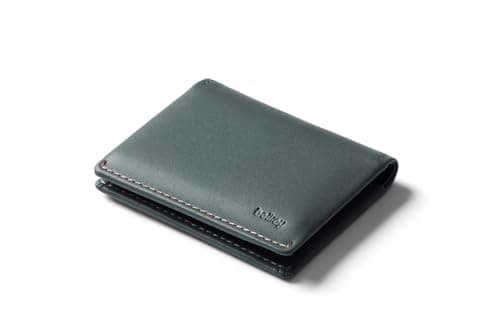
Bellroy Bellroy Slim Sleeve
Bellroy Slim Sleeve

Bellroy's thinnest bifold — the one to buy if you want leather, cash and cards but hate bulk.

Slimmest bifold
7.8
$85.00Amazon
02
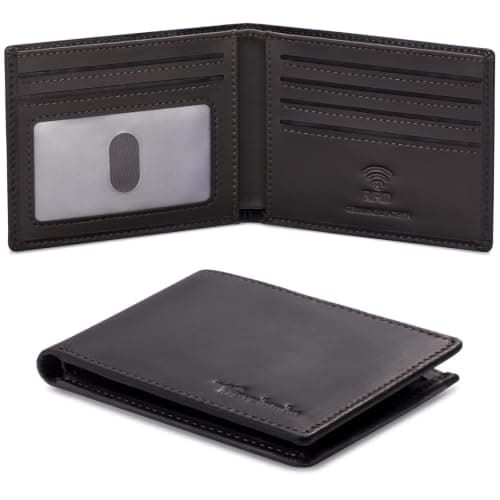
Travelambo Travelambo Slim Card Holder
Travelambo Slim Card Holder

About as cheap as a real leather cardholder gets — RFID-blocking, pocketable, and the easy way to try card-only carry.

Best budget cardholder
7.4
$9.99Amazon
03
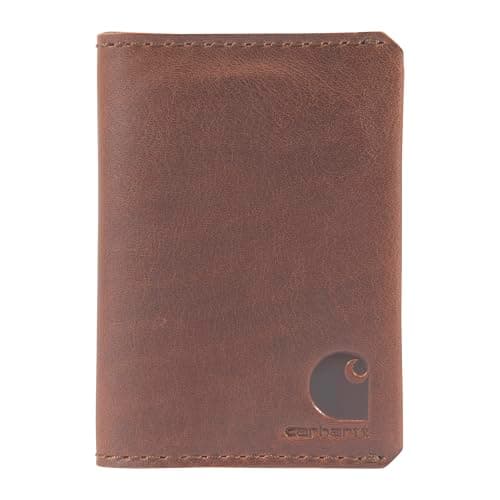
Carhartt Carhartt Craftsman Leather Front Pocket Bifold
Carhartt Craftsman Leather Front Pocket Bifold

A bifold cut from one piece of vegetable-tanned top-grain leather and folded to a published quarter-inch — the slimmest real fold here, at the price of holding only two pockets of cards.

Slimmest front-pocket bifold
6.8
$32.99Amazon

#ad · Live prices from the Amazon Product API, as of October 20, 2026. Where we have no verified live price, we show none — we would rather leave a gap than print a number that has rotted.

Side by side

The spec table

Every published spec that decides fit and function, side by side — with a dash wherever the maker does not publish the figure, never a guess.

ProductTypeLeatherCardsRFIDCash
Bellroy Slim SleeveSlim bifoldEnv-certified top-grain4–8NoYes
Travelambo Slim Card HolderSlim cardholderGenuine leather6–8YesSlot
Carhartt Craftsman Leather Front Pocket BifoldSingle-piece bifoldVeg-tanned top-grain2 pockets (count not stated)—Yes (fold)

In detail

The picks, in full

01
Bellroy Bellroy Slim Sleeve

Slimmest bifold

Bellroy Slim Sleeve

Slim bifoldTop-grainUp to 8 cardsNo RFID
7.8/10

Bellroy's thinnest bifold — the one to buy if you want leather, cash and cards but hate bulk.

Slimness
9
Leather
8
Capacity
6
Build
9
Value
7

Pros

  • One of the slimmest ways to carry cards and folded cash in real leather
  • Two quick-access slots plus a pull-tab section keep everyday cards fast to reach
  • Reads dressier and thinner than a traditional bifold under a suit

Cons

  • No RFID-blocking version of this model
  • Eight cards is the practical ceiling — heavy carriers will outgrow it

Skip this one if…

…you regularly carry ten-plus cards or a lot of receipts. The Hide & Seek or a bifold like the Fossil Derrick gives you the room this one deliberately doesn't.

$85.00· View on Amazon

Price as of October 20, 2026. Prices change — Amazon's is the one that counts.

#ad · we may earn a commission from this link to Bellroy Slim Sleeve

02
Travelambo Travelambo Slim Card Holder

Best budget cardholder

Travelambo Slim Card Holder

CardholderLeather6–8 cardsRFID
7.4/10

About as cheap as a real leather cardholder gets — RFID-blocking, pocketable, and the easy way to try card-only carry.

Slimness
9
Leather
5
Capacity
7
Build
6
Value
10

Pros

  • RFID-blocking leather cardholder for less than the cost of a coffee and a snack
  • Slim enough to vanish in a front pocket or a bag's card slot
  • A no-risk way to find out whether card-only carry suits you

Cons

  • Thin genuine leather that won't last like a premium cardholder
  • No cash management beyond squeezing a folded bill into a slot

Skip this one if…

…you want a wallet to keep. This is a try-the-format buy — if you love card-only carry, step up to an Ekster or a full-grain cardholder.

$9.99· View on Amazon

Price as of October 20, 2026. Prices change — Amazon's is the one that counts.

#ad · we may earn a commission from this link to Travelambo Slim Card Holder

03
Carhartt Carhartt Craftsman Leather Front Pocket Bifold

Slimmest front-pocket bifold

Carhartt Craftsman Leather Front Pocket Bifold

Single-piece bifoldVeg-tan top-grain2 card pockets0.25 in closed
6.8/10

A bifold cut from one piece of vegetable-tanned top-grain leather and folded to a published quarter-inch — the slimmest real fold here, at the price of holding only two pockets of cards.

Slimness
9
Leather
8
Capacity
3
Build
7
Value
7

Pros

  • The only listing on this page that publishes a closed thickness of a quarter of an inch, and the construction explains it: one piece of leather, two pockets, no lining and no window
  • Vegetable-tanned top-grain is the highest leather claim of any pick here that is not made in the USA, and it is the tannage that darkens and develops character in a front pocket
  • Rough-cut edges and a grommet for a keychain are stated on the listing rather than implied, so the workwear look is the design and not a finishing shortcut you discover on arrival

Cons

  • Two inner card pockets is the whole layout. The listing never states a card count, and a pocket is not a slot: load each with three or four cards and the quarter-inch figure no longer describes the wallet you are carrying
  • No RFID claim and no ID window anywhere in the title or bullets, so we have not claimed either
  • A grommet in the corner is a hole in the leather. It is useful if you clip the wallet to keys and a permanent feature you cannot remove if you do not

Skip this one if…

…you carry more than five or six cards. This is a two-pocket wallet and it stays a quarter of an inch thick only when it is carried that way; the Main Street Forge above it publishes up to twelve and still folds around cash.

$32.99· View on Amazon

Price as of October 20, 2026. Prices change — Amazon's is the one that counts.

#ad · we may earn a commission from this link to Carhartt Craftsman Leather Front Pocket Bifold

Step by step

How to stop sitting on your wallet

  1. 1

    Empty it onto a table

    Take everything out. Sort into three piles: used this month, used this year, and dead. The dead pile is usually the biggest and it is where most of the bulk lives.

  2. 2

    Put back only the monthly pile

    Cards you touch once a year belong at home, not in your pocket. Count what is left — the number decides which format can hold it without becoming a wedge again.

  3. 3

    Pick the destination before you change pocket

    Decide now where the wallet lives when you sit down: the car console, the desk, the front trouser pocket or a jacket. A habit needs a specific place, not an intention.

  4. 4

    Move it, and keep the old wallet for two weeks

    Do not buy anything yet. Carry what you already own in the new position for a fortnight. This is the free trial of whether the wallet was the cause.

  5. 5

    Check the symptoms at two weeks

    If they have eased, you have your answer and you are done. If nothing has changed, the wallet was not the cause — stop shopping and see a doctor.

  6. 6

    Only then buy for the new position

    If the new pocket works but your current wallet is too bulky for it, buy one sized for that pocket — and check whether it publishes a closed thickness rather than just calling itself slim.

Where to put it instead

The hardest part of this change is not the wallet, it is the habit — forty years of reaching for the same pocket. Four options people actually stick with:

The front trouser pocket. The default, and the reason this site has an entire front-pocket category. The adjustment is real: a wallet you can feel against your thigh is more noticeable at first than one you are sitting on, and most people stop noticing within a fortnight.

A jacket or shirt pocket. The best option for a large wallet, and it allows a long format that never folds a note. The failure mode is obvious and worth saying: a wallet in a jacket is a wallet you leave on the back of a chair.

The front pocket of a bag. Fine, and the most likely to be forgotten or stolen. Keep one card on your person.

Nowhere — on the phone. A magnetic card sleeve on the back of a phone removes the pocket question entirely, which is a genuine solution to this specific problem. The trade-offs are covered on the MagSafe roundup and in the guide on why those wallets fall off.

If you drive for a living

This is the group the mechanism hits hardest, because the exposure is hours a day, every day, in a seat with a fixed back angle and no opportunity to shift. It is also the group with the easiest fix, because a car has places to put a wallet that a chair does not. Put it in the console at the start of the shift and take it out at the end — the habit forms fast because the trigger is unambiguous.

If you are in work clothes with no usable front pocket, the work-wallet page covers what survives a jobsite, and the no-back-pocket guide covers the carry options in full.

What we are not going to tell you

Any stretch, exercise or treatment. Several of the most-searched phrases in this cluster are asking for exactly that, and we are a leather goods site. We are not going to publish a rehab protocol we are unqualified to write, and you should be wary of any retailer that does.

Any claim about how long recovery takes. That is a clinical question about an individual, and the honest answer is that we do not know and could not know.

That a wallet caused your pain. We have described a plausible, documented mechanism and a free way to test whether it applies to you. Low back and hip pain has many causes and most of them have nothing to do with a pocket.

Prices, and what we earn

Prices are read from the live price layer and stamped with the date they were read, which is why no dollar figure appears in this prose. Buy links are affiliate links — and note that the first two recommendations on this page cost nothing and earn us nothing. See the editorial policy.
How we picked

We do not run a testing lab

We compiled the published manufacturer specifications for every wallet here — format, leather grade, card capacity, RFID and how it carries cash — did the cost-to-own math, and scored each pick against a published rubric. The scores are judgments from documented research — they are not measurements we took or wallets we wore in, because we do not own every wallet here and we are not going to pretend we do. Where a spec could not be verified we wrote "data unavailable" rather than guessing.

Questions

Frequently asked

Is sitting on your wallet bad for your back?
Yes, and the mechanism is geometry rather than weight. A wallet under one buttock lifts one side of your pelvis for as long as you are sitting on it, so your lower spine sits in a slight side-bend, and there is local pressure in the region where the sciatic nerve leaves the pelvis beneath the piriformis muscle. The fix costs nothing: take it out of the back pocket.
Can sitting on your wallet cause sciatica?
It can produce sciatica-type symptoms — pain down the back of the leg — by compressing tissue in the region the sciatic nerve passes through. The clinical literature on piriformis syndrome lists “wallet neuritis (sitting on a thick wallet)” among the conditions to rule out, which means it is recognised as a distinct cause of the same picture rather than as the same condition.
What is fat wallet syndrome, and is it piriformis syndrome?
They are different things that feel similar. “Fat wallet syndrome” is the informal name for symptoms caused by sitting on a thick wallet — the clinical literature's term is wallet neuritis — and it appears in the piriformis-syndrome differential, i.e. as an alternative explanation to rule out. The distinguishing feature is that its cause is in your pocket and can be removed for free.
Will a slim wallet fix it?
It helps, and it is the second fix rather than the first. A thin wedge is still a wedge: halving the thickness halves the pelvic tilt, while taking the wallet out removes it. Move the wallet first, thin your carry second, and buy a wallet third — in that order.
How thin should a wallet be?
Thin enough for the pocket you are actually going to use, and the number is the one to shop on. Most listings just say “slim”; the thinnest published figure in our registry is a quarter of an inch closed, achieved by a single piece of leather with two pockets, no lining and no window. Where a thickness is published, check it describes the wallet rather than the shipping box.
Is a front pocket wallet actually more comfortable?
Differently comfortable. You feel it against your thigh rather than under you, which most people stop noticing within a couple of weeks, and nothing is tilting your pelvis while you sit. The thing that makes it work is proportion as well as thinness: a thin wallet that is 4.5 inches wide still digs in.

Keep reading

Receipts

Sources

We do not run a testing lab, and we do not pretend to. Every spec above traces to a manufacturer listing or a named standard; where we could not verify something, we say so on the page rather than quietly leaving it out. Read our full method.