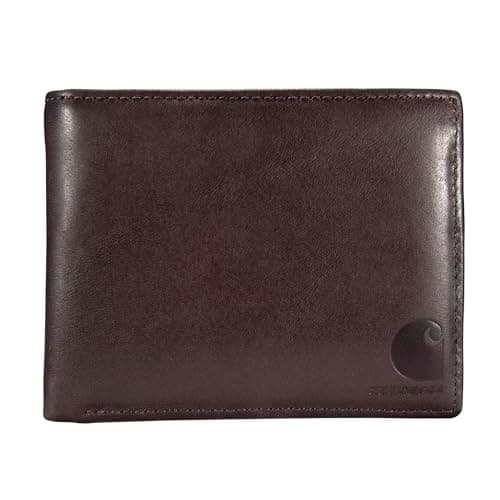
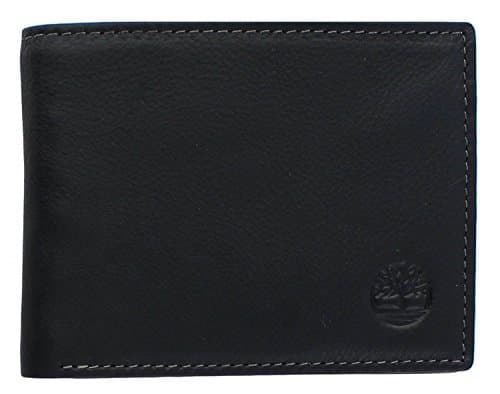
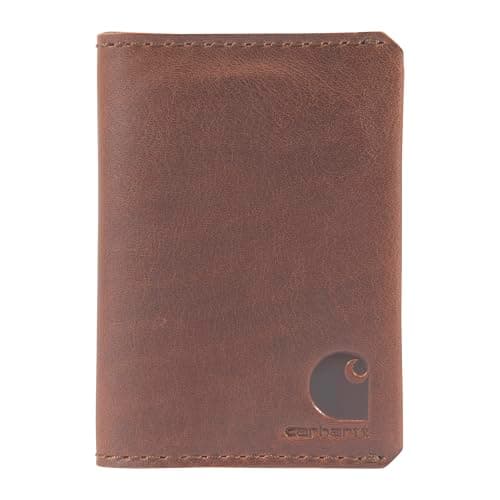
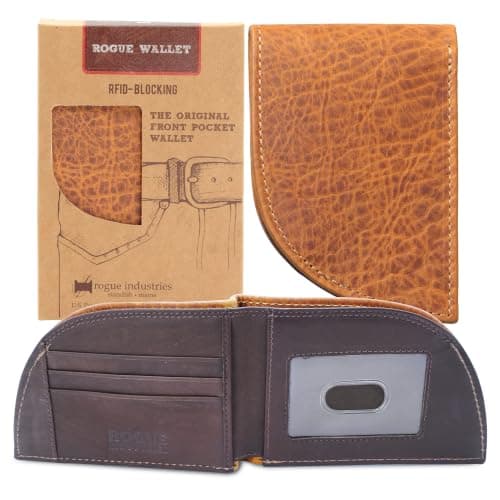
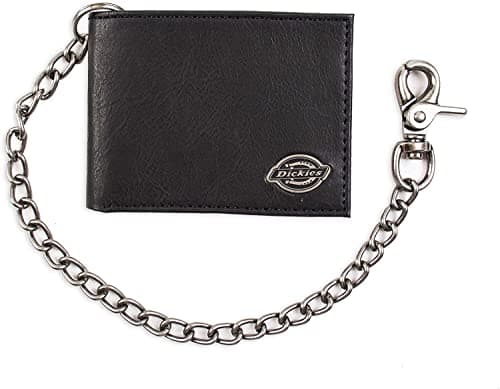
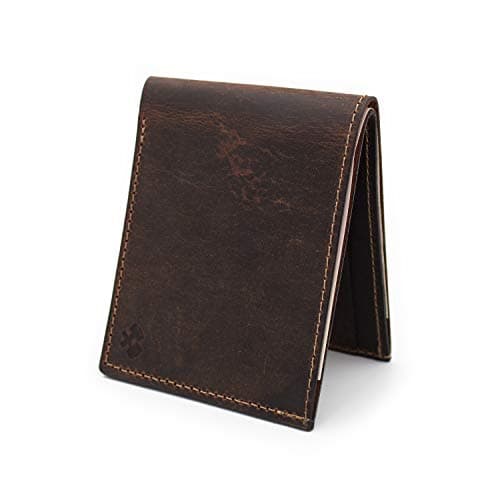
For most working carries the pick is the Main Street Forge bifold — thick full-grain hide, a six-pocket billfold and a lifetime warranty held by the maker rather than the marketplace, which is the only warranty worth anything on a wallet that is going to get destroyed. If the wallet is going to get wet regularly, the Carhartt oil-tan is the better object and costs a fraction as much, because oil-tanned leather dries back soft instead of stiff. And if the real problem is that the wallet keeps going missing on site, the Dickies chain bifold is the cheapest way to find out whether a tether fixes it.
The rule for getting on this page
One condition, and it is about the tannage and finish rather than the grade: the listing has to name a hide or a finish that tolerates abrasion and moisture. Oil-tanned, thick full-grain, bison, and milled leather all qualify. What does not qualify is a thin pigmented or coated finish — a surface-finished wallet looks good for a year in an office and cracks along the fold once it has been soaked and dried a few times. That excludes most of the wallets we rank highest on the dress and gift pages, and it is the whole reason this page exists separately from the bifold hub.
We have deliberately not ranked on brand. Three of these are from workwear labels and three are not, and the Rogue bison and the Main Street Forge outscore two of the workwear picks on exactly the criteria a jobsite cares about. A brand name on a wallet is a marketing fact; a named tannage is a physical one.
The three things that actually kill a work wallet
Abrasion, which is a finish problem
A wallet in a work trouser pocket spends the day rubbing against denim, canvas, a tape measure and whatever is in the pocket with it. On a surface-finished hide the finish wears through to a different-colored layer underneath, which is the dulled, patchy look people mistake for dirt. On full-grain and oil-tan the same abrasion burnishes the hide and darkens it — the same mechanism as patina, just faster. This is the single clearest advantage a good hide has in a working carry and it is not a comfort claim.
Sweat, which is a salt problem
Sweat is salt water, and salt is harder on leather than water is: it draws the oils out of the hide and leaves a stiff, pale panel behind. The defense is oil content, which is exactly what oil tanning puts into the hide rather than onto it. A vegetable-tanned wallet, which we recommend enthusiastically elsewhere on this site, is the wrong choice here: veg-tan water-spots and darkens unevenly, which is charming on a desk wallet and looks like damage on a work one.
Getting wet, which is a drying problem
No leather wallet is waterproof and the listings that imply otherwise are wrong — we have a whole guide on it. What differs is what happens afterwards. An oil-tanned or waxed hide dries back close to where it started. A thin coated hide dries stiff and then cracks at the fold, because the fold is where the dried fibers are asked to bend. If the wallet is going to get soaked more than once or twice a year, the tannage is the spec and nothing else on the listing matters as much.
Work badges, and the slot nobody counts
A working carry is usually a license plus a badge or site pass that has to be shown rather than swiped, and that needs a window, not a slot. Two picks here handle it properly: the Rogue twelve-slot bifold we rank elsewhere publishes two ID windows, and the Dickies publishes a clear window on an otherwise ordinary three-slot bifold. Three slots is genuinely tight for a working carry and the listing is explicit about it, which we would rather have than a vague “multi-card”. If several badges are part of the job, the ID-window roundup and the ten-slot roundup are the pages to read next.
Front pocket or back pocket on a jobsite?
Front, and for a different reason than usual. The normal argument against back-pocket carry is comfort and the shape the wallet takes; on a jobsite the argument is that a back pocket is the pocket that catches on things and the one a wallet falls out of when you crouch. The quarter-inch Carhartt Craftsman is on this page specifically because a published 0.25 inches closed is thin enough to make front-pocket carry realistic in work trousers. The trade is that two card pockets is the entire layout. The wider argument is in front pocket versus back pocket and the format is ranked on the front-pocket hub.
Is a chain wallet a work wallet?
Sometimes, and it is worth taking seriously rather than treating as a style choice. A tether solves one specific failure — the wallet leaving the pocket without you — and it solves it completely. What it costs you is a chain that can catch, and on some sites that is a genuine snag hazard rather than a theoretical one. The Dickies pick is here because it is an ordinary 4.5 inch bifold with a hook on it, so you can find out cheaply. The chain wallet roundup ranks the format, hardware and all.
Looking after a wallet that works for a living
Two habits, and neither needs a product. Empty it of receipts weekly, because wet paper against leather is how the inside of a work wallet goes bad first. And when it does get soaked, dry it slowly and away from heat, stuffed loosely to hold its shape — a radiator or a heater will cook the oils out and finish the job the water started. The full routine, including when a conditioner is actually warranted, is in the care guide, and the conditioner roundup ranks what to use if you decide you need something.
Prices, and what we earn
Prices are read live from the Amazon Product Advertising API and stamped with the date, so no dollar figure appears in this prose. Buy links are affiliate links and the ranking is score-ordered regardless — see the editorial policy.