Skip to content
Hide Thread

Leather Guide · Leather Guide

Best Leather Conditioners for a Wallet

Almost every leather conditioner is sold to people with boots, couches and car seats. A wallet is a different object — smaller, darker-sensitive, and it needs about a teaspoon a decade. Here is what that changes.

By Stephen V.Updated How we research
#ad

We earn a commission when you buy through our Amazon links, at no extra cost to you. It never affects our picks, and we say so when the cheaper wallet is the better buy. How this works.

Every guide on this site that tells you to look after a wallet ends at the same wall: use a quality leather conditioner. Nobody says which one, because the category is not built for you. Search it and you get 8, 16 and 32 ounce bottles aimed at car interiors, couches, saddles and work boots — large, dark, hard-wearing leather that gets soaked, salted and scraped. A wallet is the opposite object: about the size of your palm, kept dry and indoors, and it needs roughly a fingertip of product twice a year for its entire life. Rank the same products for that job and the order changes completely.

We compiled the published listing for six real, currently-stocked conditioners and scored them on five things a wallet owner actually cares about. Two findings came out of it that nobody in this category volunteers, and they are worth stating before the picks.

Finding one: only one of six will say it does not darken leather

Darkening is the thing that goes wrong. On a boot nobody notices; on a wallet you are holding the object at arm's length several times a day, and a conditioner that deepens a tan wallet two shades has permanently changed something you chose on the shelf. Of the six products here, exactly one — Bickmore's Bick 4 — puts a no-darkening promise in its own title and its own bullets. The other five say nothing at all about it.

We have recorded that silence as silence.The spec table below reads “Not stated” for five of six, not “yes” and not “no”. We have not put these on a wallet and watched what happened, so we are not going to publish a verdict dressed as a measurement. What we can tell you is which brand was willing to make the claim in writing, and that is genuinely useful, because a claim in a listing is a claim a seller can be held to.

Finding two: four of six will not tell you what is in the tin

Smith's names all three of its ingredients in the first bullet. Otter Wax names its base — beeswax and plant oils. The other four publish nothing: Leather Honey lists what it has left out(no silicone, no solvents, no animal products, no PFAS) and never what it put in; Chamberlain's offers “cosmetic grade adhesives… oils and waxes”; Bickmore gives you “wax free” and stops; Lexol gives you “fine oil droplets”. For most buyers that will not change the decision. For anyone with a vegetable-tanned wallet, an allergy, or a hide they care about, it is the whole decision, and it is not printed anywhere else we could find.

The five things we scored

Our usual wallet rubric — slimness, leather grade, capacity, build, value — is meaningless on a jar of balm, so this page uses its own and publishes it rather than leaving you to guess what a 7.8 means:

  • Wallet fit.Is the size, form and stated use case scaled to a small leather good, or to a couch? A 32 oz jug of an excellent product is a bad answer to this question, and several very good products score low here for that reason alone — that is a comment on the packaging, not the formula.
  • Color safety. Does the listing make a no-darkening claim? Stated beats silent; silent is not scored as a failure, just as an unknown.
  • Ingredients. What does the maker publish? A full formula beats a partial one, a partial one beats a list of exclusions, and exclusions beat nothing.
  • Ease of use. Applicator included, one step or two, and how controllable it is on something with card slots and stitch lines rather than a flat panel.
  • Value.Price against what a wallet will actually consume — which is almost nothing, and which is why the cheap small jar keeps beating the famous big bottle.

If you want the underlying routine rather than the shopping list, our guide to how to care for a leather wallet is the page to read first — conditioner is one step of five there, and the other four are free.

The short answer

Quick picks

#ProductBest forScorePrice
01
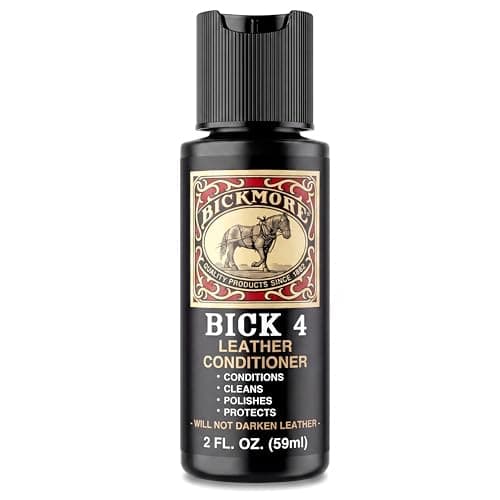
Bickmore Bickmore Bick 4 Leather Conditioner, 2 oz
Bickmore Bick 4 Leather Conditioner, 2 oz

The only product on this page whose own listing promises it will not darken your leather — in the one size a wallet will actually get through, at the lowest price here.

Best overall for a wallet
8.2
$8.98Amazon
02
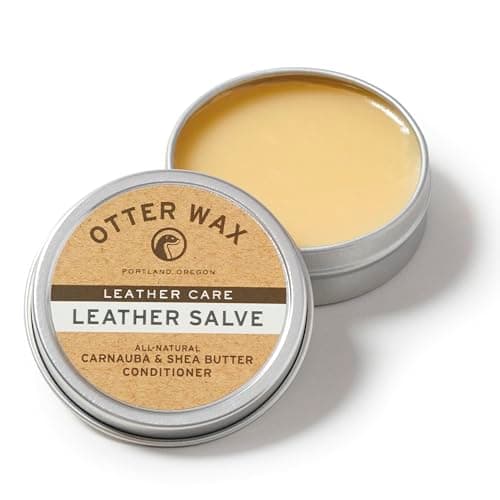
Otter Wax Otter Wax Leather Salve, 2 oz
Otter Wax Leather Salve, 2 oz

A 2 oz tin of beeswax and plant oils you warm between your fingers — the balm to pick if you want the wallet to deepen and repel water rather than stay factory-fresh.

Best balm
7.8
$10.95Amazon
03
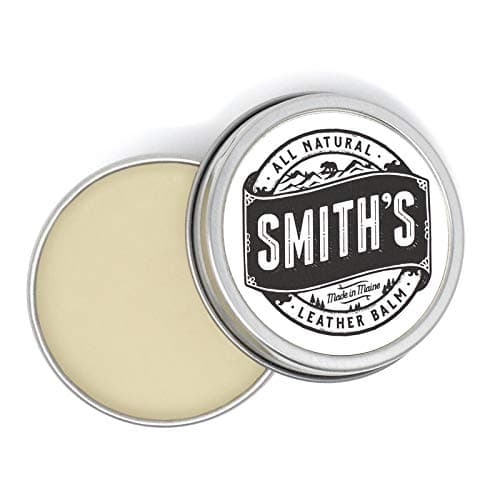
Smith's Leather Balm Smith's All Natural Leather Balm, 4 oz Tin
Smith's All Natural Leather Balm, 4 oz Tin

Three named ingredients and nothing else — the only listing on this page that tells you exactly what is in the tin, and the only one that says the word "wallets" out loud.

Best ingredient transparency
7.6
$24.00Amazon
04
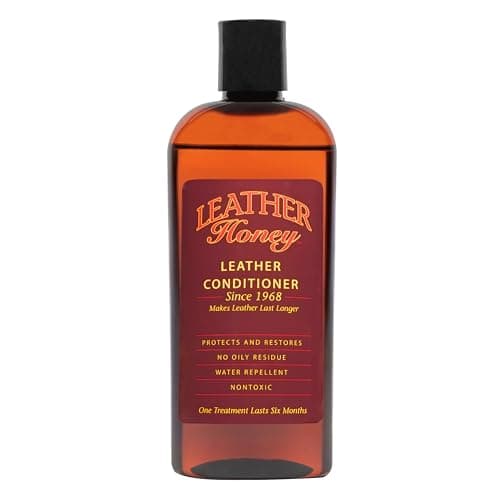
Leather Honey Leather Honey Leather Conditioner, 8 fl oz
Leather Honey Leather Conditioner, 8 fl oz

The best-known conditioner in the category, and the one that asks least of you — its own listing says a single application lasts at least six months.

Longest interval between treatments
6.0
$19.99Amazon
05
Chamberlain's Leather Milk Chamberlain's Leather Milk Healing Balm, 4 fl oz
Chamberlain's Leather Milk Healing Balm, 4 fl oz

Not a maintenance product — a repair one. This is what you reach for when a wallet is scratched, scarred or lightly cracked and routine conditioning has stopped helping.

Best for a scratched or scarred wallet
5.8
$37.56Amazon
06
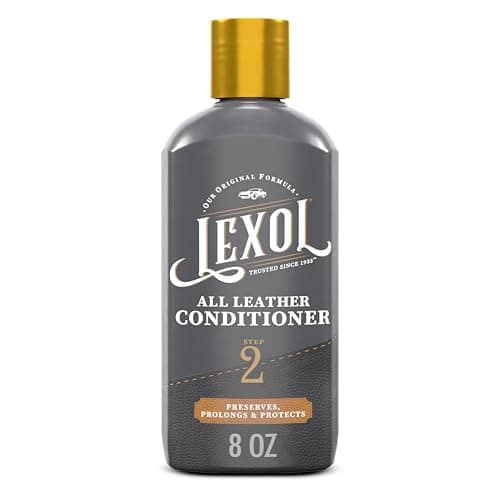
Lexol Lexol All Leather Conditioner, 8 oz
Lexol All Leather Conditioner, 8 oz

The cheapest leather conditioner per ounce here and a genuine garage staple — but it is a car-seat product that happens to work on a wallet, and its own listing tells you to buy a second bottle.

Cheapest per ounce
5.6
$9.05Amazon

#ad · Live prices from the Amazon Product API, as of Sep 7, 2026. Where we have no verified live price, we show none — we would rather leave a gap than print a number that has rotted.

Side by side

The spec table

Every published spec that decides fit and function, side by side — with a dash wherever the maker does not publish the figure, never a guess.

ProductFormSizeWon't darken?Ingredients publishedApplicator
Bickmore Bick 4 Leather Conditioner, 2 ozCream, wax-free2 ozStatedNoNone included
Otter Wax Leather Salve, 2 ozSolid balm2 ozNot statedPartial (beeswax, plant oils)Hands
Smith's All Natural Leather Balm, 4 oz TinSolid balm4 ozNot statedYes (3 named)Hands
Leather Honey Leather Conditioner, 8 fl ozLiquid8 fl ozNot statedNo (exclusions only)None included
Chamberlain's Leather Milk Healing Balm, 4 fl ozBalm4 fl ozNot statedNoSponge included
Lexol All Leather Conditioner, 8 ozLiquid8 ozNot statedNoNone included

In detail

The picks, in full

01
Bickmore Bickmore Bick 4 Leather Conditioner, 2 oz

Best overall for a wallet

Bickmore Bick 4 Leather Conditioner, 2 oz

Cream, wax-free2 ozStates it won't darkenOne-step
8.2/10

The only product on this page whose own listing promises it will not darken your leather — in the one size a wallet will actually get through, at the lowest price here.

Wallet fit
9
Color safety
10
Ingredients
4
Ease of use
9
Value
9

Pros

  • The listing states plainly that it will NOT darken leather — the only no-darkening claim among the six, and the single spec that matters most on a wallet you look at every day
  • Explicitly wax free, which the brand ties to leather pores staying open; that is the opposite trade-off to the beeswax balms below, and worth understanding before you pick a side
  • 2 oz is the right size for a small leather good: a wallet uses a fingertip at a time, and this is the only listing here that sells a jar you might plausibly finish
  • One-step cleaner and conditioner, so there is no separate cleaning product to buy first — Lexol's own bullets tell you to buy two things

Cons

  • Bickmore publishes no ingredient list anywhere in the listing; "wax free" is the only formulation fact you are given, and it is the least transparent of the picks that make a formulation claim at all
  • No applicator is included, so you supply the soft cloth — trivial, but the more expensive picks hand you one
  • It is sold as a cleaner AND a conditioner in one bottle, which purists dislike: a dedicated cleaner followed by a dedicated conditioner gives you more control on a badly soiled piece
  • The 8 oz bottle of the identical product often sells for barely more, which makes the 2 oz look poor value on paper — see the buyer's guide for why we still recommend the small one for a wallet

Skip this one if…

you specifically want your wallet to go darker and richer. Not darkening is the entire pitch here; if you are chasing a deep patina, the beeswax balms ranked second and third are the ones doing that job.

$8.98· View on Amazon

Price as of Sep 7, 2026. Prices change — Amazon's is the one that counts.

#ad · we may earn a commission from this link to Bickmore Bick 4 Leather Conditioner, 2 oz

02
Otter Wax Otter Wax Leather Salve, 2 oz

Best balm

Otter Wax Leather Salve, 2 oz

Solid balm2 ozBeeswax + plant oilsPFAS-free
7.8/10

A 2 oz tin of beeswax and plant oils you warm between your fingers — the balm to pick if you want the wallet to deepen and repel water rather than stay factory-fresh.

Wallet fit
9
Color safety
5
Ingredients
9
Ease of use
8
Value
8

Pros

  • Names its base ingredients — beeswax and plant-based oils, no synthetic additives — which puts it ahead of the four picks here that publish nothing
  • Explicitly PFAS-free and petroleum-free, and the brand has been making the same wax-based products in Portland since 2010
  • The solid formula warms in your fingers, so there is nothing to spill and nothing to over-pour onto a small piece of leather — the usual failure with a liquid on a wallet
  • The bullets are unusually specific about what it is for: smooth full-grain and pull-up leathers, explicitly not suede, nubuck or patent

Cons

  • No no-darkening claim anywhere in the listing, and a beeswax-and-oil balm on a light wallet should be expected to deepen the color — we have not tested it, so we record the silence rather than a number
  • Wax is the exact thing Bickmore's listing argues against, on the grounds that it seals the pores; the two brands contradict each other and neither publishes a test, so this is a judgment you make, not a fact we can settle for you
  • Sold as a conditioner and cleaner in one, so it inherits the same objection as Bick 4 for anyone who wants the cleaning step kept separate
  • You apply it with your hands, which is genuinely pleasant on a boot and slightly fiddly around a wallet's card slots and stitch lines

Skip this one if…

your wallet is suede or nubuck. The listing rules both out by name, and a wax balm will flatten and darken a nap permanently — that is one of the few leather mistakes you cannot undo.

$10.95· View on Amazon

Price as of Sep 7, 2026. Prices change — Amazon's is the one that counts.

#ad · we may earn a commission from this link to Otter Wax Leather Salve, 2 oz

03
Smith's Leather Balm Smith's All Natural Leather Balm, 4 oz Tin

Best ingredient transparency

Smith's All Natural Leather Balm, 4 oz Tin

Solid balm4 oz3 named ingredientsMade in Maine
7.6/10

Three named ingredients and nothing else — the only listing on this page that tells you exactly what is in the tin, and the only one that says the word "wallets" out loud.

Wallet fit
8
Color safety
6
Ingredients
10
Ease of use
9
Value
5

Pros

  • Publishes its complete formula in the first bullet — beeswax, cocoa butter, almond oil, nothing else. Four of the six products here publish no ingredients at all, so this is a genuine outlier
  • The only listing on this page whose own copy lists wallets among the things it is for; every other product here is sold to boot, furniture and car-seat owners and leaves you to extrapolate
  • Designed to be applied by hand with no rag and no greasy residue, which suits the fiddly geometry of a wallet better than a liquid does
  • Handmade in small batches in Maine, and the 4 oz tin is genuinely pocketable

Cons

  • By far the worst value per ounce here: several times the price of the Lexol bottle for half the volume, and a wallet will not notice the difference between an almond-oil balm and a cheaper one for years
  • Almond oil is a tree-nut derivative, which is worth knowing if there is a nut allergy in the house — the listing does not flag it as an allergen
  • "Neutral color works across all shades" is a claim about the balm's own color, not a promise that your leather will not darken; there is no no-darkening claim here
  • A 4 oz tin is still several decades of wallet at a fingertip twice a year, so most of what you pay for will outlive the wallet

Skip this one if…

the wallet is the only leather thing you own. At this price the tin only makes sense if boots, a belt and a bag are going to use it too — otherwise you are paying a premium for volume you will never reach.

$24.00· View on Amazon

Price as of Sep 7, 2026. Prices change — Amazon's is the one that counts.

#ad · we may earn a commission from this link to Smith's All Natural Leather Balm, 4 oz Tin

04
Leather Honey Leather Honey Leather Conditioner, 8 fl oz

Longest interval between treatments

Leather Honey Leather Conditioner, 8 fl oz

Liquid8 fl oz6-month claimNo animal products
6.0/10

The best-known conditioner in the category, and the one that asks least of you — its own listing says a single application lasts at least six months.

Wallet fit
5
Color safety
5
Ingredients
6
Ease of use
8
Value
6

Pros

  • The published six-month interval is the most usable claim on this page — it matches almost exactly the twice-a-year rhythm a wallet actually needs
  • States what is NOT in it with unusual precision: no silicone, no solvents, no animal products, PFAS-free, fragrance-free and pH balanced
  • The absence of animal products makes it the one pick here that does not add a second animal input to the object, which matters to some owners of secondhand and vintage leather
  • Made in the USA continuously since 1968, the longest track record of anything on this page

Cons

  • The smallest size on this listing is 8 fl oz. On a wallet that is not a lifetime supply, it is several lifetimes — this is the main reason it ranks below three cheaper products here
  • Publishes exclusions but not contents: you learn what is not in the bottle and never what is
  • No no-darkening claim. "Great for all colors… including white" is about breadth of use, not about leaving your shade alone
  • It is a liquid with no applicator included, and over-pouring onto something as small as a card slot is easy to do and slow to undo

Skip this one if…

a wallet is the only thing you plan to condition. Buy the 2 oz cream at the top of this page instead — you will not get through either bottle, and only one of them is the cheapest product on this page.

$19.99· View on Amazon

$27.9929% off

Price as of Sep 7, 2026. Prices change — Amazon's is the one that counts.

#ad · we may earn a commission from this link to Leather Honey Leather Conditioner, 8 fl oz

05
Chamberlain's Leather Milk Chamberlain's Leather Milk Healing Balm, 4 fl oz

Best for a scratched or scarred wallet

Chamberlain's Leather Milk Healing Balm, 4 fl oz

Balm4 fl ozScratch & scar repairSponge included
5.8/10

Not a maintenance product — a repair one. This is what you reach for when a wallet is scratched, scarred or lightly cracked and routine conditioning has stopped helping.

Wallet fit
7
Color safety
4
Ingredients
5
Ease of use
10
Value
3

Pros

  • Sold explicitly for scratches, scars and light cracks rather than for routine feeding, which is a different job from every other product on this page
  • The only pick here that ships with an applicator — a fine-pore sponge — and detail work on a small, marked panel is exactly where an applicator earns its keep
  • The listing is honest about its own scope: it says it is made for aesthetic and touch-up work, not presented as a do-everything conditioner
  • Made in the USA, and the Leather Milk line has a long-standing following among people who restore leather rather than just maintain it

Cons

  • It is the most expensive product on this page by a wide margin — several times the cost of the top pick, for a job most wallets never need
  • "Enrich the color and vibrancy of your leather" is a stated intention to change how your wallet looks. That is the point of a repair balm, but it is the opposite of what you want in a maintenance product, and we have scored color safety accordingly
  • Publishes no ingredient list — "cosmetic grade adhesives… oils and waxes" is a category, not a formula
  • Not for suede or very soft leathers, per the listing, and the adhesive component makes a hidden-spot test more important here than anywhere else on this page

Skip this one if…

your wallet is simply dry. A thirsty wallet needs the cheap cream at the top of this page, not a repair balm — read our guide to getting scratches out of leather first and try a fingertip and a cloth before you spend anything at all.

$37.56· View on Amazon

Price as of Sep 7, 2026. Prices change — Amazon's is the one that counts.

#ad · we may earn a commission from this link to Chamberlain's Leather Milk Healing Balm, 4 fl oz

06
Lexol Lexol All Leather Conditioner, 8 oz

Cheapest per ounce

Lexol All Leather Conditioner, 8 oz

Liquid8 ozFast-absorbingStep 2 of 2
5.6/10

The cheapest leather conditioner per ounce here and a genuine garage staple — but it is a car-seat product that happens to work on a wallet, and its own listing tells you to buy a second bottle.

Wallet fit
4
Color safety
5
Ingredients
4
Ease of use
6
Value
9

Pros

  • The lowest price per ounce on this page by a wide margin, from a brand that has been a default in auto detailing for decades
  • Fast-absorbing and non-greasy by its own description, which matters on something that lives against a pocket lining and the back of your hand
  • Genuinely multipurpose — if you own a leather car interior, a couch and a wallet, this is the one bottle that covers all three
  • Widely stocked, so replacing it is never a special order

Cons

  • Its own bullets position it as "Step two of two", to be used with Lexol's separate cleaner — so the honest price of the Lexol routine is two bottles, not one
  • Every use case in the title is a large leather surface: car seats, couches, saddles. Nothing in the listing is scaled to, or written for, a wallet
  • No ingredient information beyond "fine oil droplets", and no no-darkening claim
  • 8 oz with no applicator, on a product designed to be wiped across a car seat, makes controlled application to a card slot entirely your problem

Skip this one if…

the wallet is the whole job. This is the right bottle for a garage and the wrong one for a bedside drawer — the 2 oz cream at the top of this page does the same job in a size that fits the object.

$9.05· View on Amazon

Price as of Sep 7, 2026. Prices change — Amazon's is the one that counts.

#ad · we may earn a commission from this link to Lexol All Leather Conditioner, 8 oz

How much conditioner a wallet actually uses

This is the number that reframes the whole category. A wallet takes about a fingertip of product, worked in and buffed off, roughly twice a year. Two ounces is therefore not a small jar — it is decades of wallet. Eight ounces is a supply that will outlive the wallet, the next wallet, and quite possibly you. That is why our top pick is the 2 oz jar rather than the 8 oz bottle of the same product for barely more money: the extra six ounces are not a bargain, they are six ounces of leather conditioner drying out in a cupboard.

The only reason to buy the big bottle is if the wallet is not the only leather you own. A pair of boots will get through 8 oz in a few years; a car interior faster. If boots, a belt, a bag and a wallet are all in scope, buy the volume and ignore this section. If it is one wallet, buy the smallest jar of the thing you want and never think about it again.

Match the product to the tannage, not the price

Different leathers want different treatment, and this is the one place where spending more can actively make things worse. A Horween Chromexcel wallet is already loaded with oils and waxes from the tannery and wants very little, very occasionally. A vegetable-tanned wallet develops its best color from sunlight and the oils in your hands — heavy conditioning early will blunt exactly the patina you bought it for. A chrome-tanned wallet with a sealed finish absorbs less than either, so most of what you apply sits on the surface and gets buffed away. And a bonded-leather wallet cannot be conditioned in any meaningful sense, because there is no continuous hide to feed — if that is what you have, the honest advice is to spend the money on a better wallet instead of a jar of balm.

Test on a hidden spot. Every time, on every product.

Because five of six of these listings will not commit to a no-darkening claim, the hidden-spot test is not optional advice here — it is the mechanism by which you avoid the mistake this page is about. Use the inside of a cash sleeve or the back of a card slot: somewhere the leather is the same hide and the same finish but nobody will see it. Apply a small amount, let it dry fully, and look at it in daylight next to an untreated area. If it has gone darker, you have learned that for a few cents and a day's wait rather than on the face of the wallet.

What we deliberately left off

Heavy-duty preservatives.Obenauf's Heavy Duty LP is a superb product and it is on Amazon, in stock, for less than most of the picks above. It is not here because its own listing describes an “industrial strength” beeswax preservative built by wildland firefighters for work boots in extreme conditions. A wallet is not in extreme conditions. Putting a boot preservative on one is not dangerous, it is just the wrong tool, and it will change the hand feel and the color of a dress wallet in ways you cannot walk back.

Multi-piece care kits.Otter Wax and Chamberlain's both sell handsome kits — cleaner, conditioner, wax, oil, cloths — for roughly three to seven times the price of the single jar you actually need. They make sense as a gift for someone with a boot collection. For a wallet they are a way to spend several times over on a problem the cheapest jar on this page already solves, and we would rather say so than rank one for the commission.

Neatsfoot oil, mink oil and saddle soap.All three are real leather products with long histories, and all three are the wrong shape for this job. Neatsfoot and mink oils soften and darken aggressively — the point, on tack and work boots, is to make stiff leather pliable. On a wallet that reads as a limp, greasy panel that no longer holds its shape. Saddle soap is a cleaner, not a conditioner, and it strips before it feeds.

Anything from the kitchen. Olive oil, coconut oil and petroleum jelly all turn up in wallet-care advice online. They soak in unevenly, they can go rancid inside the leather over months, and the smell that results is not removable. Our guide on getting a smell out of a leather wallet exists partly because of this advice.

The honest bottom line

Most people reading this do not need to buy anything. If your wallet is a year old, is not dry to the touch, and lives in a front pocket rather than under you on a chair, the correct amount of conditioner to apply is none — over-conditioning is a more common mistake than neglect, and it is the one that darkens and clogs. Conditioner is a maintenance product for leather that has started to feel dry, and for most wallets that is a year or two away.

When it is time, the cheap 2 oz jar at the top of this page does the job that a multi-piece kit costing several times as much does. The reason to spend more is a specific one: you want a named formula (Smith's), you want the deepening a wax balm gives (Otter Wax), or the wallet is already marked and you are repairing rather than maintaining (Chamberlain's). Those are real reasons. “It is the expensive one” is not, and it will not make your wallet last a day longer — the things that actually do are in our guide to how long leather wallets last and they are mostly about where you carry it.
How we picked

We do not run a testing lab

We compiled the published Amazon listing for every product here on 7 September 2026 — title, feature bullets, size field and stock status — and scored each one against the five-metric rubric printed above this page's picks: wallet fit, color safety, ingredients, ease of use and value. That is a different rubric from the one on our methodology page, which scores wallets, and it is published here because scoring a tin of balm on “capacity” would be nonsense. The scores are judgments from documented research — they are notmeasurements, and we have not conditioned a wallet with all six and compared the results. Where a listing does not state something — and on this page that is most often whether the product darkens leather — the table says so rather than guessing in either direction.

Questions

Frequently asked

What is the best leather conditioner for a wallet?
For most wallets, a small jar of a wax-free conditioning cream is the right answer, and Bickmore's Bick 4 in the 2 oz size is our pick because it is the only product here whose listing states that it will not darken leather — the failure mode that matters most on something you look at daily. If you want a named formula rather than an unnamed one, Smith's All Natural Leather Balm publishes all three of its ingredients. If the wallet is already scratched or scarred, that is a repair job rather than a conditioning one.
How often should you condition a leather wallet?
About once or twice a year for most wallets, and only when the leather starts to feel dry rather than on a schedule. Over-conditioning is the more common mistake: too much product too often darkens leather, clogs the surface and can leave it limp. Leather Honey's listing claims a single application lasts at least six months, which is roughly the interval a wallet wants anyway. Our full routine is in how to care for a leather wallet.
Will leather conditioner darken my wallet?
It might, and most listings will not tell you. Of the six products on this page, only Bickmore's Bick 4 states in its own listing that it will not darken leather; the other five make no claim either way, so our spec table records “Not stated” rather than guessing. Oil- and wax-based balms are generally the ones expected to deepen color, which is desirable on a wallet you want to develop a patina and unwelcome on a light tan one you want kept as bought. Always test on a hidden spot first and let it dry fully before you judge.
Do you need a leather cleaner as well as a conditioner?
Usually not, for a wallet. A wipe with a barely damp cloth handles everyday dirt, and two of the picks here (Bick 4 and Otter Wax Leather Salve) are sold as a combined cleaner and conditioner. Lexol is the exception worth knowing about: its own bullets describe it as “step two of two” and point you at a separate Lexol cleaner, so the real price of that routine is two bottles rather than one.
Can you use olive oil or coconut oil on a leather wallet?
No — use a product made for leather. Household oils soak in unevenly, can go rancid inside the hide over months and leave a smell you cannot get out, and they darken unpredictably. A jar of real conditioner costs very little and is formulated to be absorbed rather than to degrade the fibers.
Should you condition a brand-new leather wallet?
Generally no. A new wallet leaves the maker with the oils the tannery put in it, and adding more before it has done any work is the classic over-conditioning mistake — particularly on vegetable-tanned leather, where early heavy conditioning blunts the patina you paid for. Carry it, let it break in, and treat it when it starts to feel dry. Our guide to breaking in a leather wallet covers the first few weeks.

Keep reading

Receipts

Sources

We do not run a testing lab, and we do not pretend to. Every spec above traces to a manufacturer listing or a named standard; where we could not verify something, we say so on the page rather than quietly leaving it out. Read our full method.