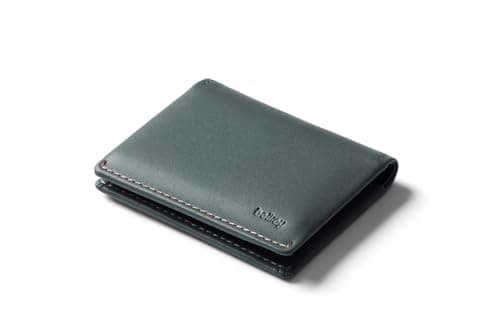
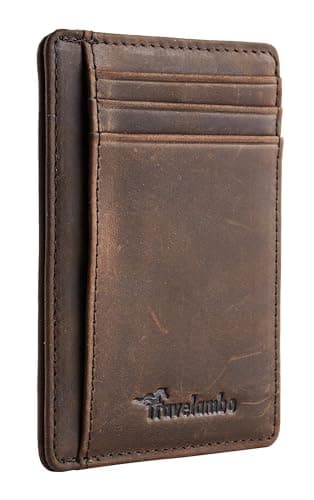
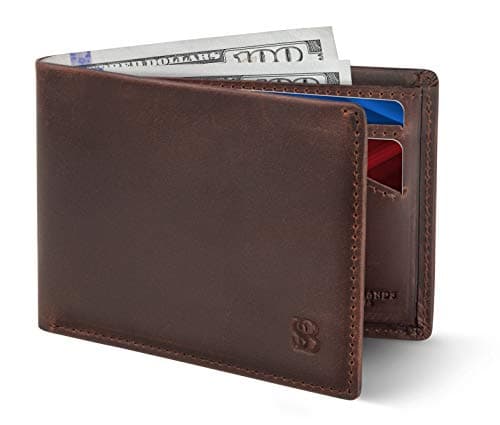
A minimalist wallet works by making the decision for you: it physically cannot hold what you were carrying, so the editing happens once at the start instead of never. That is the whole mechanism, and it is why the switch succeeds or fails in the first fortnight rather than at the point of purchase. The process below takes about twenty minutes, costs nothing, and will tell you which kind of slim wallet you need before you buy one — which is the opposite of the usual order.
Start by emptying the old wallet onto a table
Everything out, in one pile. Then sort it into three piles rather than two, because the middle pile is where the decision actually lives:
- Daily. A payment card, a license or ID, and the one access card you use every day. For most people that is three or four items and nothing else.
- Monthly.A second payment card, an insurance card, a library card, the loyalty card for the shop you actually go to. These are the ones people cannot let go of, and they are also the ones that do not need to be on your body — a drawer, the car or a phone app covers them.
- Dead. Expired cards, receipts, loyalty cards with one stamp, a business card from 2019, the folded parking stub. This pile is usually the thickest thing in the wallet and it is the reason some people do not need a new wallet at all.
If the dead pile alone accounts for most of the bulk, stop here and do not buy anything. That is a genuine outcome and it happens often enough that the organizing guide exists as a cheaper alternative to this page. It costs us a sale to say so and it is still the right advice.
Count the daily pile, because the number picks the format
This is the step people skip, and it is the one that decides whether the wallet you buy is the right object. A payment card at the ISO/IEC 7810 specification is about 0.03 inches thick, and the three slim formats are sized around genuinely different counts:
- Two or three cards, no cash: a card sleeve, or a wallet on the back of your phone. Nothing else is thinner. The two-and-three card roundup ranks these, and the important detail is that a sewn slot holds one card as well as four while a metal cage needs about three to hold anything.
- Four to eight cards, plus folded cash: a slim bifold. This is the mainstream answer and the three picks below are all in this band.
- Nine or more: you are not switching to a minimalist wallet, and a slim wallet will be a bad experience. The ten-slot roundup is the honest page for that carry.
Decide what happens to the cash before you buy
The most common reason a slim-wallet switch fails. A US Federal Reserve note is 6.14 inches long and a bifold is about 4.5 inches wide, so cash in a slim wallet is always folded, and the three options behave differently. A bill channel takes folded notes flat and costs you a couple of layers of leather even when empty. A money clip costs nothing when empty and puts the notes on the outside. A card sleeve has no provision at all, which is fine if you have genuinely stopped carrying cash and miserable if you have not. Ten notes folded twice add less than three payment cards do, so cash is rarely the bulk problem — it is the mechanism that has to be chosen, not the capacity. The cash-and-cards guide goes through the three options properly, and the money-clip roundup ranks the middle option.
How a slim wallet actually behaves, day to day
Three things are genuinely different and nobody mentions them, which is why the format gets abandoned in week two by people who would have liked it.
The slots are tight for the first few weeks.A slim wallet is slim because the slots are cut close, and new leather has not relaxed yet. Every pick in this band has a version of that note in its own listing. It is not a defect and it does not need forcing — the break-in guide covers the right way to speed it up, which mostly means using it.
Access is reordered, not reduced. Slim wallets put one or two cards in quick-access slots and the rest behind a pull-tab or inside the fold. That is a feature and it changes the ergonomics: the card you tap most should go in the outside slot on day one, and almost nobody does this deliberately.
It moves to the front pocket, and that is most of the benefit.The point of a slim wallet is not the thickness, it is that the thickness makes front-pocket carry possible — which is better for the wallet, better for your cards and better for sitting down. Front pocket versus back pocket is the argument, and the front-pocket hub ranks wallets cut for it.
The two-week test
Put the monthly pile in a drawer rather than throwing it away, and carry the slim wallet for two weeks. Then check the drawer. If you reached for something in it once, the switch worked and that card can stay in the drawer forever. If you reached for it three or four times, you edited too hard and the honest answer is a slightly bigger wallet rather than a discipline problem. Two weeks is the right window because it covers a payday, a weekend and at least one unusual errand, which is where the cards you forgot about surface.
What not to do
- Do not double cards in a slot. It is the single fastest way to permanently stretch a slim wallet, and it defeats the point: a doubled slot is as thick as two slots and grips worse. If you need the extra position, you need a different wallet.
- Do not buy the thinnest thing you can find on day one. The published floor in our record is a quarter of an inch, and the wallets at that figure hold about three cards. Starting at the extreme is how people conclude they dislike the format.
- Do not put receipts back in. This is the whole battle, and it is won by emptying the wallet on a fixed day each week rather than by willpower.
- Do not carry two wallets. If you end up with a slim wallet plus a card case in the other pocket, you have bought bulk and added a step. One wallet of the right size beats two of the wrong one.
Is a minimalist wallet actually better?
For most people, for most carries, yes — but we have a whole page arguing both sides rather than a slogan, because the honest answer has conditions on it. Are slim wallets good covers the case against, and slim wallet versus bifold is the format comparison. If you want the short version: the benefit is real, it comes from front-pocket carry rather than from the wallet itself, and it is wasted on anyone who genuinely needs ten cards.
Prices, and what we earn
Every price here is read live from the Amazon Product Advertising API and stamped with the date, which is why there is no dollar figure in this prose. The three picks span the price band of this format deliberately, and the cheapest one is on the page precisely because the first slim wallet is an experiment. Buy links are affiliate links; the editorial policy explains why the ranking does not depend on them.