Nearly every version of this list is really a decluttering list, and it puts loyalty cards and old receipts at the top because they are the things taking up room. That is the wrong ranking. The question that matters is not what is making my wallet fat — we have a whole guide for that — it is what will this cost me on the day the wallet is gone. Rank by that and the order changes completely: the receipts drop to the bottom, cash turns out to be one of the least damaging things in there, and a single piece of paper most people have carried since they were sixteen goes straight to the top. This fix is free, takes about ten minutes, and we would rather you did it than bought anything.
1. Your Social Security card — and the reason is not what you think
Every list says take it out. Almost none of them say why it is in a different category from everything else, so here is the part that is actually worth knowing.
Replacement of a Social Security card is rationed by federal regulation. The rule reads that you may receive no more than three replacement cards in a year and ten in a lifetime. It was written to implement a provision of the Intelligence Reform and Terrorism Prevention Act of 2004. Reasonable exceptions are allowed case by case in compelling circumstances, and a name change does not count against the caps — but the caps are real, they are cumulative across your whole life, and there is no comparable limit on replacing a debit card, a license or a passport.
There is a second asymmetry that matters more. When you replace the card, you get the same number back. A compromised bank card is cancelled and reissued with new digits, so the stolen data expires. A compromised Social Security number does not expire; it is the identifier used to open credit in your name, and the card is simply the paper that carries it. Reporting the card lost does not stop the number being misused.
So: finite replacements, a permanent identifier, and no cancellation mechanism. That is why this one is not merely inconvenient to lose but structurally different from every other item in your wallet, and it is why it sits at number one on a list ranked by consequence. It belongs in a drawer at home. If an employer or agency needs to see it, it can come out for the day and go back.
2. Anything that tells a stranger where you live and lets them in
The second item is the one most lists miss entirely, and it is a combination rather than a single object: a spare house key carried alongside your ID.
Separately, each is unremarkable. Together they are a problem, because your driver's license has your address printed on it. A wallet containing both does not merely cost you cards; it hands over an address and a working key to that address, and it tells the finder you are not home right now. The same logic applies to a garage fob, an apartment entry card, or a valet tag with a plate number on it.
The free fix is separation rather than removal: keys on a key ring in a different pocket, wallet in another. If you carry a key specifically because the wallet is where you will not lose it, that is the habit to change, and our leather key holders page covers the alternative without needing to make the wallet the answer.
3. PINs, passwords and the backup code you wrote down
A PIN written on a slip of paper, or on the card itself, turns a stolen debit card from a reversible fraud problem into a cash-withdrawal problem. The distinction matters: card networks have well-established dispute processes for unauthorized transactions, and your practical exposure is usually bounded and recoverable. Cash taken from an ATM with your own PIN is a different conversation to have with your bank, and a much harder one.
Same category, newer version: a two-factor backup code or a recovery phrase on a card in your wallet. It is in there because somebody sensibly told you not to keep it on your phone. The wallet is not the other option; a drawer is.
4. Your passport, on an ordinary day
A passport is the most valuable identity document most people own and the most laborious to replace. It belongs in daily carry on exactly the days you need it, which for most people is a handful a year. The rest of the time it is the single highest-consequence item you could be carrying for no reason.
Travel is the exception and it has its own answer: a dedicated document carry you take out for the trip and put away afterward, which is what travel wallets are for. The point of a separate travel wallet is not capacity; it is that the high-value documents live in something you only carry when you need them.
5. Checks, deposit slips and anything with a routing number
A single blank check carries your name, your address, your bank, your account number and your routing number — a complete set, printed, in the open. It is a strange survival: most people who carry one have not written a check in a year, and it is in there for an emergency that has not happened.
Deposit slips and bank-printed receipts with a partial account number belong in the same bin. Our checkbook cover page exists for the people who genuinely still use checks, and the honest advice there is the same as here: carry the book when you are going to write one, not permanently.
6. Birth certificates, insurance cards you never use, and the spare of everything
A birth certificate is a foundational identity document and there is almost no everyday reason to carry one. A health insurance card is more arguable — many people reasonably want it available in an emergency — but the card is usually replaceable by a phone call and the number is often in the insurer's app, so this is a judgment call rather than a rule. We would not tell you to take it out; we would tell you to notice that you are carrying it and decide on purpose.
The spare-of-everything habit is the real target here: the second credit card you keep for a limit you no longer need, the expired membership, the gift card with four dollars on it. Every one of them is a call to make on the day the wallet goes missing, and the cost of carrying them is paid entirely in that moment.
7. Cash — which is the least of your problems
This is where a consequence ranking departs most sharply from the usual list, so we will be plain about it: losing cash costs you exactly the cash. There is no follow-on. Nobody opens an account with it, you make no phone calls, and the matter is closed the moment you have accepted it.
Everything else on this list has a tail: a number that persists, a document that takes weeks, an address that is now known. Cash has none. That does not mean carry a large float for fun — the amount you carry is a separate decision we work through in how much cash to carry — but if you are reorganizing your wallet around risk, the twenty-dollar bill is not the thing to worry about, and plenty of articles have it backwards.
8. Receipts, loyalty cards and punch cards — bulk, not risk
Last, and genuinely last. These are the items the conventional list leads with, and they deserve to be here: a receipt is not an identity risk, it is a volume problem, and a loyalty card is a phone app in almost every case. Take them out because the wallet will be half as thick, not because you are exposed. The one real exception is a receipt showing a full card number, which is rare now and should be shredded rather than carried.
What should be in there
The constructive half, because “take things out” is not a carry. For most people the working set is small:
- One primary payment cardand, if you like, a second on a different network — kept somewhere other than the wallet if you can manage it, so one loss is not a total loss.
- Your driver's license or ID. The reason a document window is worth having, and the reason we rank wallets with an ID window separately.
- An insurance card, if you want it— a decision, not a default.
- Enough cash to get home without a working card or phone. The reason this is in the keep column is that it is the one item whose loss has no tail.
- One thing that is not about you— a transit card, a work badge, a gym tag. Fine, and it is usually the item that decides your format.
That is four to six cards, which is why the card-holder formats on this site are the busiest pages on it, and why our page on how many cards a wallet should hold lands on a number far below what most wallets advertise.
The free procedure, in full
No purchase involved, and it is the whole recommendation of this page. The numbered steps below are the version to follow; the one that people skip is photographing the fronts of what remains. It takes thirty seconds and it is the difference between knowing exactly who to call and spending an afternoon trying to remember what you had.
One caution on that photo: keep it somewhere that is not your wallet and not the same unlocked phone gallery as everything else — an encrypted notes app or a password manager, not the camera roll. Capture the card fronts and the customer-service numbers on the backs, not the security codes.
Why a smaller wallet is the enforcement, not the fix
Here is the part where we are supposed to tell you to buy a wallet, and the honest version is narrower than that. Nothing below removes a single item from your carry. You do that part for free, today, and it is where all of the benefit is.
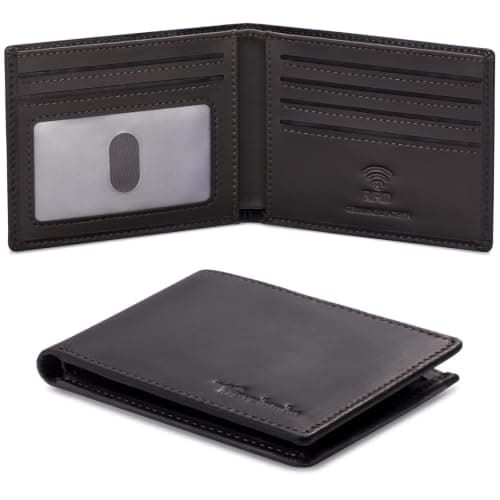
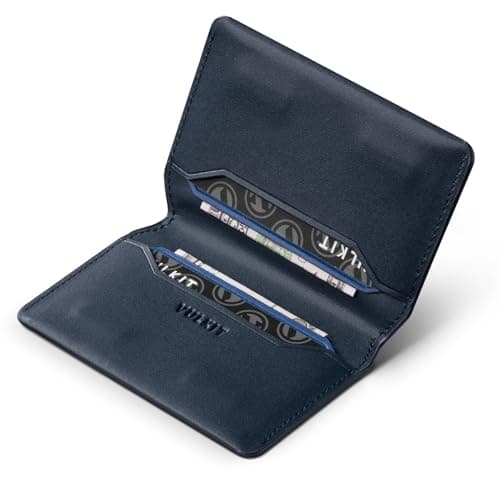
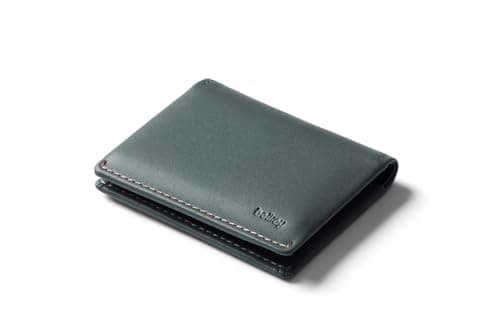
What a small wallet does is stop it coming back. A twelve-slot bifold with a zip pocket will refill over eighteen months, because capacity is an invitation and nobody audits their wallet twice. A four-slot holder physically cannot absorb the birth certificate, the blank check and the spare key. That is a real mechanism and it is the only reason to spend money here: the ceiling is what keeps the purge permanent.
So the three picks below are chosen on one rule — a published, low card ceiling, with no zip pocket, no expanding gusset and no second compartment that can quietly become a filing cabinet. They are not the best wallets on this site in general; they are the ones whose shape agrees with this page. If you want the thinnest end of that argument, the two-and-three-card page is the extreme version, and slim wallets is the broader category.
What we are not going to tell you
That any of this prevents identity theft.It reduces what a lost wallet gives away. Most identity theft does not start with a dropped wallet, and we are not qualified to advise you on fraud response, credit freezes or police reports. Your bank and the relevant federal agency are the right sources for that, and your card issuer's dispute line is the first call.
A number for how much identity theft costs. Figures circulate and we have not verified any of them, so we are not repeating one to make a point.
That you need to carry an insurance card, or that you must not. That is a personal medical judgment and it is genuinely contested. We have told you it is a decision.
Prices, and what we earn
Prices on this page come from the retailer and are timestamped; where one cannot be verified you will see “check current price” instead of a number. We earn a commission if you buy through our links — and the entire recommendation of this page is a ten-minute job you do at your kitchen table for nothing.