Skip to content
Hide Thread

EDC · EDC & Tech Wallets

How much cash should you carry in your wallet?

Cash is the thing people blame for a fat wallet and it is almost never the cause. The arithmetic, the travel rules, and how to size a float you will actually use.

By Stephen V.Updated How we research
#ad

We earn a commission when you buy through our Amazon links, at no extra cost to you. It never affects our picks, and we say so when the cheaper wallet is the better buy. How this works.

For everyday carry in the US, somewhere between $40 and $100 in small notes covers the realistic cash-only situations — a tip, a parking meter, a cab, a market stall, a card reader that is down — without turning your wallet into a safe. And the good news is that it is almost free: a Federal Reserve note is 0.0043 inches thick, so ten of them folded in half twice add under 0.09 inches to your wallet. That is less than three payment cards. If your wallet is fat, cash is almost certainly not why.

The arithmetic, because it settles the argument

A US note measures 6.14 by 2.61 inches (156 by 66.3 mm), is 0.0043 in (0.11 mm) thick and weighs about a gram. A payment card, by contrast, is 0.76 mm thick under ISO/IEC 7810 — roughly seven times a single note.

Fold a note in half for a bifold's bill channel and you double the thickness; fold it twice for a clip or a slot and you quadruple it. So:

  • Five notes, folded once: about 0.043 in. Less than two cards.
  • Ten notes, folded twice: about 0.086 in. Less than three cards.
  • Thirty notes, folded twice:about 0.26 in — now you are feeling it, and that is a float of hundreds of dollars.

For comparison, an empty leather card slot costs roughly 0.035 to 0.040 in of closed thickness, derived from ten published figures on the thickness guide. One unused slot costs you about as much as four or five folded notes. The bulk is in the construction and in the cards and receipts, not in the money.

How to size your own float

Three questions, in this order.

What is the largest cash-only thing you hit in a normal month? Not the emergency you imagine — the actual one. For most people that is a tip, a taxi, a barber or a market, and it lands somewhere under $60. Carry that, in small notes, and you have covered the real cases.

Are you carrying for payment or for failure? These want different money. A payment float is small notes, used and replenished. A failure float — the card declines, the terminal is down, the phone is dead — is one larger note that lives behind your ID and never gets spent. Many people are better served by a $50 or $100 note folded flat in a slot they never open than by a thick stack they churn.

What is the fold costing you? If your wallet folds notes twice, the same money is twice as thick as it needs to be. A wallet with a full-length bill channel folds once; a long wallet does not fold at all. If cash is a real part of your carry, the format matters more than the amount — which is what bifold versus long wallet is about.

Three wallets that handle cash well

These are not the three best wallets we rank — that is the main roundup. They are the three that treat cash as a first-class passenger rather than an afterthought: one with a proper bill channel, one that stays slim while keeping it, and one that carries notes on a clip so an empty wallet is genuinely flat.

The short answer

Quick picks

#ProductBest forScorePrice
01
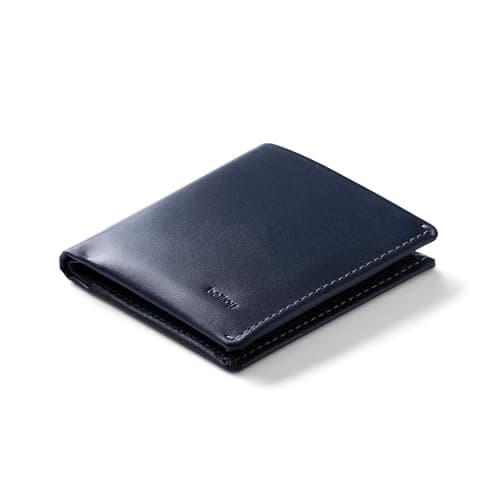
Bellroy Bellroy Note Sleeve
Bellroy Note Sleeve

The default recommendation in this whole category: a genuinely slim bifold that still swallows cash and up to eleven cards.

Best overall
8.0
$95.00Amazon
02
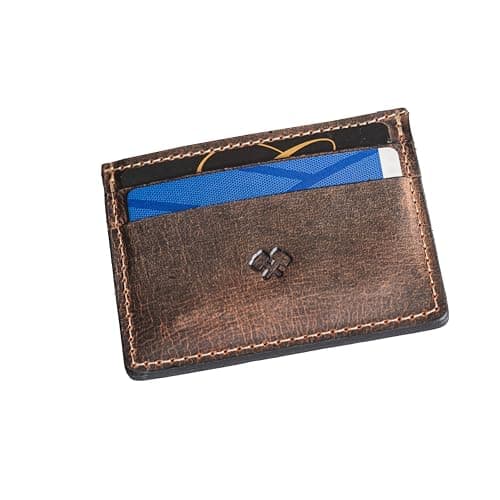
Main Street Forge Main Street Forge Slim Wallet
Main Street Forge Slim Wallet

The smallest wallet the brand makes, and the only one whose listing publishes an exact slot count: five slots rated for up to eight cards.

Best Main Street Forge for a minimal carry
7.6
$39.99Amazon
03
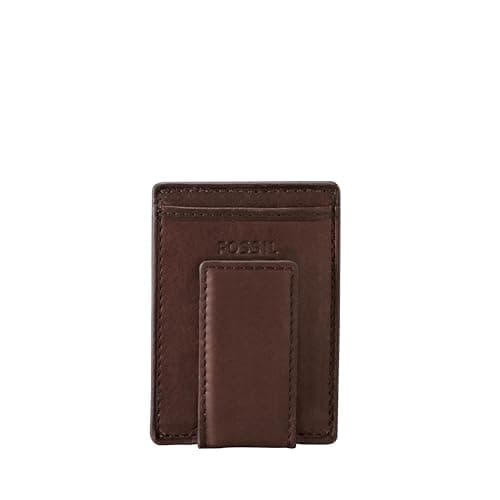
Fossil Fossil Ingram Magnetic Card Case
Fossil Ingram Magnetic Card Case

A leather card case with a magnetic money clip on the back — the classic 'cards in front, cash clipped behind' carry from a mainstream brand.

Best leather money clip
7.2
$55.00Amazon

#ad · Live prices from the Amazon Product API, as of October 9, 2026. Where we have no verified live price, we show none — we would rather leave a gap than print a number that has rotted.

Side by side

The spec table

Every published spec that decides fit and function, side by side — with a dash wherever the maker does not publish the figure, never a guess.

ProductTypeLeatherCardsRFIDCash
Bellroy Note SleeveSlim bifoldEnv-certified top-grain4–11OptionalYes
Main Street Forge Slim WalletSlim walletFull-grain5 slots (up to 8)—Yes
Fossil Ingram Magnetic Card CaseCard case + money clipGenuine leather4–6NoMagnet clip

In detail

The picks, in full

01
Bellroy Bellroy Note Sleeve

Best overall

Bellroy Note Sleeve

BifoldTop-grainUp to 11 cardsRFID option
8.0/10

The default recommendation in this whole category: a genuinely slim bifold that still swallows cash and up to eleven cards.

Slimness
8
Leather
8
Capacity
8
Build
9
Value
7

Pros

  • Slim enough for a front pocket while still folding around cash — the balance most people actually want
  • Environmentally-certified leather and Bellroy's three-year warranty back the price
  • A pull-tab lifts your everyday cards into reach, and an RFID edition exists if you want it

Cons

  • $95 is real money next to the $10–$25 budget wallets that carry the same cards
  • The leather is top-grain, not the full-grain a heritage maker would use at this price

Skip this one if…

…you want the thinnest possible profile with no cash — a dedicated cardholder like the Slim Sleeve or a Travelambo card holder disappears in a pocket where a bifold still has a spine.

$95.00· View on Amazon

Price as of October 9, 2026. Prices change — Amazon's is the one that counts.

#ad · we may earn a commission from this link to Bellroy Note Sleeve

02
Main Street Forge Main Street Forge Slim Wallet

Best Main Street Forge for a minimal carry

Main Street Forge Slim Wallet

Slim walletFull-grain5 slots / up to 8 cardsMade in USA
7.6/10

The smallest wallet the brand makes, and the only one whose listing publishes an exact slot count: five slots rated for up to eight cards.

Slimness
9
Leather
9
Capacity
4
Build
8
Value
8

Pros

  • Five slots rated for up to eight cards is a published, specific number — most of this brand's listings never give one at all
  • The thinnest body in the line, which is the whole reason to buy a minimalist wallet rather than a bifold
  • Full-grain leather and US small-batch assembly, same as the more expensive wallets above it

Cons

  • The warranty bullet says "manufacturer-backed" rather than lifetime, unlike the classic bifold and trifold listings, so the coverage on this specific model is not spelled out
  • Five slots is a genuine ceiling — this is a wallet you have to edit your carry down to, not one you grow into
  • No RFID and no ID window are claimed on the listing

Skip this one if…

…you carry an ID you show often or more than a handful of cards. The front-pocket slim bifold above holds more for the same money.

$39.99· View on Amazon

Price as of October 9, 2026. Prices change — Amazon's is the one that counts.

#ad · we may earn a commission from this link to Main Street Forge Slim Wallet

03
Fossil Fossil Ingram Magnetic Card Case

Best leather money clip

Fossil Ingram Magnetic Card Case

Card case + clipLeather4–6 cardsMagnet clip
7.2/10

A leather card case with a magnetic money clip on the back — the classic 'cards in front, cash clipped behind' carry from a mainstream brand.

Slimness
9
Leather
7
Capacity
5
Build
8
Value
7

Pros

  • A strong magnetic clip holds folded bills securely on the back while cards sit in front
  • Fossil's finishing and gift packaging are a step above the no-name money clips
  • Slim, pocketable and a genuinely versatile everyday carry

Cons

  • No RFID blocking on this model
  • The magnet is strong but a big fold of cash can still slide if overloaded

Skip this one if…

…you want to carry more than a few cards or you hate a clip's exposed cash — a traditional bifold hides and holds more.

$55.00· View on Amazon

Price as of October 9, 2026. Prices change — Amazon's is the one that counts.

#ad · we may earn a commission from this link to Fossil Ingram Magnetic Card Case

Cash and travel: the one rule that actually exists

Domestically there is no limit on how much cash you may carry, and airport screening is looking for threats rather than money — large amounts of cash can attract questions at a checkpoint, but carrying it is not an offence.

Crossing a US border is different, and the rule is specific. U.S. Customs and Border Protection states that “Federal law mandates that when entering or leaving the United States you must report amounts exceeding $10,000 to U.S. Customs and Border Protection”, using FinCEN Form 105. Two details catch people out: there is no cap on the amount you may carry — only an obligation to report it — and for a group traveling together the threshold applies to the collective total, not to each person. The money is only at risk if you fail to declare it.

If you are carrying meaningful cash abroad, split it: a working float in the wallet and the rest somewhere else. A passport holder with a cash channel is the usual answer, and the picks are on the travel wallet roundup. Note also that a wallet sized for a US note is not sized for every currency — euro notes get taller as the denomination rises, and the larger ones will stand proud of a US-dimensioned bill channel.

What actually makes your wallet fat

Having ruled out the cash, the real culprits, in order: unused cards at 0.76 mm each, empty slots at 0.035 to 0.040 in each, and receipts, which are the paper that genuinely accumulates because nothing in your routine removes them. Thick leather is almost never the problem: dropping a full leather weight on both outer panels of a wallet saves about 0.8 mm, which is the thickness of a single card.

The fix is a ten-minute job and it is set out in how to organize your wallet. Do that before you buy anything — a decent number of people who think they need a slimmer wallet need an emptier one.

If you have stopped carrying cash entirely

Then stop paying for a bill channel. An empty cash compartment is still two faces of leather you carry every day, and giving it up is the single biggest slimming move available: a card holder is about half the thickness of the bifold it replaces. The format's costs and the workarounds for the occasional note are in how to carry cash with a card holder, and the picks are on the card holder hub. We would rather say that than sell you a wallet for money you do not carry.
How we picked

We do not run a testing lab

We compiled the published manufacturer specifications for every wallet here — format, leather grade, card capacity, RFID and how it carries cash — did the cost-to-own math, and scored each pick against a published rubric. The scores are judgments from documented research — they are not measurements we took or wallets we wore in, because we do not own every wallet here and we are not going to pretend we do. Where a spec could not be verified we wrote "data unavailable" rather than guessing.

Questions

Frequently asked

How much cash should I keep in my wallet?
Enough to cover the largest cash-only purchase you actually make in a normal month, which for most people is somewhere between $40 and $100 in small notes. Add one larger note tucked somewhere you never open if you want a failure float. Beyond that you are carrying risk rather than convenience, because cash is the one thing in your wallet nobody can reverse for you.
Does carrying cash make a wallet thicker?
Barely. A Federal Reserve note is 0.0043 in thick, so ten notes folded twice add under 0.09 in — less than three payment cards, and roughly what two empty card slots cost you. If your wallet is uncomfortable, look at the cards, the slot count and the receipts first.
Can you carry cash through airport security?
Yes. There is no limit on cash for domestic US travel, though a large amount can prompt questions at a checkpoint. Crossing the border is where the rule bites: CBP requires you to report amounts exceeding $10,000 when entering or leaving the United States, on FinCEN Form 105. There is no maximum you may carry — only a duty to report it — and for a group the threshold applies to the combined total.
Is it better to use a money clip or a bill compartment?
A clip if you carry cash occasionally: it adds no thickness when empty, where a bill compartment is two faces of leather whether or not there is money in it. A compartment if you carry cash daily and want it enclosed and out of sight. The wallets built around each are on the money-clip roundup and the cash-and-cards page.

Keep reading

Receipts

Sources

We do not run a testing lab, and we do not pretend to. Every spec above traces to a manufacturer listing or a named standard; where we could not verify something, we say so on the page rather than quietly leaving it out. Read our full method.