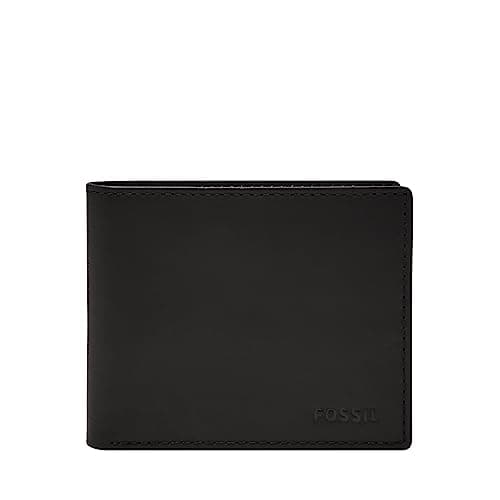
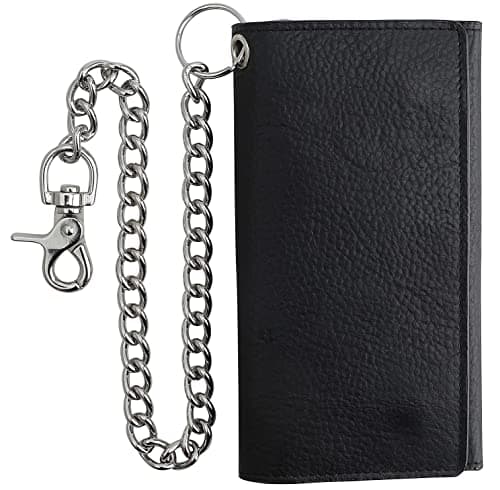
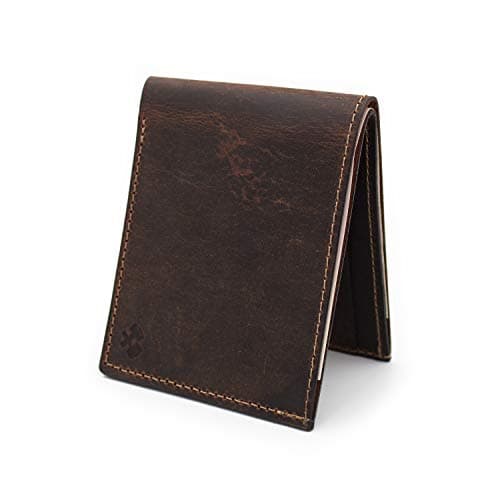
For almost everyone carrying a wallet in a trouser pocket, the answer is the bifold, and the Main Street Forge Bifold is the one we would buy — full-grain, made in the USA, six slots and nothing unnecessary stacked inside it. The long wallet wins in exactly one situation, but it wins decisively there: if your wallet lives in a bag, a briefcase or an inside jacket pocket and you want your notes and documents flat and uncreased, a long wallet does something no bifold can. If that is you, the F&L Classic long trifold is the best-made long option we rank.
The one number that decides this
A US Federal Reserve note is 6.14 inches long and 2.61 inches tall. A conventional bifold is about 4.5 inches wide closed. The gap between those two figures is the entire comparison.
A bifold is narrower than a banknote, so it folds your cash once, across the middle. A long wallet — sometimes sold as a breast-pocket wallet, a travel wallet or a clutch — is longer than a banknote, usually around 7.5 to 8 inches, so the note lies flat. Nothing else about these two objects is a real difference of kind: both are leather, both have card slots, both have a cash channel. One creases your money and fits in a pocket; the other does not crease your money and does not fit in a pocket.
Everything people argue about downstream — capacity, bulk, where it goes, how it looks — is a consequence of that choice rather than an independent variable.
What the fold actually costs you
Less than almost anyone expects, which is the first reason the bifold wins by default. A note is 0.0043 inches thick. Folded once it is 0.0086 in; ten notes folded once add under 0.09 inches to a wallet — less than three payment cards, each of which is 0.76 mm under ISO/IEC 7810. So the bifold's fold is cheap in bulk and cheap in wear: paper money is a consumable, and a crease in a note you will spend next week costs you nothing.
Where the fold genuinely matters is with things you are not going to spend. Boarding passes, event tickets, receipts you need to keep, cheques, documents and foreign notes you want to present uncreased all suffer from being folded twice and then sat on. That is the long wallet's real argument, and it is a narrower argument than its sellers make — but it is a true one.
Where each format actually wins
The bifold wins on carry, and carry is most of the decision
It fits a front or back trouser pocket, it fits a jacket pocket, and it does not announce itself. A long wallet in a trouser pocket is not a compromise, it is simply wrong — at around eight inches it will stand proud of the pocket, bend against your leg, and ruin both the wallet and the line of the trousers. If you do not habitually carry a bag, the comparison ends here and the bifold wins on a walkover.
The long wallet wins on flat capacity
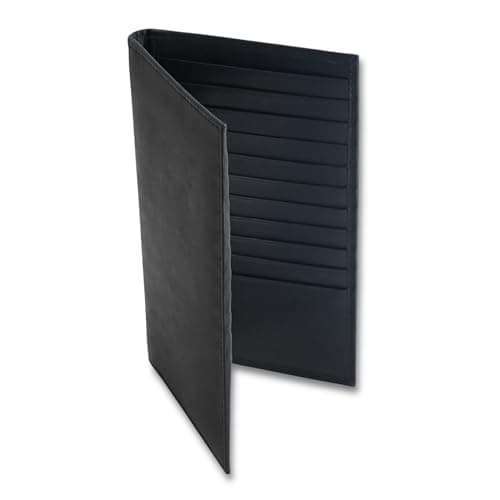
Because it is not constrained to a 4.5-inch footprint, a long wallet can run a full row of slots along its length and still close. The long options we rank publish sixteen to twenty card slots, against six to ten on a typical bifold. That is a genuine capability gap, and it comes with a genuine warning attached — see the next section.
The bifold wins on how it ages
A bifold is folded by design, so the spine is where the maker put the strongest leather and the heaviest stitching. A long wallet carried in a trouser pocket gets folded by accident, across a line nobody reinforced, and it takes a permanent set there. A long wallet that lives in a bag, by contrast, barely flexes at all and can outlast a bifold comfortably.
The long wallet wins for documents and travel
Boarding passes, currency that is physically larger than a dollar — euro notes get taller as the denomination rises, and the big ones stand proud of a US-dimensioned bill channel — and anything you need to hand over flat. This overlaps with a format we rank separately on the travel wallet page, and if travel is your actual reason, start there instead.
The trap on the long-wallet side
Those twenty slots are not free, and this is the thing to understand before you buy one. Across the ten wallets and card cases we rank that publish a closed thickness, the figures climb by roughly 0.035 to 0.040 inches per slot the maker added, against a card thickness of 0.030 in. An empty slot costs about as much thickness as a card does. The widest figure in our whole record is a twenty-four-slot zip organizer at 1.18 inches closed, against a quarter of an inch for a two-pocket single-piece bifold.
So a long wallet does not merely hold more — it is thicker before you put anything in it. If you buy twenty slots and fill eight, you are carrying twelve slots of bulk for nothing, in a wallet that already does not fit a pocket. The full derivation is in the thickness guide, and it is the single most useful thing to read before choosing on capacity.
Decide in three questions
1. Where does the wallet live? Trouser pocket, any pocket at all: bifold. Bag, briefcase, or an inside jacket pocket that stays on: a long wallet is now on the table. This question alone settles it for most people, and nothing further down overrides it.
2. Do you need anything to stay flat? If the honest answer is “only banknotes I am about to spend”, the fold costs you nothing and the bifold wins. If it is tickets, documents, cheques or larger foreign currency, the long wallet is doing real work.
3. How many cards do you actually carry? Not how many you own — how many you used last month. Under eight and a bifold holds them with less bulk; over about twelve and you are choosing between a long wallet and admitting that a dedicated card organizer plus a slim wallet is the better system. It usually is, and it is a cheaper answer than either format here.
The picks, and why these five
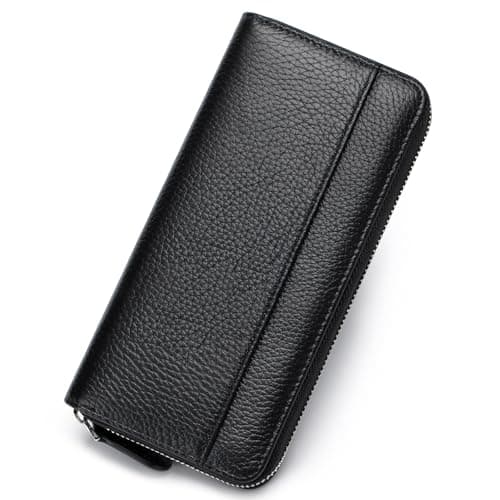
The ranking above runs across both sides of the comparison, by the same five-metric rubric we use everywhere, so the bifolds and the long wallets are scored against each other rather than in separate leagues. Two bifolds lead it: a full-grain US-made six-slot wallet and the classic high-street RFID bifold. Three long options follow: a full-grain sixteen-slot long trifold, a long zip clutch that takes up to eighteen cards, and a twenty-card long wallet built for a bag.
One disclosure about the long side, because it would be unfair to bury it: the best-made long option we rank ships with a chain. That is a feature for some readers and a dealbreaker for others; the chain is part of the product and we are not going to describe it as a long wallet that happens to have one. If the tether is what you want, it is ranked properly against its peers on the chain wallet page. If it is not, the two remaining long picks are the ones to look at.
What this comparison is not
It is not bifold versus trifold, which is an argument about folds and bulk inside the same footprint. It is not slim wallet versus bifold, which is an argument about how much to carry. And it is not card holder versus wallet, which is the argument about giving up cash entirely. This page is about one axis only: whether your money folds.
On the numbers we use
Every dimension quoted here is either a published standard or a figure from a seller's own listing title or feature bullets. None is taken from a marketplace item-dimensions table, which measures the shipping carton rather than the wallet. Where a listing publishes no thickness we say so instead of estimating one, and prices come live from the Amazon Product Advertising API with the date they were read — which is why no dollar figure appears anywhere in this prose.