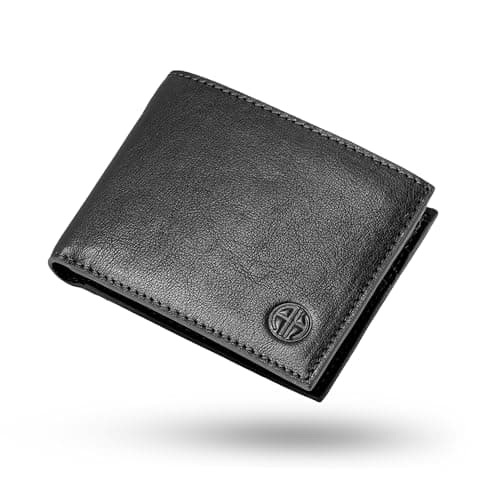
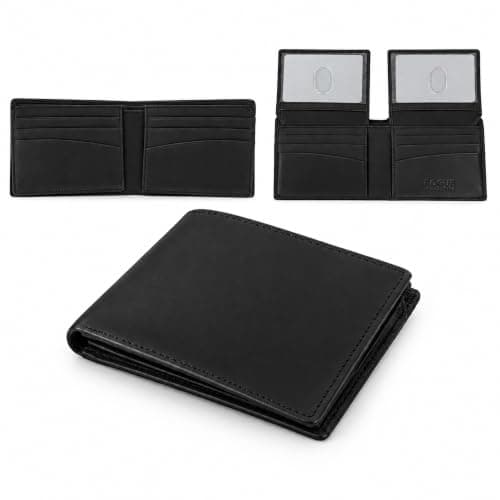
The short version: buy the Serman Brands Venture Bifold— full-grain leather, up to twelve cards and an ID window for around $35, which is the most complete spec sheet under the ceiling. The budget pick is the Timberland Wellington RFID Bifold at around $20, the cheapest name-brand bifold in our registry with a real warranty behind it. And the argument this page is built on: the bifold is the one wallet format where a $50 ceiling costs you almost nothing, because there is no mechanism to pay for and no design problem left to solve.
About the prices on this page.Every figure comes from our live price layer and carries its own “as of” date above the Quick Picks table — we do not type prices into copy, because a typed price is wrong the next morning. The band on this page was chosen against the price file pulled on 7 November 2026. Amazon prices move; if a pick has crossed the ceiling since, the number you see above will say so before we can, and that is deliberate.
Why the ceiling barely bites in this format
A bifold is a rectangle of leather folded once with a cash channel along the spine and card slots up the inside faces. That arrangement was settled long before any brand on this page existed. Nobody is iterating on it, which means almost all of the money above $50 in a bifold buys you leather, finishing and a name — not function.
Compare that with the categories where the ceiling does bite. A pop-up cardholder has a sprung aluminium cage in it, and the well-engineered ones cost $99. A MagSafe wallet has magnet grade and a stand to pay for. A bifold has a fold.
So the honest headline for this page is that three of the six picks state full-grain leather— the top rung of the grade ladder — and the rank-1 pick on our unconstrained bifold hub costs $95 and is top grain. You are not buying down a quality ladder by shopping here. You are declining to buy a brand.
What you actually give up
Three things, and they are all real:
- Slimness.This is the big one. The expensive bifolds are expensive largely because somebody worked out how to make them thin — slot depths, skived edges, a cash sleeve that does not double the spine. Under $50 a bifold is a bifold, and it will sit thicker in a pocket. If thin is the point, read slim wallets under $50 instead, which is the same ceiling applied to the other priority.
- Edge finishing. Turned, painted or burnished edges are hand work. Expect cut edges, which fray at the corners first.
- A warranty you would bother claiming. Two picks here come from brands with real service behind them; the rest are return-window propositions. At $20 that is a reasonable trade and at $45 it is less so, which is part of the ranking.
The one spec worth paying attention to here
Not the grade, as it turns out — it is the ID window. Four of these six have one and two have two, and it is the feature readers most often discover they need after buying a wallet without it. A window costs a seller almost nothing, so its absence at this price is a design choice rather than a cost saving. Our ID window roundup ranks the feature across the whole catalog.
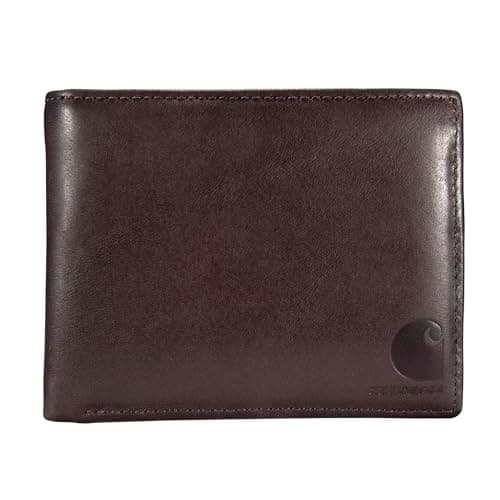
The second thing to watch is tannage rather than grade. The Carhartt here is oil-tanned, which is a different proposition from the chrome-tanned norm: softer, more water-tolerant, and it darkens with handling. On a jobsite that matters more than a rung on a ladder does, and our wallets for work page makes the argument in full.
The six, and who each is for
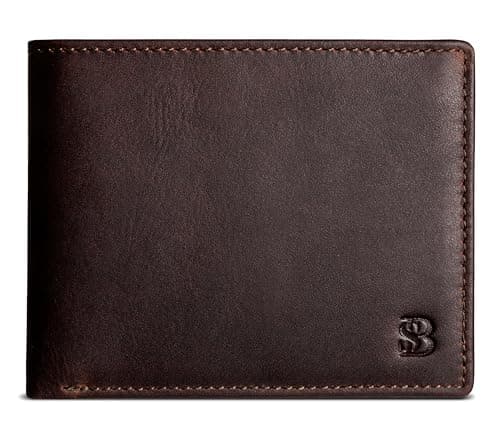
Serman Brands Venture Bifold— for most people. Full grain, up to twelve cards, an ID window, and the most claimed per dollar on this page.
AZURAHIDE Full-Grain Bifold — for anyone who needs twoID windows — a work badge and a licence, typically. Full grain, up to eight cards, and the cheapest double-window wallet we rank.
Rogue Wallet RFID Leather Bifold— for a full card load from a maker with a long track record. Top-grain cowhide, twelve slots plus two, RFID.
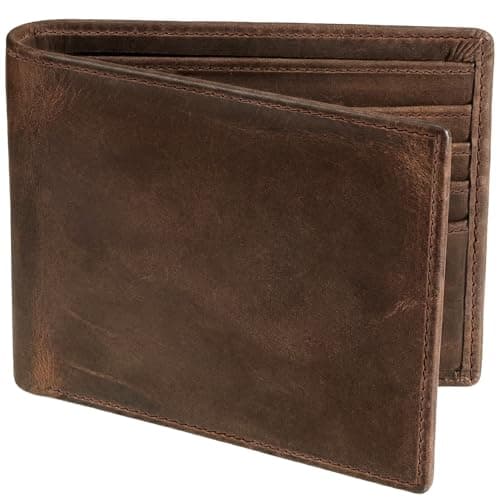
RUNBOX Full-Grain Crazy Horse Bifold— for a wallet that is supposed to look used. Full-grain crazy horse, two ID windows, up to twelve cards; it will mark in the first week and that is the design. See crazy horse wallets.
Carhartt Oil-Tan Leather Wallet— for a jobsite or a glovebox. Oil-tanned, a passcase, six to eight cards, and the most abuse-tolerant pick here.
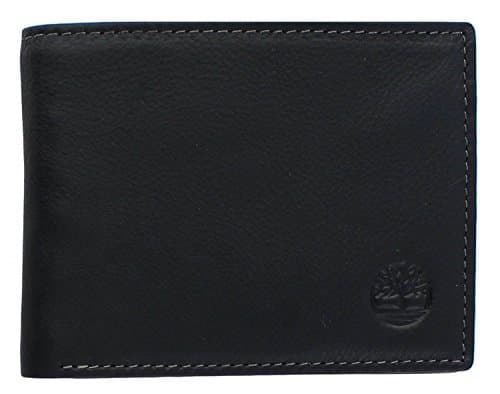
Timberland Wellington RFID Bifold— the budget pick. Around $20 from a brand that will answer an email, with six to eight cards and RFID. Buy this if the wallet is a replacement rather than a purchase.
Buying notes
The thickness you will actually carry
None of these six publishes a closed thickness, which is normal and unhelpful. The arithmetic: a payment card is 0.68 to 0.84 mm under the ID-1 standard, and each filled slot costs roughly 0.035 to 0.040 in of bulk once you include the leather around it. A twelve-slot bifold filled to capacity is close to half an inch of cards alone. Our bifold thickness guide does the sum properly.
Buy the format for where it sits
A bifold is a back-pocket or jacket-pocket wallet. If yours is going in a front trouser pocket, a conventional bifold is the wrong shape and you want a front-pocket cut or a vertical bifold, both of which exist under this ceiling. And if it is going in a back pocket you sit on all day, read is sitting on your wallet bad for your back before you fill it.
Advice that earns us nothing
If your current bifold still closes and the stitching is sound, the honest recommendation is to clean and condition it for about $10 rather than replace it for $35. Our conditioner roundup and our care guide will get you another couple of years out of a wallet you already own. Come back when a seam goes.
Trifold, if capacity is the real problem
A trifold holds more in the same footprint at the cost of a third panel of thickness, and the whole format lives under this ceiling. Our trifold roundup and bifold vs trifold cover the decision.