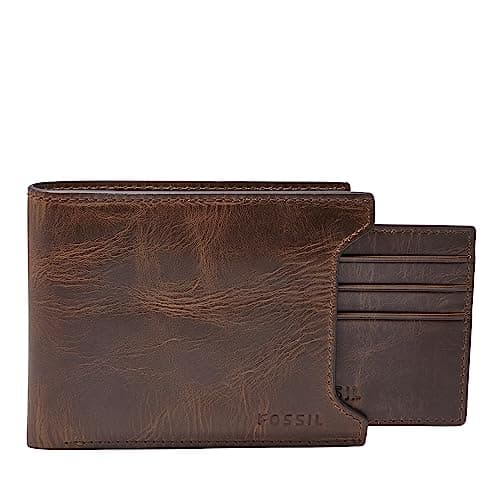
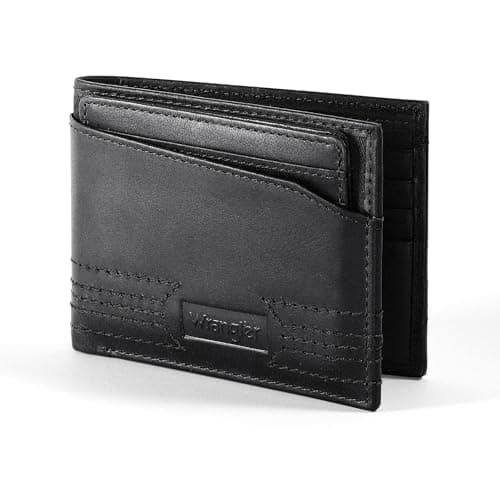
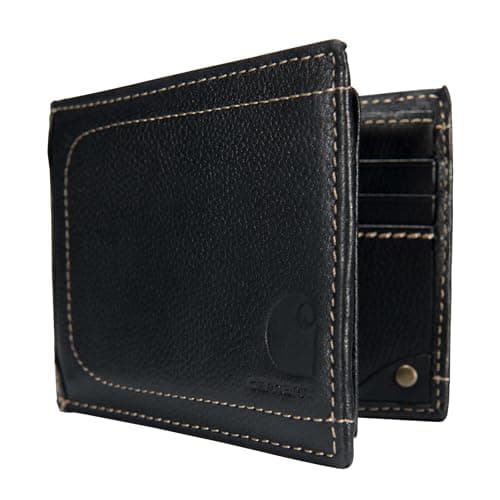
The short version:a wallet with a removable card holder is a bifold carrying a second, smaller leather object inside it — an insert that lifts, slides or snaps out so you can hand over an ID without handing over the wallet, or walk out with just the cards. The trade name is passcase. And here is the problem that sent you searching in the first place: the word “passcase” is used for both the removable kind and the fixed-flap kind, and most listings never say which one they are selling. So the inclusion rule for this page is mechanical and we are putting it at the top rather than burying it: the listing has to say the holder is removable or detachable. A title that only says “passcase” did not make the page, however good the wallet might be.
What the removable piece actually does — and what it costs you
There are exactly two reasons to want this format, and they are worth separating because different wallets serve them.
The first is handing something over. If your week involves showing a license at a counter, a badge at a door, or an insurance card at a desk, a removable holder means the thing you pass across is a two-inch sleeve rather than your entire financial life. That is a real advantage and it is the one a phone cannot replicate — you cannot hand someone your phone and keep using it.
The second is splitting your carry. The insert comes out, three cards go with it, and the bifold stays in a drawer. This is the use case most people actually buy the format for, and it is the one where the picks below genuinely differ: only one listing on this page states that the removable piece is a card case rather than an ID holder. An ID holder takes your license and perhaps one card behind it. A card case is a small wallet. If you came here wanting a detachable minimalist wallet, that distinction is the whole purchase, and it is the first thing we rank on.
What it costs you is thickness, and this is where the arithmetic is useful. Every card you carry is built to one international standard — ISO/IEC 7810 ID-1, 85.60 by 53.98 mm, which is the size of a payment card and, in many countries, of a driving licence and a national identity card too. The standard also fixes the thickness at 760 ± 80 µm, so between 0.68 and 0.84 mm per card. Our bifold thickness guidefound that each additional slot in a wallet adds roughly 0.035 to 0.040 inches of bulk — about what a card itself occupies.
A passcase insert is two more layers of leather wrapped around those cards, and they sit inside a wallet that already has its own panels. That is the honest trade: a passcase is thicker than the identical bifold without one, every time, by the thickness of the insert's own leather. Nobody in this category publishes that number — not one of the five listings below states a closed thickness. So if slimness is your priority, the format is working against you and you should be on our front-pocket bifold page instead. This page is for people who have decided the removable piece is worth a few millimeters.
The inclusion rule, and the listing it cut
We searched the category live on 2 November 2026 using the same catalog API we use to resolve every product we rank. The searches returned plenty of wallets with the word passcasein the title — and a meaningful share of them never say the passcase comes out. The clearest example is an Alpine Swiss bifold whose title is literally “Mens Passcase Bifold Wallet Genuine Leather”: in stock, from a brand already in our registry, and excluded from this page, because nothing in its listing states that the holder is removable and we will not supply a fact the seller did not.
That is not a knock on the wallet. It is the finding. Passcase is a shape-of-wallet word in the way pebbled is a texture word — widely used, no fixed specification behind it. If the detaching is the feature you are buying, the only safe way to shop this category is to require the words removable or detachable in the listing and ignore everything else.
What this category publishes, and what it hides
Three gaps are worth naming before you read the picks, because they are category-wide rather than faults of any one wallet:
- Exactly one listing here names a leather grade.The Carhartt says full grain. One says “genuine,” which is the bottom rungand not a compliment. One says “tumbled,” which is a finish and not a grade at all. Two just say leather.
- Three of the five publish no card count. On a wallet sold on its capacity-splitting trick, that is the number you would most want.
- Not one publishes a closed thickness, which, as above, is the single specification this format most needs to disclose.
There was one exception to all three, and we dropped it. A listing titled “Men's Wallet with Removable ID Holder … 11 card slots | 2 bill sections & zipper pocket | Slide-out insert for separate use | 4.5 x 3.75 in. | Up to 1.5 in. loaded” is the only product we found in the entire category that publishes both a closed footprint and a loaded thickness. It is not on this page because no brand can be named from the listing, and our standing rule is that we do not rank a product we cannot attribute. We would rather tell you it exists and that we would not stake our ranking on it.
How to choose a passcase, in four decisions
1. Decide what the removable piece has to hold
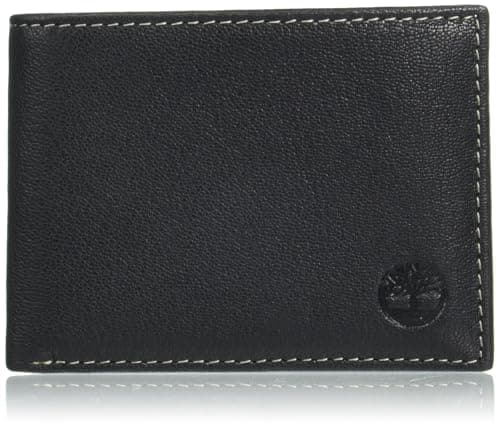
This is the only decision that really matters, and it splits the category cleanly. If you need to hand over one ID, a removable ID holder is correct and it is the cheaper half of the market — the Timberland does this for less than twenty dollars. If you want the insert to function as a standalone slim wallet, you need a listing that says card case, not ID holder, and on this page that is a single product at roughly four times the price. There is no middle option that states its capacity, which tells you something about how little this category is competing on the spec that defines it.
2. Require the word, not the format name
Search for removable card holder or detachable card holder, not passcase. The first two are claims; the third is a silhouette. Every pick on this page passes that filter and some well-reviewed wallets do not, which is the clearest piece of shopping advice on the page and it earns us nothing.
3. Treat the leather grade as a separate question from the mechanism
A removable insert is a hardware-and-stitching feature. It tells you nothing about the hide. On this page the ranking rewards the one wallet that states full grain, because a wallet with a moving part gets handled more than a plain billfold, and the grade is what decides whether the edges of the insert pocket look acceptable in year three. If you want to work the other way round — pick the hide first and accept whatever layout comes with it — start at full-grain leather wallets and expect to give up the removable piece.
4. Check the RFID claim on your exact variant
Three of these five state RFID blocking and one — the most expensive — does not mention it at all. If contactless shielding is part of why you are here, do not assume it travels with the brand or the price. Our honest read on whether RFID blocking is worth it is more skeptical than most, and a removable insert actually complicates it: a shielded wallet does nothing for the cards you have just carried out of it in an unshielded sleeve.
What a passcase is not
Three adjacent formats get confused with this one, and the difference is mechanical in each case:
- A card ejector is a sprung cage that fans cards out and stays in the wallet. If that is the trick you want, it is ranked at wallets with a card ejector. One live listing straddles both ideas — a detachable pop-up cage — and we kept it on the ejector side of the line deliberately, because what comes out of it is aluminum rather than a leather holder.
- An ID window is a clear panel set into fixed leather. It shows your license; it does not release it. Those are at wallets with an ID window, and the two features coexist happily — several picks here have both.
- A standalone cardholder has no host wallet at all. If you have realized mid-page that you want the small piece and not the big one, go to leather card holders and buy one object instead of two.
Where this format fits in a carry
The most common honest outcome of buying a passcase is that you carry the insert five days a week and the bifold on the days you need cash, which makes it a two-wallet system you bought as one purchase. That is a genuinely good deal if it works for you and a waste of leather if it does not, and the deciding factor is whether the insert holds enough. Which brings you back to decision one.