A front-pocket bifold is a compromise, and the honest version of this page says so in the first sentence. A bifold folds around cash, which is why most people still want one; a front pocket wants the thinnest, smallest object you can put in it, which is why the front-pocket wallets we rank on the hub are mostly cardholders, clips and one curved design. The wallets on this page sit in the gap between those two ideas: they fold, they take a bill or two flat, and their own listings say they are cut for a front pocket. Whether that last claim is true depends almost entirely on one number, and it is the number this page is organized around.
The rule for getting on this page
Three conditions, all mechanical, all checked against the listing itself on the day this page was published. First, the listing has to call the wallet a bifold, or publish a fold with a bill section, in its own title or bullets — a flat card sleeve that happens to bend is not a bifold, however it is marketed. Second, the listing has to say front pocket in its own words; we did not decide on the buyer's behalf that a wallet is small enough. Third, it has to state real leather. That third rule removed one wallet the site has ranked elsewhere for a year: the Buffway slim wallet's listing now describes it as synthetic leather, so it is not here, and we have corrected its entry on the pages where it does appear.
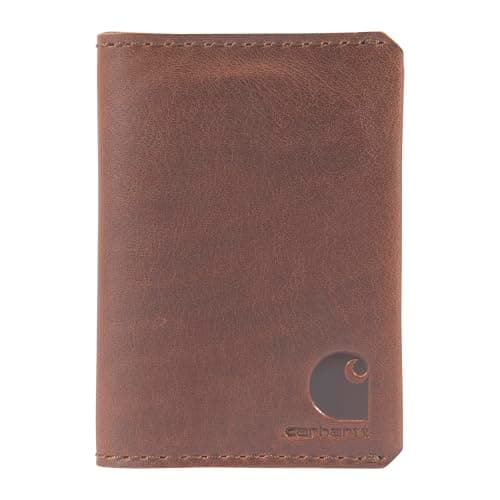
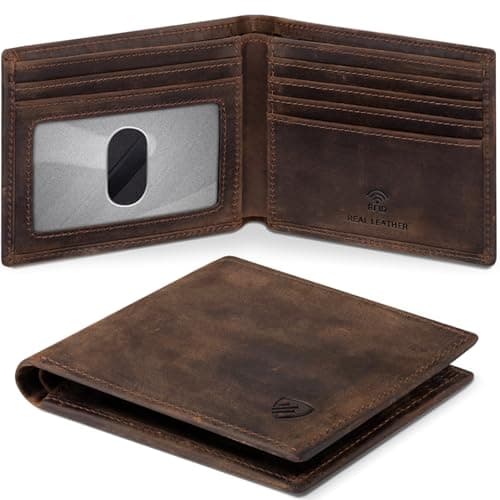
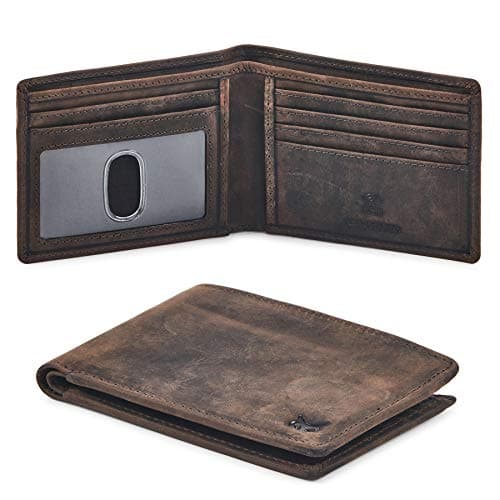
Eight wallets passed. Two are curved — the Rogue and the Polare — and get their front-pocket credentials from shape. One, the Carhartt, gets them from construction: a single piece of leather folded once, with nothing inside it. The rest are conventional slim bifolds whose sellers have decided that a half-inch wallet is a front-pocket wallet. Sometimes it is. The ranking below uses our standard five-metric rubric — slimness, leather, capacity, build, value — and the picks are listed in score order. The Main Street Forge wins on the strength of a full-grain hide and US assembly at a price the imported picks cannot answer; it is not the slimmest wallet here, and the copy says so.
The number that matters, and who prints it
Closed thickness is what a front pocket feels. It is also the figure most sellers in this category decline to publish, and the pattern is worth seeing in one place, because it says something about each listing's confidence:
- Carhartt Craftsman: 3.75 x 2.75 x 0.25 in, stated in the bullets. The only quarter-inch figure on the page, and the only wallet built in a way that makes it plausible.
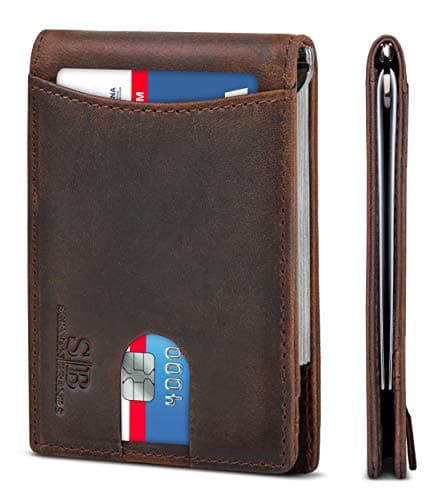
- Serman Brands: 3.9 x 2.85 x 0.5 in, stated in the bullets, for a wallet the same bullets rate at six to eight cards.
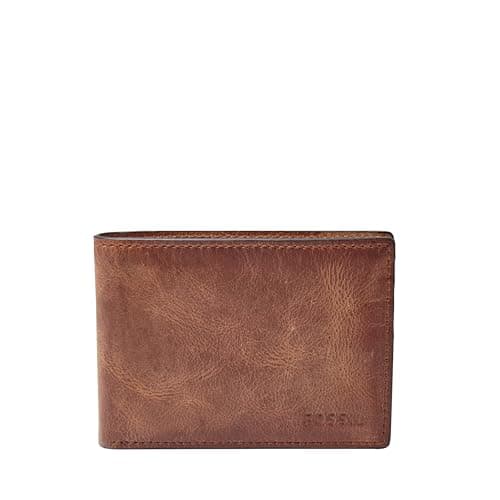
- Fossil Derrick: 4 x 2.75 x 0.5 in, stated as “MEASUREMENTS” in the bullets.
- RUNBOX: 4.3 x 3.5 x 0.5 in, stated in the bullets — the largest footprint here that prints one.
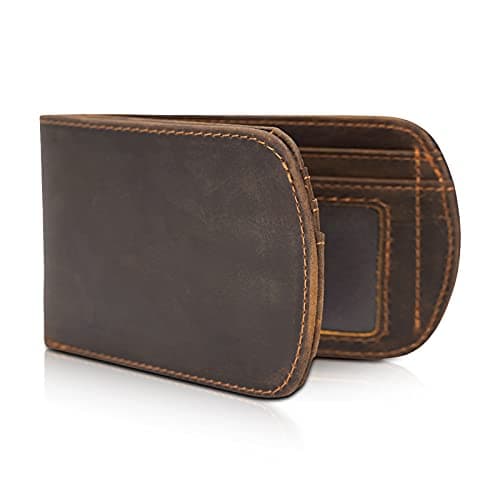
- Polare: 4.5 x 3.1 in, length and height only. The thickness is the one dimension the bullet leaves out.
- Rogue, Main Street Forge, Wise Owl: no wallet dimensions in the bullets at all. We have not filled the gap from Amazon's item-dimension table, because on several wallets that table measures the box.
Read that list against the rubric and the tension is obvious. The wallet with the best published thickness holds the fewest cards. The wallets with the most published slots are the thickest. Nobody in this category has abolished the trade-off; they have only chosen a point on it, and the honest job of a ranking is to tell you which point each one chose.
Flat, curved or single-piece: the three ways to make a fold fit up front
The flat slim bifold is the majority answer — Main Street Forge, Serman Brands, RUNBOX, Wise Owl and the Fossil all take a conventional bifold and thin it: fewer slots, lighter leather, no lining or a thin one. It works, up to a point, and the point is the half inch most of them publish. A flat rectangle at that thickness rides fine in jeans and chinos and prints visibly through dress trousers. Our slim wallet vs bifold comparison is the longer argument about whether you want a fold at all.
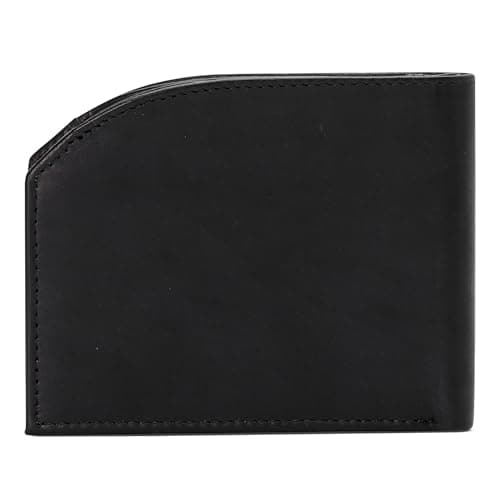
The curved bifold is Rogue's idea and Polare's imitation: round off the corner that would otherwise dig into the top of your thigh when you sit, so the wallet follows the line of the pocket instead of fighting it. It is a genuine ergonomic improvement in a front trouser pocket and an irrelevance anywhere else, which is why both curved picks carry a “don't buy if” note about jackets and back pockets. Rogue's listing also claims the curve reduces back pain; it offers no evidence and we do not repeat it as a benefit, here or in our Rogue Wallet review.
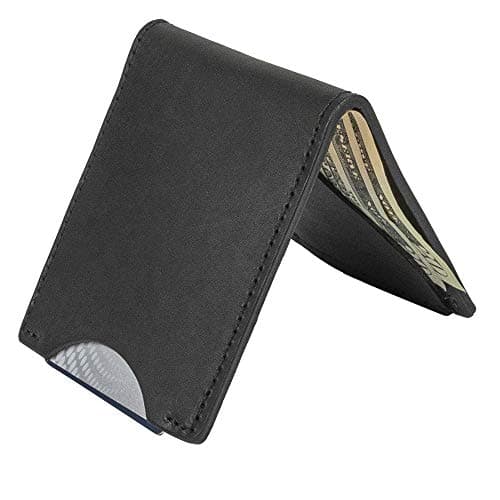
The single-piece fold is the Carhartt's answer, and it is the purest: one hide, cut and folded, two pockets and a grommet. There is no lining to add a layer, no window to add a layer, no stitched-in slot wall. That is how it publishes a quarter inch. It is also why it holds two pockets of cards and not nine, and why the moment you overfill those pockets the quarter inch is gone.
What the picks have in common, and where they split
Every pick folds. Six of the eight put cash in a bill section; two — the Serman Brands and the Fossil Derrick — put it on a clip inside the fold instead, which is faster to reach and holds far less. If you carry more than a few bills, that distinction matters more than anything else on the page, and our money clip vs bifold comparison exists for exactly that decision. Five publish an RFID claim; the Main Street Forge, Carhartt and Fossil do not, and we have not claimed it for them. Leather claims run from full-grain (stated and US-made on the Main Street Forge; stated and uncheckable on the Polare) through vegetable-tanned top-grain (Carhartt) and plain top-grain (Rogue) down to genuine (Serman Brands, RUNBOX, Fossil) and an unspecified “real leather” (Wise Owl). The grade guide explains why that ladder matters more on a wallet that lives against your leg than on one that lives in a bag.
Considered and not ranked
Fossil Rowan Front Pocket Bifold. A real query and a real product, but the listing describes a nylon body, and this is a leather site. Travelambo Slim Wallet Front Pocket. The best-selling budget front-pocket wallet on Amazon and a pick on our hub, but its listing never calls it a bifold and publishes a thickness of 0.12 in — that is a folded card sleeve, and it belongs on the hub, not here. Buffway Slim. Listing now states synthetic leather, as above. Timberland and Columbia front-pocket wallets. Both sell “front pocket” wallets on Amazon, but the listings describe a cardholder and a magnetic card case respectively, not a fold. Any wallet the listing calls a trifold. The query exists; the product mostly does not, because a trifold has two spines and is the least front-pocket format there is. Our trifold roundup is where those belong.
How to choose a front-pocket bifold
Start by being honest about how many cards you carry on a normal day, not the most you have ever carried. Two pockets (Carhartt) suits three to five cards. Three slots plus a window (Rogue, Fossil) suits five to seven. Six to nine slots (Polare, Serman Brands, Wise Owl, RUNBOX) suits people who will not thin the deck, and the price of that is thickness no listing will admit to once the slots are used. If you are between two of those groups, buy the smaller one; our guide to how many cards a wallet should hold makes the case that almost everyone carries more than they use.
Then decide how you want cash held. A bill section takes notes flat and hides them, and adds a layer of leather the full width of the wallet. A clip inside the fold (Serman Brands, Fossil) takes a few notes and nothing more, but costs nothing in width. If cash is occasional, the clip is the slimmer choice; if cash is daily, buy the bill section and accept the layer.
Match the shape to the pocket. A curved bifold earns its curve in a front trouser pocket, where the rounded corner follows the crease of your hip. In a jacket, a shirt pocket or a bag it is a slightly odd-looking flat wallet. If you move between pockets through the day, buy flat. Our guide to front-pocket vs back-pocket carry covers the comfort argument in full, without the medical claims some listings attach to it.
Weigh the leather claim against the price, not on its own. Full-grain from a US workshop that names its country of manufacture, at a mid-range price, is a claim you can act on. Full-grain Italian leather at a budget price from a listing that names no tannery and no origin is a claim you cannot check, and the sensible response is to enjoy the wallet and not pay a premium for the word. Genuine leather is genuine leather at any price and from any brand; a fashion name on the front does not change the grade printed in the material bullet.
What we would buy
For most people, the Main Street Forge: it is the only wallet here with a full-grain hide and stated US manufacture, it folds around cash properly, and it is priced under the imported fashion brand. If the curve is the point, the Rogue is the original and publishes a card rating and an RFID lining; the Polare is the way to try the shape for less. If slimness is the only thing you care about and you carry five cards, the Carhartt's quarter inch is the real thing. Spend the least on the Wise Owl and expect a two-year wallet. And read the Fossil Derrick's clip-not-billfold layout twice before paying the most on the page for it; it is a good wallet that a lot of people will buy for a job it does not do.