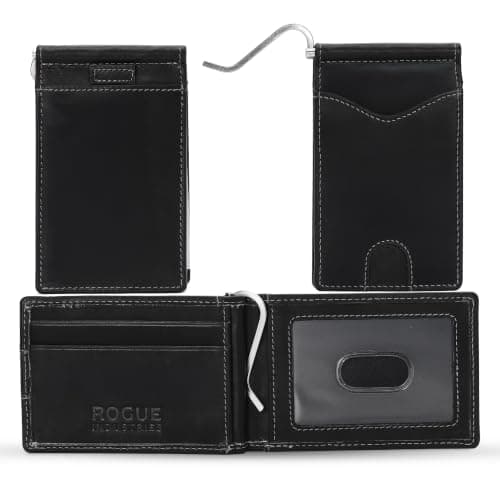
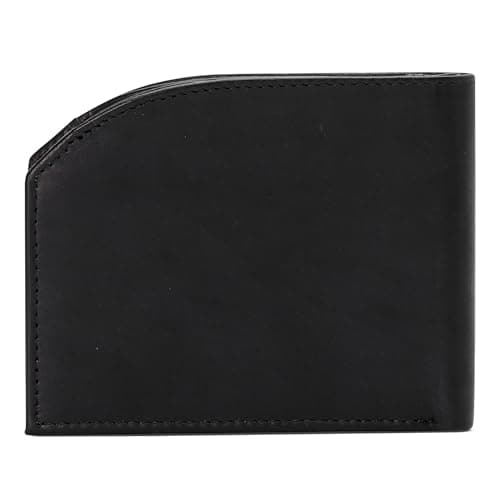
Most wallet brands sell a material or a look. Rogue sells a shape. According to the company's own about page, Rogue Industries was founded in 2007 by Michael Lyons, who was unhappy with his bulky back-pocket wallet and went on to obtain two patents on "a front pocket wallet design that was shaped to fit the cut of your front pants pocket." That curved wallet is still what the brand is known for, and it is the wallet we rank first in our best front-pocket wallets roundup.
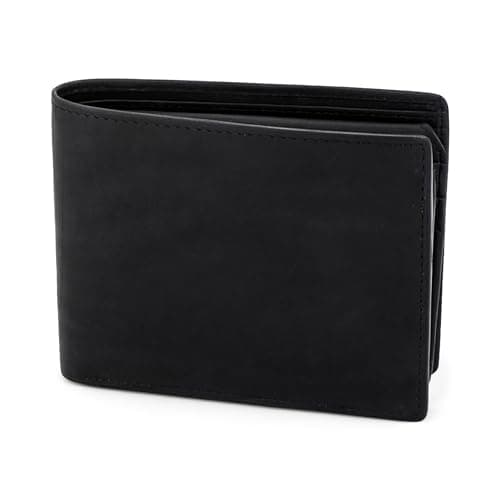
Shopping for one is harder than it should be. Across our searches of Amazon's catalog, the Rogue Wallet storefront returned more than a dozen listings: curved wallets in leather, bison and ballistic nylon, a slim RFID model in three colorways, a money-clip wallet, a flat twelve-slot bifold that is not a front-pocket wallet at all, card sleeves, a zip wallet and a checkbook cover. The titles overlap, the leather claims contradict each other, and the question many buyers care about most, whether the wallet is made in Maine, has a different answer depending on which listing you open.
This review is the map. As with every review on this site it is research, not a wear test: we have not carried these wallets, and everything below is compiled from Rogue's own Amazon listings and feature bullets, checked on 2026-09-16, plus three pages of the brand's own website, exactly as our published methodology describes.
What Rogue actually designed
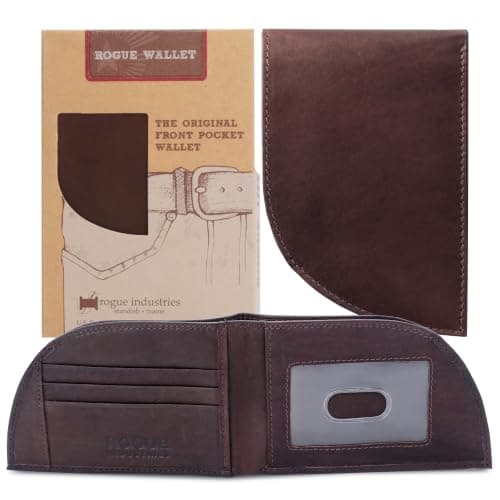
A normal wallet is a rectangle, and a rectangle is the wrong shape for a front trouser pocket, which is why a flat bifold tends to sit crooked in one and press into your thigh when you sit. Rogue's homepage describes its answer as a wallet "curved to follow the shape of your pocket, slim enough to disappear." The listings describe the same thing as a rounded silhouette that matches the contour of the pocket, so the wallet slides down into it rather than wedging across it.
That is a real design idea, and it is also a narrow one. The curve does its job in exactly one place: a front trouser pocket. In a jacket, a bag or a back pocket it is simply a wallet that does not lie square. So the first question in any Rogue purchase is not which model, it is where you carry. If you are still deciding whether to move your wallet to the front at all, our front-pocket versus back-pocket guide makes that case first.
Two of the ranked listings go further and say the curve reduces or eases back pain, and the brand's about page says its founder was convinced his old wallet was causing his. None of those pages offers evidence, and none is a medical source, so we have not repeated the claim as a benefit on any pick below. What is uncontroversial is simpler: a wallet in your front pocket is a wallet you are not sitting on.
Which Rogue wallets are made in Maine?
This is the finding that matters most, and one this site had partly wrong until this review.
Rogue's FAQ answers the question directly. Asked "Are all of your products made in Maine?", it says: "No. Our Made in Maine Collection is made in the USA. Products not in the Made in Maine collection are not." The company's workshop is in Standish, Maine, and the brand tells its story from there, which makes it easy to assume everything with the Rogue name is stitched in Maine. By the brand's own account, it is not. Rogue is a mixed-line brand: some of its wallets are made in Maine and some are imported, often under very similar names.
Now apply that to what is actually for sale on Amazon. Of the six Rogue wallets we rank:
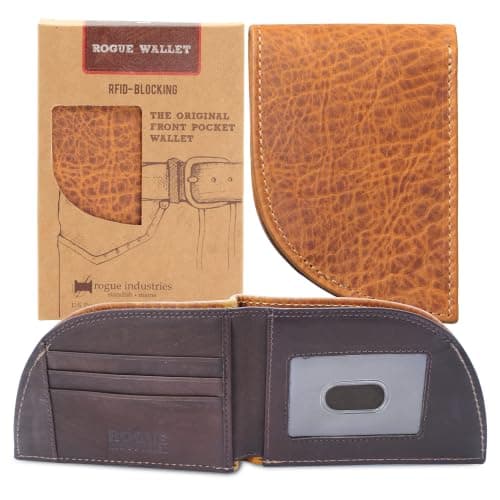
- The bison front-pocket wallet is the only listing that states US manufacture, in a bullet headed "Handcrafted in Maine", and Rogue's Made in Maine collection does include an American bison leather front-pocket wallet.
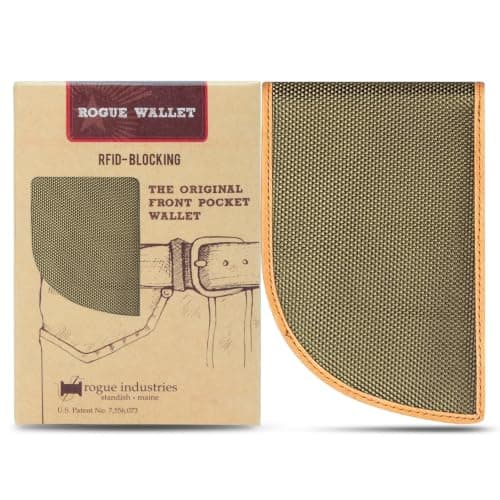
- The ballistic-nylon front-pocket wallet states the opposite in its own bullets: imported from India.
- The other four (the slim RFID wallet, the curved leather bifold, the money-clip wallet and the twelve-slot bifold) say nothing about where they are made, and none of their names appears in the Made in Maine collection on Rogue's website. Under the brand's own FAQ, you should not treat them as US-made.
The curved leather bifold deserves a specific warning. Rogue's website sells a product named "Rogue Front Pocket Wallet - Classic Made in Maine Edition" in that collection. The Amazon listing for the curved top-grain bifold looks like the same classic wallet, but its title and bullets never use that name and never mention Maine. It may be a different product, or it may be the same one described badly; either way the listing does not claim it, so we do not claim it on the seller's behalf. If US manufacture is the reason you want a Rogue, buy the bison wallet on Amazon, or buy the named Made in Maine edition from Rogue directly.
About this site getting it wrong: before this review was published, the product notes on the nylon Rogue in two of our roundups said Rogue's leather wallets are made in Maine and told readers who wanted US manufacture to "buy the leather model." On the brand's own FAQ that advice could have sent a reader to an imported wallet, so it now points at the bison listing instead. Our made-in-USA leather wallet roundup, which admits a wallet only when its own listing states US manufacture, had already ranked the bison wallet and nothing else from Rogue. That is the listing-first rule working as intended.
Full-grain, top-grain or "genuine": the line does not agree with itself
The second thing to read on any Rogue listing is the leather bullet, because the storefront uses at least four different descriptions and they are not interchangeable.
The slim RFID wallet, the curved leather bifold and the twelve-slot bifold all say top-grain. The ballistic-nylon wallet says top-grain too, but only for its trim and interior; the body is nylon. The money-clip wallet says only genuine leather, which can mean plain "real leather" or can be the trade name for a grade below top-grain, and the listing does not say which. The bison listing says bison and never states a grade. And one listing, a "Slim Front Pocket Leather Wallet" in a Redline colorway, says full-grain, while a near-identical "Slim Leather Front Pocket Wallet" in Black/Redline from the same storefront says top-grain.
Those two Redline listings are the clearest example of why a title is not enough. They are different ASINs at different prices, their titles differ only in word order and color name, and one claims a higher grade than the other. The full-grain listing publishes only three feature bullets and no layout at all (no card count, no ID window, no bill section), which is why we could not score its capacity and have not ranked it. If full-grain matters to you, that is the listing to look at, and our full-grain versus top-grain versus genuine explainer covers whether the difference is worth paying for on a wallet.
The warranty lives on Rogue's website, not on Amazon
Rogue publishes a warranty, and it is a clear one. The FAQ calls it a two-year guarantee that "covers defects in materials (leather, rivets, zippers and such) and workmanship for two years from the date of purchase," with covered products "repaired or replaced at no charge." It excludes wear and tear from normal use, naming worn edges and creased leather, along with final-sale items and factory seconds.
None of the six Amazon listings we rank mentions it. Not one feature bullet refers to a guarantee, a warranty or a return policy. We are not suggesting an Amazon purchase is excluded, and the FAQ does not say that. We are pointing out that the terms are not on the page you buy from, so if the warranty is part of your decision, read it on Rogue's site before you order. One part of the policy is clearly tied to where you buy: the FAQ's 30-day return and exchange window is written for "any unused product purchased directly from Rogue Industries," with embossed items excluded. An Amazon order goes back through Amazon.
For context, two years covering defects is a narrower promise than the lifetime warranty some leather makers print on their listings, which our Main Street Forge review checks listing by listing. It is a promise that the wallet was made properly, not that it will last forever.
Which Rogue wallet should you buy?
The ranked list below orders the six by overall score on our standard five-metric wallet rubric (slimness, leather, capacity, build and value). That rubric does not score the curve, which is why the one flat back-pocket bifold in the line sits second. If front-pocket carry is your reason for buying Rogue, read the list with that wallet taken out. The short version:
Buy the slim leather front-pocket wallet with RFID if you want one Rogue and do not want to think about it further. It is the only model that combines the curve, an RFID lining, an ID window, a full-length bill section and a published six-to-eight-card rating. It is top-grain rather than full-grain and it is not a Made in Maine product, and it is still the most complete wallet the brand sells on Amazon.
Buy the curved leather bifold if you carry very little and want the thinnest version of the original idea. Its listing publishes a 0.25in thickness and a hard limit of three cards plus an ID. It has no RFID lining, and the listing does not claim one.
Buy the bison wallet if US manufacture is the point. It is the only Rogue on Amazon whose listing says handcrafted in Maine, it has an RFID lining, and it sits at the top of the line's price range for the same small three-slot layout as the nylon model. You are paying for the hide and the workshop, not for capacity.
Buy the ballistic-nylon wallet if you want the curve in a material built to take abuse. It has RFID, and it is the least leather wallet on a leather site: a nylon body with leather trim, imported. It is also the Rogue our front-pocket roundup ranks first, on the strength of the shape.
Buy the money-clip wallet if you carry a few bills and want them fast. It is the only Rogue we rank that clips cash on the outside, and it carries the weakest leather description in the line. Our front-pocket money-clip wallet roundup compares that format across other brands.
Buy the twelve-slot RFID bifold only if you want the Rogue name on a conventional wallet. Its listing is refreshingly complete and honest that it is a hip-pocket wallet. It is also the one Rogue that does not do the thing Rogue was founded to do.
How to read a Rogue listing on Amazon
Four habits will stop you from buying the wrong one.
Read the model words, not the color. The slim RFID wallet is sold as separate Black, Brown and Black/Redline listings; the money-clip wallet as Black, Brown and Redline; the curved leather bifold as brown and distressed brown. Those are colorways of one product with separate stock and sometimes separate prices. What separates the actual models is the phrase in the title: slim leather front pocket, genuine leather bifold curved, ballistic nylon, bison, minimalist money clip, RFID leather bifold.
Read the leather bullet on the exact listing. As covered above, two Redline listings from the same storefront disagree about grade. Do not carry a claim from one colorway or near-twin over to another.
Trust dimensions in the bullets, not Amazon's size table. Only two of the wallets we rank publish their size in their feature bullets: the curved leather bifold at 5 x 3.4 x 0.25 inches and the twelve-slot bifold at 4.3 x 3.5 x 0.8 inches. The structured item-dimension tables on several other Rogue listings describe something far larger than a wallet (the bison listing's table reads 11 by 8 by 9 inches), so they cannot be measuring the wallet itself. We have not published a thickness for any Rogue whose bullets leave it out.
Read the title against the bullets. The curved leather bifold's title says "3 ID Slots"; its bullets say three card slots that hold up to three cards, plus one ID slot. When the two disagree, the bullet is usually the more specific claim, and it is the one we publish.
What else Rogue sells on Amazon, and why we did not rank it
The Angler front-pocket wallet is a vertical top-grain wallet with six double-capacity card slots, a rear ID window, a top-opening full-length cash compartment and a front display window holding a decorative fishing fly. Its listing publishes 3.5 x 3.75 x 0.2 inches and about 1 oz, and states no origin. On the day we checked it showed single-digit stock, and we chose not to rank a wallet a reader may not be able to buy by the time they click through. If the fly appeals to you, search it by name.
The leather and nylon zip wallet pairs a nylon exterior with full-grain inner leather, five card slots rated for ten cards, a cash slot and an expandable coin pouch. It is a zip-around rather than a front-pocket design, which is the format our zip-around wallet roundup covers.
The full-grain Redline slim wallet is the listing discussed above: the only Rogue front-pocket wallet we found on Amazon that claims full-grain leather, and one that publishes no layout, so there is no capacity we could honestly score.
Rogue also sells RFID-blocking card sleeves in ten-packs, a leather checkbook cover whose title says made in USA, and a leather accordion zip wallet. None is a front-pocket wallet. The sleeves answer a narrower question, whether you need RFID blocking at all, which our guide to whether RFID wallets are worth it takes on directly.
Is a Rogue wallet worth the money?
The Amazon line sits in the lower middle of the leather wallet market: above the budget RFID front-pocket wallets that crowd the bestseller lists, and well below the heritage workshops that sell direct. Within that bracket, what you are paying Rogue for is the curve, the design work behind it and a named company with a published guarantee. On most of these listings you are not paying for full-grain leather, and you are not paying for US manufacture.
That makes the value question personal. If you carry in a front pocket every day, the shape is the one thing a cheaper flat wallet cannot give you, and the slim RFID model is fair value for it. If you mostly carry in a jacket or a back pocket, the same money buys more leather or more features elsewhere. Our front-pocket wallet roundup ranks the Rogue against flat slim wallets from Bellroy, Travelambo, Buffway and others, and our cost-to-own method is the fairer way to compare a wallet you will keep for years against one you will replace.
Who should skip Rogue
Skip the brand if you carry in a back pocket, a jacket or a bag, because the curve is what you would be paying for and you would never use it. Skip the curved models if you carry more than a handful of cards: the published figures run from three cards on the curved leather bifold to six-to-eight on the slim RFID model, and a curved wallet overfilled stops sitting flat. Skip the curved leather bifold specifically if you need RFID blocking, because its listing does not claim it; every other Rogue we rank does, and our RFID-blocking wallet roundup has more options. And skip Rogue on Amazon if you want a US-made wallet in anything other than bison: on the brand's own FAQ the Made in Maine wallets are a separate collection, and apart from the bison wallet, the Amazon listings we ranked do not claim to belong to it.
What is left is a clear buyer: someone who has moved, or wants to move, a slim carry to the front pocket and wants a wallet cut for it by the company that designed the shape. For that person the slim RFID wallet is the one to start with, and the bison wallet is the one to buy if Maine matters.