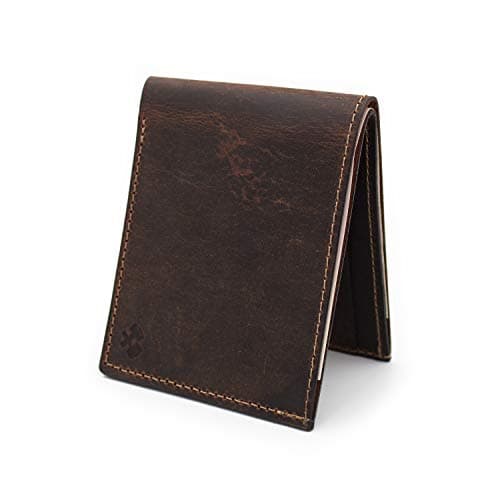
There is a hole in the middle of the leather wallet market, and Main Street Forge sits in it. Above them are the heritage American workshops — Popov, Saddleback, Ashland — who make beautiful full-grain wallets and sell them almost exclusively from their own websites. Below them are the thousands of Amazon listings that say "genuine leather" in the title and are assembled somewhere the seller would rather not name. Main Street Forge is one of the very few makers whose listings claim full-grain hide and American manufacturing and put the whole line on Amazon where you can actually buy it. That combination is why this review exists.
It is also why the brand is confusing to shop. Search their name and you get five different wallets, several of them photographed on the same wooden bench in the same eight colors, with titles that overlap so heavily that two of them are literally both called a front-pocket wallet. This review is a map: what the listings genuinely prove, what they quietly leave out, and which of the five is the one you should buy. As with every review here, it is research, not a wear test — we have not carried these wallets, and everything below is compiled from the brand's own published listings and feature bullets, which is exactly what our published methodology says we do.
What the listings actually prove
Two claims run through every Main Street Forge product page, and both are stated plainly enough to be checkable rather than implied.
The first is full-grain leather. Not "genuine leather," not "premium leather," not the weasel phrasing that fills this category. The bifold's bullets say "Handmade by American Craftsmen from Full Grain Leather." The trifold says "100% Full Grain Leather." The slim wallet and the front-pocket bifold both say full-grain. That matters more than any other spec on a wallet you plan to keep, because full-grain is the only grade that reliably darkens and softens instead of wearing flat — our full-grain versus top-grain versus genuine explainer covers why the difference is structural rather than marketing. If you are buying leather because you want a wallet that looks better in five years than it does in the box, the grade is the whole ballgame, and this brand publishes it.
The second is US manufacture. The bullets do not say "designed in America" or "American-inspired," the two phrases that let an importer sound domestic. They say produced in small batches by leatherworkers in the United States. That specific wording is why Main Street Forge products qualified for our made-in-USA leather wallet roundup, which only lists wallets whose own listing states US manufacture — a rule that eliminates most of the brands people assume are American.
Put those two together and you get the brand's actual pitch, which is narrower and more honest than the copy suggests: this is heritage-maker material and provenance at a mid-market price, sold through Amazon. You are not buying engineering. You are buying hide and a zip code.
The two things the entire line does not have
Here is the finding that is worth the price of reading this page. Across all five listings — the bifold, the front-pocket bifold, the slim wallet, the trifold and the passport holder — not one claims RFID blocking, and not one claims an ID window. Not as an option, not as a variant, not buried in the bullets. The line simply does not offer either feature.
Neither omission is a scandal, but both are deal-breakers for a specific buyer, and no Main Street Forge listing is going to warn you. If shielding is on your list, the honest move is to shop our RFID-blocking wallet roundupinstead — and if you are unsure whether you even need it, our guide on whether RFID wallets are worth it lays out what the shielding does and does not protect against. If you show an ID daily and want a window to flash rather than a card to dig out, our wallets with an ID window roundup exists precisely because that feature is easy to assume and easy to miss.
There is a coherent reason for both gaps. An RFID liner is a synthetic layer sandwiched inside the leather, and an ID window is a sheet of clear plastic riveted into a panel — neither is a thing a small full-grain workshop particularly wants to build. That does not make them less absent. It just means the brand is being consistent about what it is rather than careless.
The lifetime warranty is not on every listing
Main Street Forge advertises a lifetime warranty, and it is one of the strongest arguments for paying more than an import costs: a warranty is only as good as the company that has to honor it, and this one comes from the maker rather than from a marketplace seller who may not exist next year.
But it is not printed on every product page. The classic bifold, the trifold and the passport holder all carry the full "Lifetime Warranty Provided by Main Street Forge" bullet. The slim wallet's bullets say only "a manufacturer-backed warranty" — real, but not the same word. And the front-pocket slim bifold, the cheapest wallet in the line, has no warranty bullet at all. Its five bullets cover layout, card pockets, leather, US assembly and everyday carry, and stop.
We are not claiming the coverage is different. We are claiming that three of the five listings publish it, one hedges it, and one is silent — and that a buyer choosing between two near-identical wallets deserves to know which one puts the promise in writing on the page they are buying from. If the warranty is a reason you are considering this brand, buy the model that states it, or ask the seller before you order.
Which Main Street Forge wallet should you buy?
This is the question the brand's Amazon presence makes unnecessarily hard, so here is the short version before the detail below.
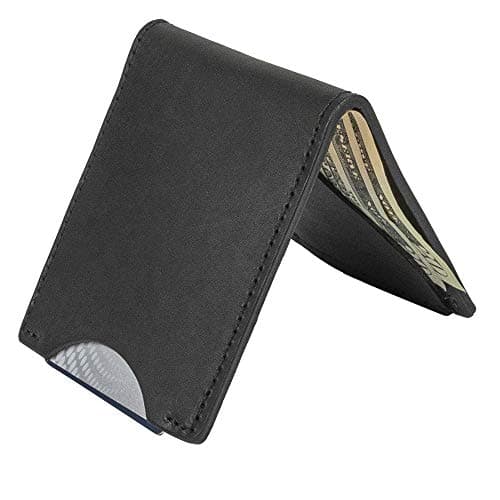
Buy the classic bifoldif you want a normal wallet. It is the only model with a published, generous layout — six card pockets plus a full billfold — and it carries the lifetime warranty language in full. It is the pick we already rank first in the made-in-USA roundup, and for most people it is the end of the search.
Buy the front-pocket slim bifoldif you want the same leather in a smaller body and you are trying to move a back-pocket wallet to the front. It is the least expensive wallet here and the curved end pockets are a genuinely good detail. Be skeptical of its "up to 12 cards" claim — a wallet cannot be minimalist and hold twelve cards at the same time, and if you actually load it that way you have rebuilt the bulk you were trying to escape.
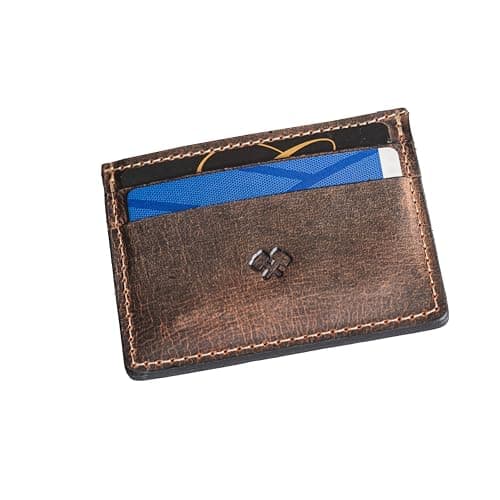
Buy the slim walletif you have already edited down. It is the only model in the line that publishes an exact figure — five slots, rated for up to eight cards — and it is the thinnest thing they make. It is also the one that will frustrate you fastest if your carry is not genuinely small; our guide to how many cards a wallet should hold is the right sanity check before you commit.
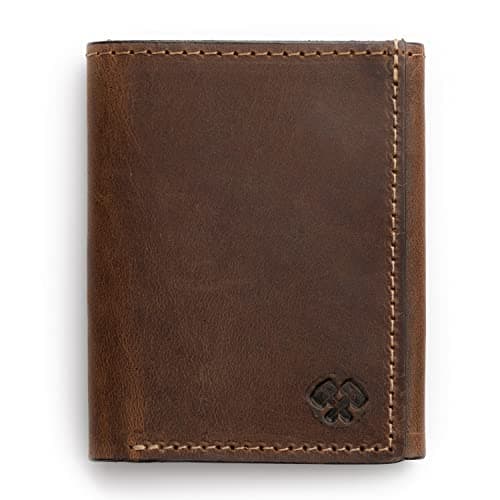
Buy the trifoldonly if you specifically want a trifold. Almost every trifold on Amazon is an import, so an American full-grain one is a real and unusual thing — but the format is the bulkiest way to carry the same cards, and the listing never publishes a card count at all, which is a strange silence on the model whose entire selling point is capacity. Our bifold versus trifold comparison is the decision to make before this one.
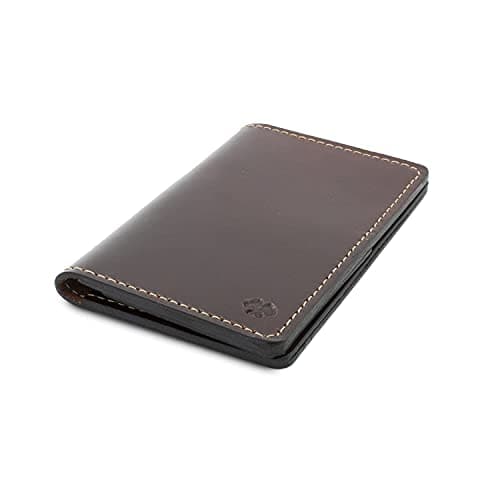
Buy the passport holder if you travel with paperwork, or if you keep a notebook. Its published size is 3.5 by 5.5 inches, which is Field Notes size, so it works as a pocket-notebook cover in the eleven months a year you are not flying. That dual use is the reason to prefer it over a cheaper sleeve; the organizers with pen loops and ticket slots live in our travel and passport wallet roundup.
How to read a Main Street Forge listing
Three habits will save you from buying the wrong one of these.
Ignore the color name and read the title.The same wallet is sold as Bootlegger Brown, Midnight Black, Charred Oak, Tobacco Snakebite, Whiskey Barrel, Avalanche Gray, Chocolate Brown and Rio Latigo, each as its own Amazon listing with its own stock level and sometimes its own price. Those are colorways of one product, not eight products. What distinguishes the actual models is the word before "wallet" in the title: bifold, front pocket slim bifold, slim, trifold.
Watch the word "genuine."The trifold's title reads "Genuine Full Grain Leather." Read as English that means authentic full-grain hide, and the bullets back it up with "100% Full Grain Leather." But "genuine leather" is also the trade name of a specific, much lower grade, and putting the two words next to each other is exactly the ambiguity that sends buyers to our leather grade guidein the first place. On this listing the bullets settle it in the brand's favor. On a listing you find elsewhere, they very often will not.
Check the stock line before you fall in love with a color. Small-batch production shows up on Amazon as thin inventory: on the day we checked, several colorways showed single-digit or low-double-digit stock counts. The color you want may simply not be there, and the model matters far more than the shade.
What else the brand makes
Main Street Forge also sells a leather EDC pouch — a belt-clip multitool sheath whose listing states premium veg-tanned full-grain American steer hide and names the tools it fits, including the Leatherman Wave, Free P2 and P4, Charge, Rebar and Signal, plus the Gerber Truss and SOG PowerAssist. It is worth knowing about if you carry a multitool, and it is the only product in the line whose listing names the tannage rather than just the grade.
We have deliberately not ranked it above. Every product on this site is scored on the same five-metric wallet rubric — slimness, leather, capacity, build, value — and three of those five are meaningless applied to a knife sheath. Scoring it anyway would produce a number that looks authoritative and means nothing, which is the opposite of what a score is for. If you want it, search the brand; we would rather leave a link on the table than publish a fake ranking.
Is it worth the money?
The line sits in the middle of the market: well above the sub-$30 imports that dominate Amazon's bestseller lists, well below the heritage American makers who sell direct. The fair way to judge that is not the sticker but the annual cost, which is what our cost-to-own methodexists to compute. Full-grain leather from a maker with a warranty is the input that changes the math, because it is the grade that survives the years the math is spread across — our guide to how long leather wallets actually last is the honest baseline.
The catch is that the same money buys a great deal more features elsewhere. Import brands in this bracket routinely ship RFID shielding, an ID window, a coin pocket and a pull-tab, because features are cheap and hide is not. If you are the buyer who scores a wallet by counting what it does, you will feel underserved here and you should shop our main leather wallet roundup instead. If you are the buyer who wants one material done properly and made close to home, this is one of the very few places on Amazon you can get it.
Who should skip Main Street Forge
Skip the brand entirely if you need RFID blocking or an ID window, because no amount of liking the leather will add them. Skip it if you are shopping on price — the value end of this market is genuinely good now, and our budget leather wallet roundup will get you a competent wallet for a fraction of this. And skip it if what you actually want is a heritage workshop wallet with hand-burnished edges and saddle stitching; those makers exist, they are better at that specific thing, and most of them sell direct rather than on Amazon, which is a trade-off our leather wallet brands guide maps out in full.
What is left after those exclusions is a real and reasonably large group: people who want full-grain leather, want it made in the United States, want a warranty from the maker, and want to buy it in two clicks with a return window. For that person, Main Street Forge is one of the few honest answers on Amazon, and the classic bifold is where to start.