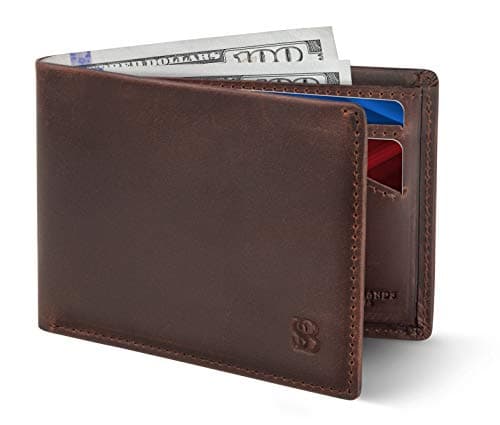
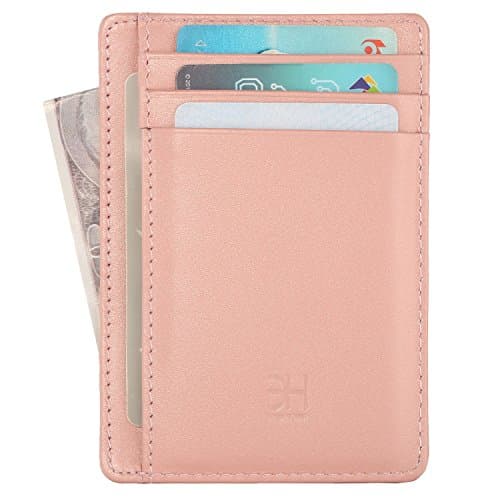
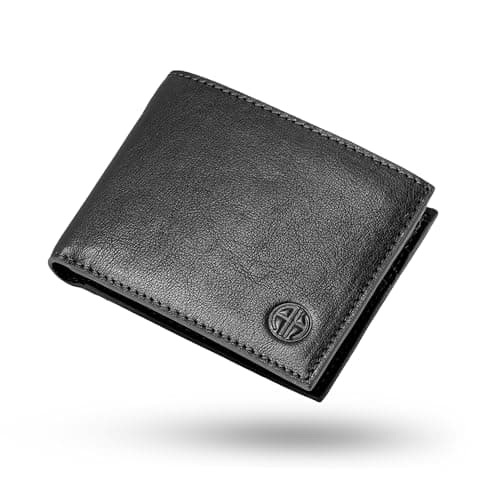
The short version: buy the AZURAHIDE full-grain bifold. It has twoID windows, which is the single most useful feature on a campus — a student card in one and a driving licence in the other, both readable without opening anything — and it is full grain at under thirty dollars, so it will outlast the degree. The budget pick is the GH GOLD HORSE card holder at around thirteen dollars, for the reader whose whole carry is a campus card, a bank card and a folded note.
A campus carry is a specific problem and it is not the same as a first wallet. Our best first walletpage is about a teenager who will leave it somewhere, and it ranks on replacement cost. A student wallet has a harder job: it gets shown constantly — a card at a door, a meal plan at a counter, a licence at a bar — it taps for transit and laundry and vending, it rides in a gym bag and a jeans pocket on the same day, and it almost never contains cash. This page ranks for that, and shares no picks with the first-wallet page.
The ranking rule: ID access, then taps, then replacement cost
ID access comes firstbecause it is the thing you do most. A wallet that shows a card through a window without you fishing for it saves ten small frictions a day, and at a bar door it is the difference between a glance and a search. Two picks here publish ID windows and one publishes a removable ID holder, which is the other good answer — hand over the holder, not the wallet.
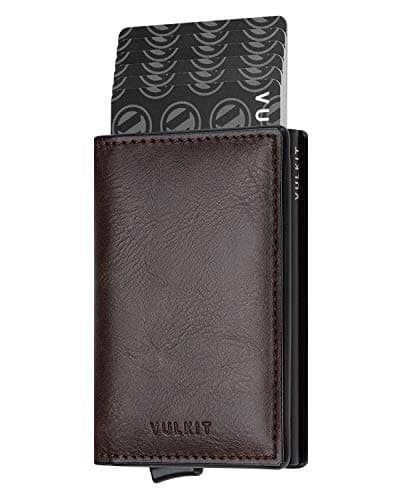
Tap access comes second. Campus cards, transit and contactless all want a card out fast, which is why a pop-up mechanism ranks third here despite being the least wallet-shaped thing on the page: a thumb lever fans your cards in one motion and it is the quickest access of anything we rank, at a quarter of what the premium version costs.
Replacement cost comes third, not first.Everything here is under thirty-three dollars, so nothing on this page is painful to lose — but we would rather rank a full-grain wallet that lasts four years at twenty-nine dollars than a disposable one at twelve, because the student who buys once is better off than the student who buys three times.
The thing nobody mentions: a campus wallet lives in a gym bag
It will be damp. It will be sat on in a lecture hall. It will spend a weekend in a jacket pocket in a pile. That argues for two things: a hide with structure rather than a soft lined wallet that goes limp, and a format that does not spill. Two picks here are full grain for exactly that reason, and a card holder with a magnetic or sprung retention beats an open sleeve in a bag every time. If the wallet is going into a tote rather than a pocket, our card holders for women page makes the retention argument in full.
What to skip
Skip the big capacity. The instinct at eighteen is to buy slots for every loyalty card, and the result is a brick that does not fit the one pocket of jeans it needs to. Skip the expensive brand — this is the wallet most likely to be left on a table in four years of anyone's life. And skip anything whose only selling point is RFID: useful, universal, and not a reason to choose. Read are RFID wallets worth it if you are being sold it.
Advice that earns us nothing
If money is genuinely tight, the right purchase here is the thirteen-dollar card holder and nothing else — most students do not carry enough to justify anything bigger, and the money is better spent on the textbook. And if someone is buying this as a gift, buy the full-grain bifold rather than the expensive brand: a wallet that still looks good at graduation is a better present than a logo that is scuffed by Thanksgiving.
Buying notes
Count what is actually in the carry
A typical campus wallet is a student ID, a bank card, a driving licence, maybe a transit card and a folded twenty. That is four cards. A payment card is 85.60 x 53.98 mm and 760 ± 80 μm thick, so four cards is a genuinely slim object — which means the right wallet is smaller than instinct says. See wallets for 2 and 3 cards if the deck is smaller still.
Full grain is the one upgrade worth the money here
At under thirty dollars you can have the top rung of the grade ladder, which is unusual, and it is what separates a wallet that survives four years from one that cracks at the fold in eighteen months. Our grade explainer covers why.
If it is going in a back pocket, read this first
A thick wallet in a back pocket all day is a real ergonomic problem and a classic student habit. Our is sitting on your wallet bad for your back guide has the honest version, and slim bifolds is the fix.
Advice that earns us nothing
Put a note with a phone number inside the wallet. It costs nothing, and it is by a distance the most effective thing anyone has ever done to get a lost wallet back — far more effective than any tracker you could buy, including the ones we rank on AirTag wallets.