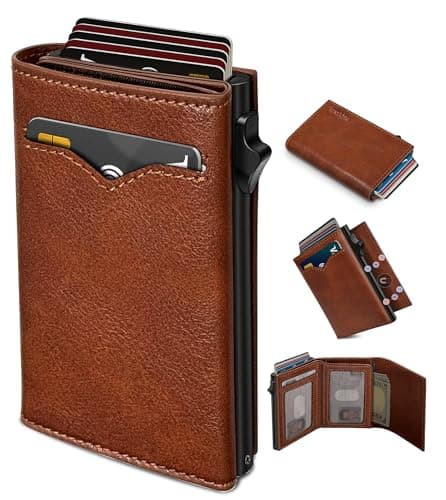
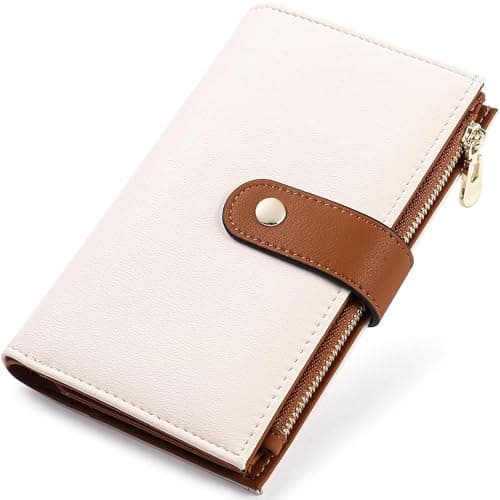
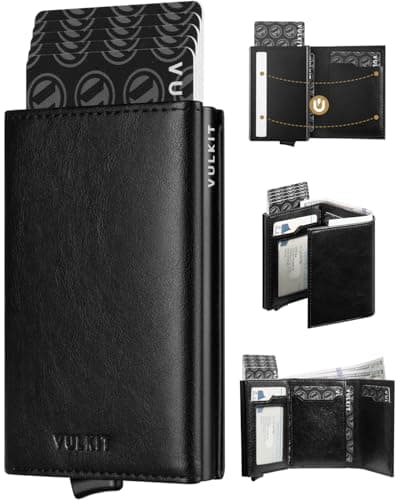
The short version: buy the VULKIT trifold pop-up wallet. It is the pick that puts the thumb-lever card fan — the mechanism that defines $99 card holders — into a trifold body that still has a bill compartment, at under thirty dollars. It is for someone who wants trifold capacity without digging through three panels for the card they use most. The budget pick is the yiijay trifold travel clutch at under twenty dollars, which is the cheapest pick here and the only one shaped for a bag rather than a pocket.
Our main trifold wallets page ranks three plain, well-made, mall-brand trifolds and has not needed to change since launch. What has changed is the registry around it: there are now eight more trifolds in this catalog and every one of them is under $50. This page ranks those, shares no picks with that one, and exists because the band turns out to tell a different story than the category does.
The finding: under $50 the trifold is a specialist format
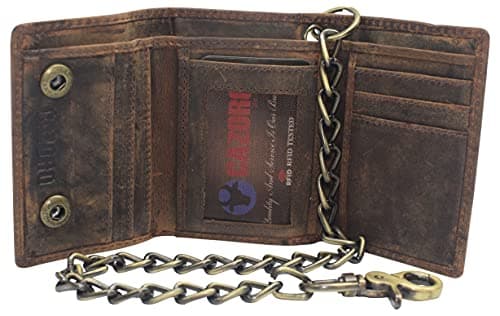
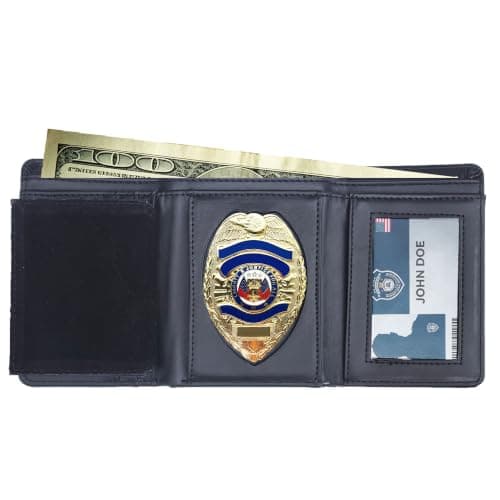
We expected a list of cheaper plain trifolds. Instead, five of these six are built around a specific job: a pop-up card mechanism, a second pop-up with a money clip, a chain hook for a belt loop, a badge cutout cut to a published size, and a long clutch sized for travel documents. Only the plainest end of the format — the ordinary leather billfold with three panels — is already covered at around eighteen dollars on our main page.
That is not a coincidence. A trifold is the format you choose when you need more organised card storage than a bifold in a shorter body, and once a maker is already adding a third panel the marginal cost of adding a mechanism to it is small. So the budget trifold aisle has become the place where features live, while the plain version has become a commodity. If you want plain, buy plain and spend less; this page is for the rest.
The thing every trifold trades away, at any price
Thickness.Three panels means three layers of leather at the fold plus whatever is inside them, and nothing on this page or any other page changes that arithmetic. A payment card is 760 ± 80 μm, a filled slot adds roughly another millimetre of leather, and a trifold stacks those across three panels rather than two. A loaded trifold is a back-pocket or jacket wallet, not a front-pocket one — if you have been told otherwise, read bifold vs trifold before you buy, and slim bifolds if the pocket is the constraint.
How we ranked
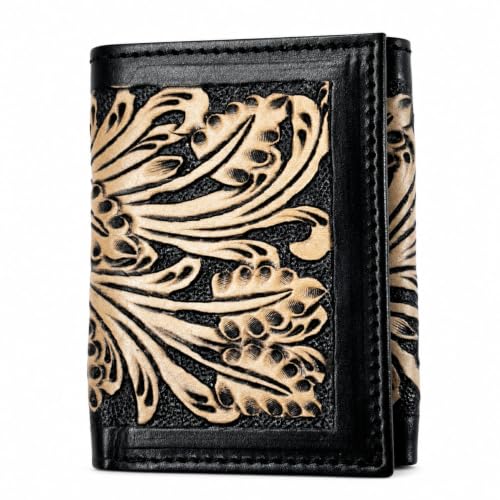
On what the third panel buys you, then on what the listing publishes. The two pop-up picks rank first and second because the mechanism genuinely changes how the wallet is used every day, and because fanning cards out of a trifold is the cure for the format's one real annoyance. The chain trifold ranks third because a detachable chain is a solved problem solved well at this price. The tooled and badge picks rank fourth and fifth because they are excellent answers to narrow questions — decoration and a shield cutout — and wrong for everyone else. The clutch ranks last as a general wallet and first for anyone carrying a passport, which the page says rather than hiding.
Advice that earns us nothing
Most people buying a trifold are solving a capacity problem, and a trifold does not solve a capacity problem — it gives the problem a third panel to spread into. Before you spend, take everything out of the wallet you own, carry only what you touched in the last month for two weeks, and see whether you still need the format. A fair number of readers who do that end up at slim wallets under $50 instead, and we would rather send you there than sell you a thicker wallet.
Buying notes
Pop-up mechanisms in a fold are a different animal
A pop-up cage in a card holder is rigid by design; in a trifold it has to coexist with a panel that bends. That works, and it adds a stiff zone to a wallet that otherwise folds softly. If the mechanism is what you want and the fold is not, our pop-up card holders page ranks the dedicated version, and wallets with a card ejector covers the wider family.
Check the closed length before you buy a clutch
A US banknote is 6.14 in long. A wallet that takes notes flat is necessarily longer than that, which rules out a back pocket for most people. The travel pick here is in that class and is the right shape for a bag; see long leather wallets for the format on its own terms.
Specialist picks are specialist
The badge trifold publishes a cutout size because that is the one measurement that decides whether it works for you. The tooled trifold is bought for the pattern. Neither is a general-purpose recommendation, and we have ranked them where they belong rather than where their prices would put them. See badge wallets and western leather wallets for those categories in full.
Advice that earns us nothing
If you want a plain leather trifold and nothing else, our main trifold page has one at around eighteen dollars from a workwear brand, and you will not get a better plain trifold by spending thirty-five dollars here. The money on this page buys a mechanism or a feature; if you do not want one, do not pay for one.