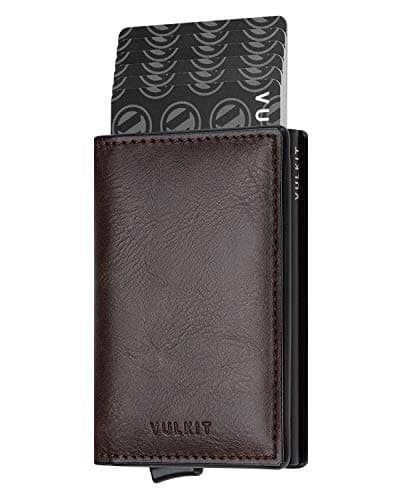
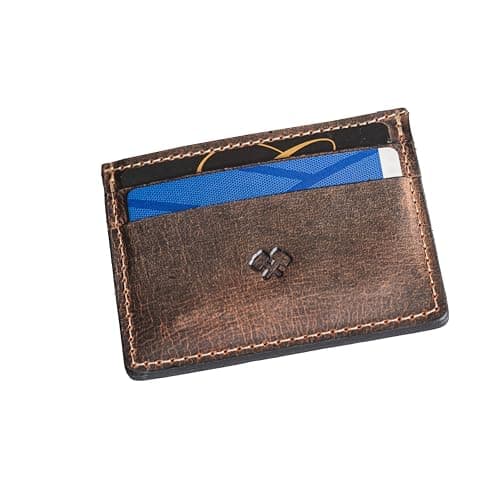
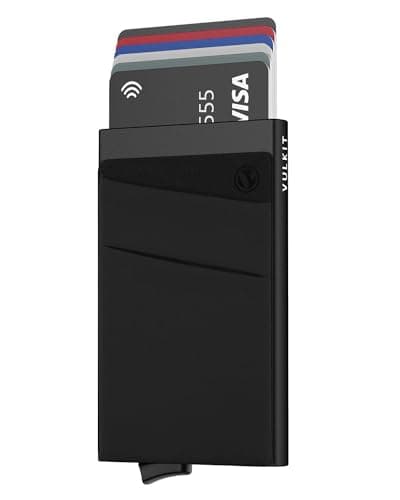
The short version: the closest thing to a Secrid in our catalog is the VULKIT Metal Card Case with Money Pocket— an aluminum case that presents your cards in one motion, works entirely on its own, claims RFID blocking, publishes a 0.31 in thickness, and adds a pocket for folded notes that a Cardprotector has no room for. It is also the budget pick, at under $16, which is not a combination that happens often on this site and we are not going to bury it. And the framing that decides everything below: a Secrid is not a leather wallet with a gadget in it. It is an aluminum card case that happens to come with a leather shell — so the thing you are replacing is the architecture, not the hide.
What Secrid is actually known for
From Secrid’s own site rather than from reputation, because every pick below is measured against it:
- The aluminum Cardprotector. Secrid states that “The aluminium Cardprotector protects all your cards against RFID skimming” (their spelling), and that “One motion provides quick access to your cards without opening the wallet”. That is the product. Everything else in the range is a different way of wrapping it.
- Deliberate capacity discipline. The Cardprotector is listed under “Essential Carry (4-6 cards)” and stated as “Up to 6 cards”. Six is a design decision, not a limitation — it is the number that keeps the object thin, and it is the reason a Secrid owner carries less than a bifold owner.
- RFID protection, stated plainly as “RFID protected”.
- A named provenance. Secrid describes itself as “Dutch wallet makers since 1995” and its manufacturing as “Responsibly made in Europe”. Hardly any seller in the wallet aisle names a continent, let alone a country, and this is a genuine differentiator rather than a marketing line.
- A system rather than a product.The site names a Cardprotector, Slimwallet, Miniwallet, Twinwallet, Cardprotector for Magsafe, Flexwallet, Cardslide, Envelope Wallet and Bandwallet — one mechanism, many shells. That is why so many of the searches that bring people here name a specific model.
So the honest reasons to look elsewhere are: price, cash (a Cardprotector has nowhere for a banknote, and the shells handle notes only by folding them), and availability— a European brand is simply harder to buy and harder to get serviced in the US than a listing that ships tomorrow.
How this page ranks, and how it differs from our Ekster page
Two tests, applied in this order:
- Does the card case come out and work on its own? This is the Secrid architecture and it is what people actually miss when they switch. A mechanism welded inside a wallet is a different object from a case you can pocket by itself on a Saturday.
- Does the maker name where it is made? Secrid does. Almost nobody else does, and when somebody does it belongs on a page about replacing Secrid.
That is a different rule from the one on our Ekster alternatives page, which ranks purely on getting the thumb-lever mechanism for less money. The two pages share two picks and differ on four, and if what you want is the cheapest possible pop-up cardholder, that page is the better one for you. This page is for the reader who wants the two-part system.
The six, and what each one answers
1. VULKIT Metal Card Case with Money Pocket — the closest structural analogue, and the budget pick. Aluminum, a pop-up action, RFID blocking, a published 0.31 in, and it works standalone because it is nothing but the case. Its listing states it holds cards and notes, which is the one thing the original cannot do. Under $16.
2. VULKIT Pop-Up Card Holder — the Slimwallet idea at a fraction of the price. A leather shell wrapped around the mechanism, with an RFID claim. This is the pick if you liked the feelof a Secrid — metal inside, leather in the hand — rather than the engineering.
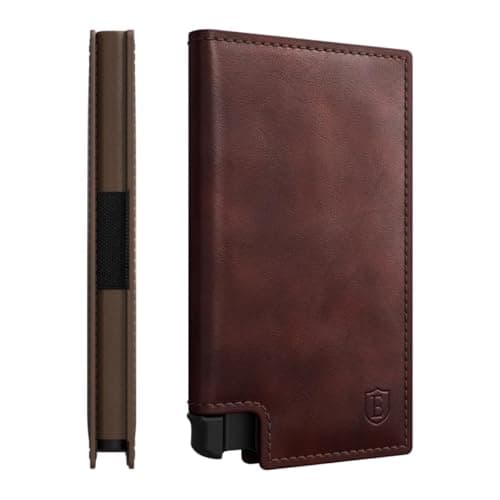
3. Ekster Parliament — the premium mechanism. Its listing describes “push-button card ejection and easy one-hand card access”, which is the same promise Secrid makes in different words, over an aluminum core in top-grain leather. It costs what a Secrid costs. If you are leaving Secrid because you want better engineering rather than a lower price, this is the honest destination, and it is our rank-1 pick on pop-up card holders.
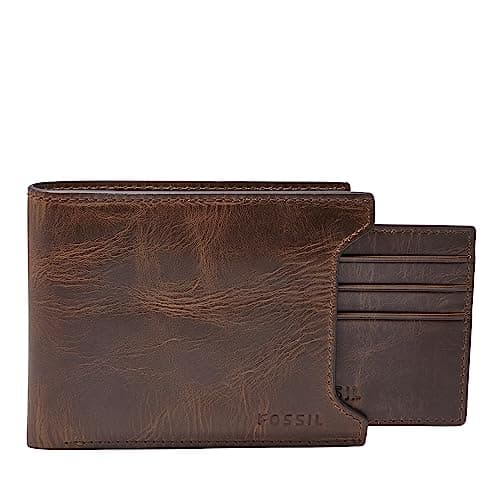
4. Fossil Derrick Sliding 2-in-1 — the two-part architecture in leather. A removable card case inside a bifold: the piece genuinely comes out and is a working card wallet on its own, which is the Secrid idea executed in hide rather than aluminum. No mechanism and no RFID claim, and it is the second-dearest pick here.
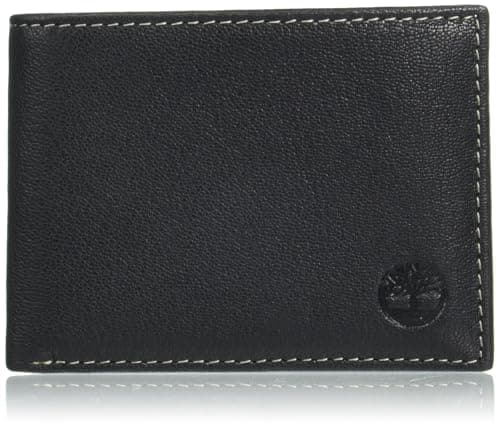
5. Timberland RFID Passcase with Removable ID Holder — the cheap two-part version. A removable holder inside a genuine-leather bifold with six card slots, two billfold pockets and a stated RFID claim, for around $20. Be clear what detaches: this is a removable ID holder, which takes a license and a card or two — not a full card case. See wallets with a removable card holder.
6. Main Street Forge Slim Wallet — the provenance answer. No metal and no mechanism, but it matches Secrid on the thing almost nobody else matches: its listing states full-grain leather and Made in USA, with a lifetime warranty behind it. If the reason you bought a Secrid was that somebody finally told you where the wallet came from, this is the pick that answers it.
What you give up, named honestly
- Integration. Secrid sells one mechanism with nine shells around it, so you can change the wallet without changing the card case. Nothing on this page is part of a system; each pick is one object.
- A stated provenance, on five of six.Only the Main Street Forge names a country. The rest name nothing, and we have recorded that as “—” rather than glossing it.
- Mechanism longevity. A stamped aluminum cage with a stiff spring works like a machined one in year one and not in year five. No listing in this category publishes a cage material or a spring specification, ours included, so this is a known unknown rather than a measured difference.
- Capacity discipline as a feature.Secrid’s six-card ceiling is doing you a favor. Several picks here will happily take more, and the result is the thickness problem you were trying to escape.
Advice that earns us nothing
If you own a Secrid and the only thing wrong with it is a worn leather shell, replace the shell and keep the Cardprotector. That is the entire point of a two-part system and it is the cheapest fix available to you — cheaper than anything on this page. Come back when the mechanism itself stops presenting cards cleanly.
And if you are shopping this because of the price rather than the brand, card holders under $50 asks the same question without naming anyone, and reaches the same first answer by a different route.
Buying notes
The cage is a thickness budget, not a capacity
A sprung aluminum case has a fixed internal depth, and a payment card is 0.68 to 0.84 mm under the ID-1 standard. Secrid’s six is that arithmetic made into a design rule. Overfilling a cage jams the action rather than just making the object fat, so whichever you buy, treat the stated figure as a ceiling and not a target.
Embossed cards are the real compatibility problem
Raised-number cards do not stack flat in a metal case, so a case rated for six may take four of them. If most of your cards are embossed, a slotted leather holder is the better format and our card holder roundup covers both kinds.
Decide about cash first
Three picks here take notes (one in a money pocket, two in a billfold) and three do not. This is the decision people most often get wrong when they move to a card case, and the regret arrives at the first parking meter. Our how to carry cash with a card holder takes each mechanism in turn.
On RFID, our position has not changed
Secrid states RFID protection and four of our six picks claim it. The shielding costs almost nothing to add, so take it when it comes with the object and never pay a premium for it. What the threat actually looks like is in are RFID wallets worth it. A metal case has an inherent advantage here, because the shielding is the wallet rather than a liner inside it.