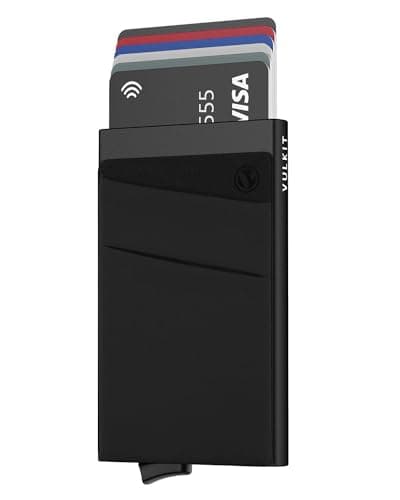
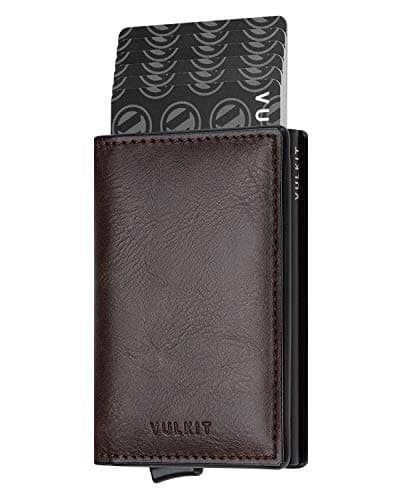
The short version: buy the VULKIT Pop-Up Card Holder— the same thumb-lever idea in a leather shell for about a quarter of an Ekster's price, holding seven cards with an RFID claim. The budget pick is the VULKIT Metal Card Case with Money Pocket at under $19, which is the thinnest way to carry cards and a folded note in our whole catalog. And the honest opening: the Ekster Parliament is our rank-1 pick on pop-up card holders and on the card-holders hub. It earns that. What has changed is that it is no longer the only way to get the mechanism.
What an Ekster is actually good at
From the brand's own published specifications and support documentation, because the picks below are measured against these and not against a reputation:
- The mechanism, executed properly. A thumb lever drives a sprung aluminium cage that fans your cards into a staircase, one-handed, in about a second. The action is the product. Cheaper cages work on the same principle with a stiffer spring and thicker stamped aluminium.
- Capacity, with an important split.Ekster's own support page states the cardholder “Holds 1-14 cards; 5-7 in the cardholder”, and the live Amazon listing for the Aluminium Pro states “Up to 8 Cards (7 in Pop-Up Slot + 1 Side Slot)”. So the headline fourteen is a total that depends on the backplate strap, not fourteen cards you can fan. We publish the split rather than the headline, here and on our Ekster review.
- Top-grain leather over machined aluminium on the Parliament, RFID across the line, and an ecosystem of accessories including a tracker card.
- A two-year warranty on the standard cardholders; the Wallet Pro carries a lifetime one.
- A naming note, so you are not confused in a search result.Ekster's own journal states that “The Ekster Parliament Wallet was simply renamed to the Ekster Wallet” and that it is “Same wallet, same features, new name.” The Amazon listing we link is still titled Parliament, which is why this site still uses that name.
So the three honest reasons to look elsewhere are: price (the mechanism costs a quarter as much elsewhere), cash (an Ekster cardholder has nowhere for a banknote to live), and the metal itself (some people simply do not want an aluminium object in their pocket). Every pick below answers one of those.
The six, and what each one is for
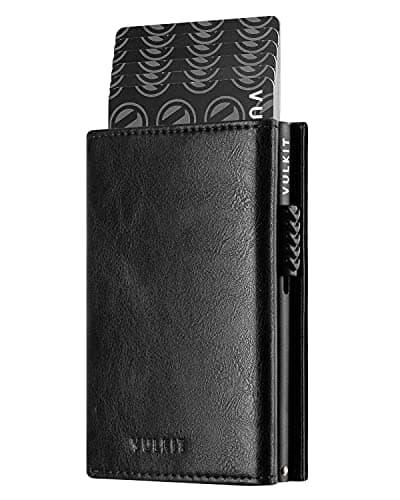
1. VULKIT Pop-Up Card Holder — answers price. Seven cards, RFID, a leather shell of unstated grade, and the mechanism, for about a quarter of the price. The best value object in this entire aisle, and the pick for most people who searched for this page.
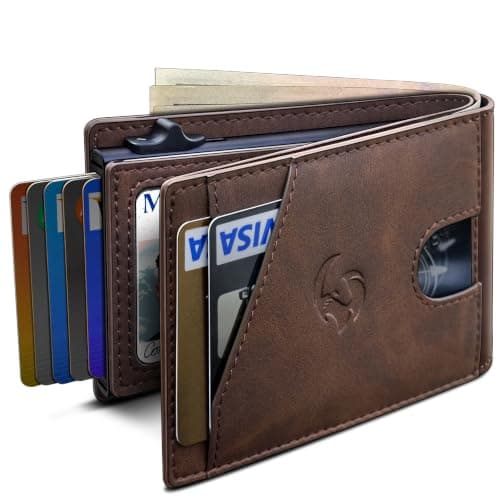
2. Housmai Pop-Up Bifold — answers cash, completely. A pop-up cage inside a full bifold: nine cards in the cage, a stated fifteen bills in the cash slot, a magnetic flip and an RFID claim at 13.56 MHz. This is the pick if the single thing stopping you buying an Ekster is that you still carry notes. See wallets with a card ejector.
3. VULKIT Pop-Up Card Holder with Coin Pocket — answers cash and coins without going full bifold. Ten cards claimed, a zipped coin pocket and a note pocket in a shell around the cage. The middle path between pick 1 and pick 2.
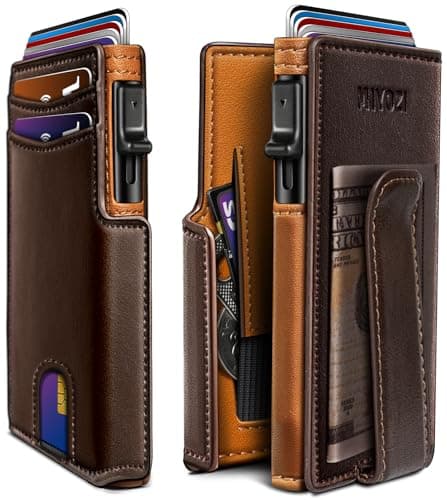
4. miyozi Pop-Up Wallet with Money Clip — answers cash the fast way. Cage plus an external clip, nine cards and ten-plus bills, and it publishes its footprint (3.9 x 2.7 in) — a measurement Ekster does not state for its cardholders.
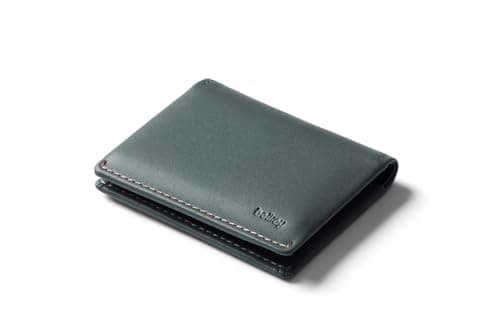
5. Bellroy Slim Sleeve — answers “I do not want a metal wallet”. No cage, no aluminium, no mechanism: a top-grain leather slim bifold holding up to eight cards. It costs nearly as much as an Ekster, and it is here because “Ekster alternative” is sometimes a question about material rather than about money. No RFID.
6. VULKIT Metal Card Case with Money Pocket — the budget pick, and the thinnest answer of all. Aluminium, four to seven cards published, a published 0.31 in, and a money pocket. Not leather, and we have labelled it that way rather than sliding it in.
What you give up at a quarter of the price
Four things, named honestly, because a page that pretends a $24 wallet is a $99 wallet is not worth reading:
- The action degrades. Cheaper cages use stamped rather than machined aluminium and a stiffer spring. New, the difference is small. In year three it is the difference between a mechanism and a sticky lever.
- The leather grade goes unstated.Ekster says top grain. Picks 1, 3 and 4 say “leather” with no rung behind it, which we have recorded as exactly that. See the grade ladder.
- The warranty shortens or vanishes. Two years from Ekster against a return window from most of the alternatives.
- No tracker ecosystem.If a slim tracker card that slides into the wallet matters to you, Ekster sells one and none of these brands does. The workaround is an AirTag in a wallet built for one — see AirTag wallets.
Advice that earns us nothing
If you tap a card more than a handful of times a day, every day, and you expect this wallet to be the only thing you carry for the next five years, buy the Ekster. The mechanism is the entire product and the expensive one will still work when the cheap one has gone stiff. The alternatives on this page are the right answer for a reader who wants to try the format, who carries cash, who does not want metal, or who simply refuses to spend $99 on a cardholder — and all four of those are perfectly good reasons.
If it is the price band rather than the brand that brought you here, card holders under $50 is the same question asked without naming anyone.
How to choose between these
The cage is a thickness budget
A sprung aluminium cage has a fixed internal depth, and a payment card is 0.68 to 0.84 mm under the ID-1 standard. That is why every pop-up in this category publishes a card count rather than a “holds as much as you can squeeze in” figure, and why going over the stated count jams the mechanism rather than just making the wallet fat. Respect the number on the listing.
Embossed cards are the one real compatibility problem
Raised-number cards do not stack flat in a cage, so a mechanism rated for seven cards may take five of them. If most of your cards are embossed, pick a format with slots instead — our card holder roundup covers both.
Watch the capacity claim, in both directions
We split Ekster's fourteen into “5-7 in the cardholder” above, and the same scepticism applies to the alternatives: a claimed ten cards on pick 3 is a claim about the shell plus the cage, not the fan. Whichever you buy, the number you can actually fan is smaller than the number on the box.
If the comparison you want is one-to-one
We compare Ekster directly against three brands: vs Ridge, vs Nomad and vs VULKIT— that last one being the head-to-head between our rank-1 Ekster and the rank-1 pick on this page. Our Ekster brand review covers the range, including the capacity split and the rename.