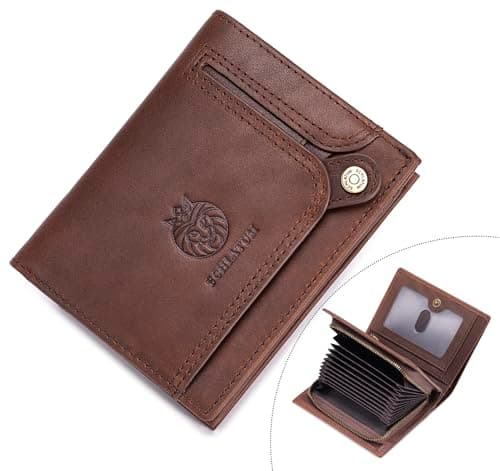
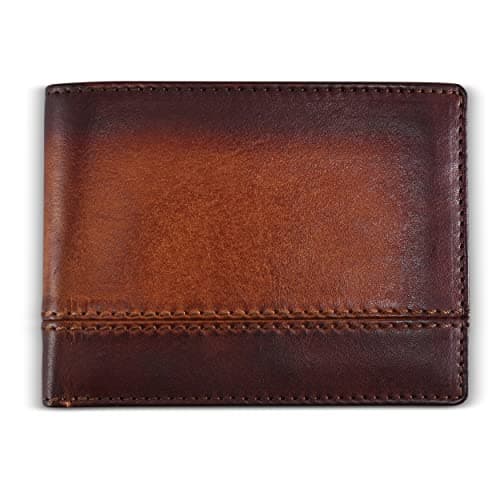
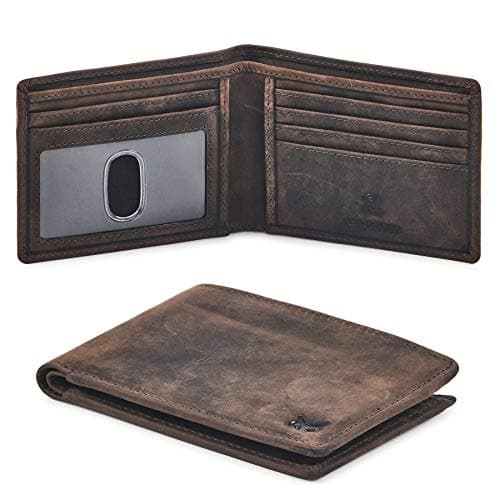
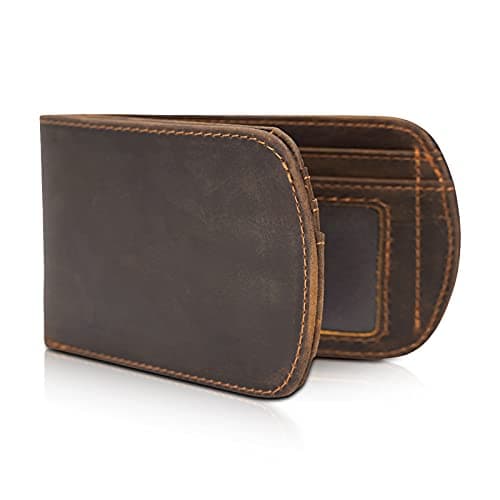
The short version: buy the Polare slim curve front-pocket RFID bifold. It is the pick that publishes the most for the money — six slots, an ID window, a money pocket, a curved front-pocket body and an RFID claim — at roughly a quarter of what our unconstrained RFID winner costs. It is for someone who wants shielding in a wallet that is still pleasant to carry rather than shielding bolted onto whatever was cheapest. The budget pick is the Wise Owl front-pocket bifoldat under fifteen dollars: a real bifold with seven published slots and an ID window, bought knowing that “real leather” with no grade is exactly what it says.
Here is the measured reason this page exists. The three wallets that win our main RFID walletsroundup are priced at $79, $69 and about $57. They deserve those rankings — they are better objects. But a reader with a fifty-dollar ceiling got nothing usable from that page, and shielding is the one feature in this entire category where the cheap version and the expensive version do the same job. So this page shares zero picks with it, by design.
The finding: RFID is not what you are choosing between
Every wallet on this page claims to block the 13.56 MHz band that contactless cards use. So do wallets at $8 and wallets at $119. A layer of shielding fabric or foil costs a seller almost nothing, which means RFID is a tick-box, not a tier— and anyone charging a premium specifically for it is charging you for the cheapest thing in the wallet. We will not pretend to have measured attenuation on any of them; nobody in this aisle publishes a figure, ours included, and a claim is a claim.
What that leaves is the actual decision, which is the wallet. So the ranking here is on what each listing publishes once you stop counting the shielding: slot counts, ID windows, whether the ID holder comes out, body dimensions, and the leather claim. On those terms the order is not the price order, and one pick drops below cheaper ones for a specific reason stated below.
Where the ranking breaks from the price
The BULL GUARD removable-ID bifold sits third rather than first despite a mid-page price, because its defining specs are phrases rather than numbers: it states that the holder comes out and that the wallet blocks RFID, and then publishes no capacity, no dimensions and no grade. Three cheaper picks publish more. That is the penalty this site applies every time, and we would rather print the reason than bury it in a score.
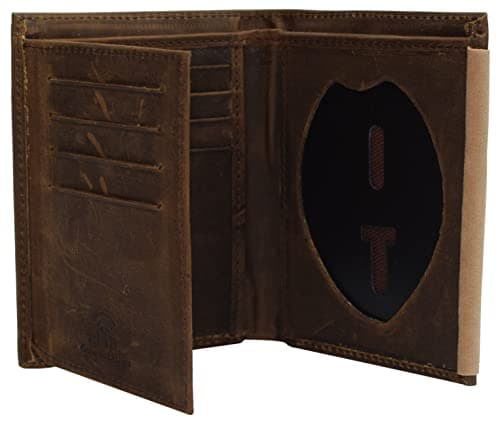
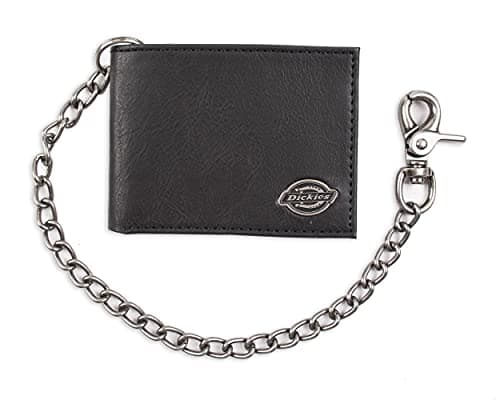
At the other end, the SCHLATUM 21-slot accordionranks second on raw published capacity — twenty-one slots, a cash pocket and an ID window for under twenty-seven dollars — with the caveat that a slot count is headroom, not a target. And two picks here are specialists rather than general wallets: a badge bifold with an aluminium RFID lining, and a workwear chain bifold. They are on the page because they are the honest answer for the readers who need them, and the page says which reader each one is for.
What $50 does not buy in this category
Three things, consistently. A named leather grade— one pick claims full-grain Italian leather and the rest describe their hide loosely or not at all. Edge finishing, which is the hand-work that keeps a wallet looking new at the corners. And a warranty worth claiming. What you lose by staying under the ceiling is longevity and finish, not function and not shielding, which is a different trade from the one most buyers think they are making.
Advice that earns us nothing
If your only worry is contactless skimming, you can solve it for nothing: a single shielded card sleeve costs a few dollars and works inside the wallet you already own. Buy from this page because you want a different wallet, not because you want shielding — and read are RFID wallets worth it first, which is the most honest thing on this site about how big the risk actually is.
Buying notes
A shielded wallet does not protect a card that is out of it
The shielding works while the wallet is closed and the card is inside. Tap-to-pay happens with the card out, which is when any risk exists. That is the whole reason this feature is oversold. See do RFID wallets demagnetize cards and can RFID wallets go through airport security for the two questions readers actually ask next.
Count slots as headroom
A payment card is 760 ± 80 μm thick and a filled slot adds roughly another millimetre of leather around it, so a twenty-one-slot wallet filled to twenty-one cards is a brick. Two picks here publish capacities in double figures; treat them as room to be untidy, not a target.
Match the body to the pocket
A curved front-pocket bifold, a 4.5 in workwear bifold and a badge wallet are three different objects that happen to share a feature. Decide the carry first: RFID front pocket wallets for front-pocket carry, back pocket wallets if that is where it lives, and badge wallets if you carry a shield.
Advice that earns us nothing
If you already own a wallet you like and only want shielding, do not replace it. The cheapest honest fix is a sleeve for the one or two contactless cards that worry you, and it costs less than the delivery on anything here.