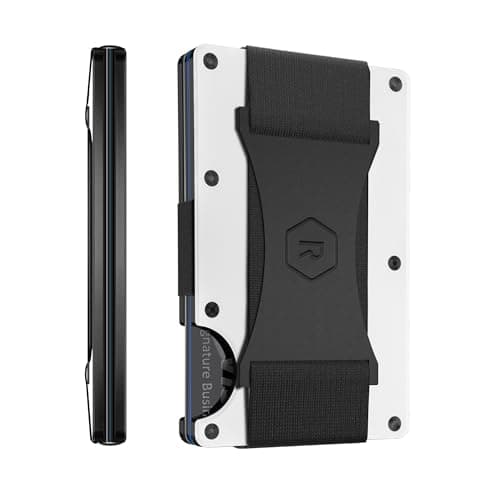
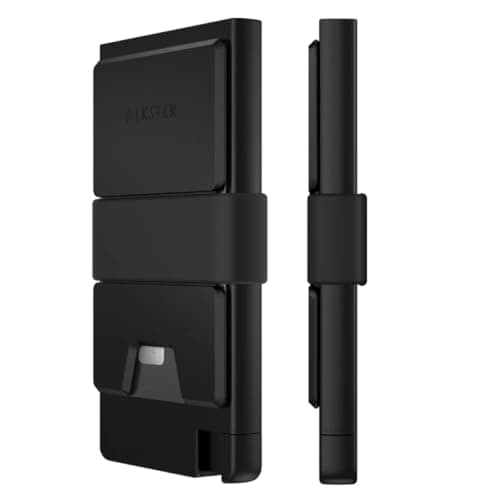
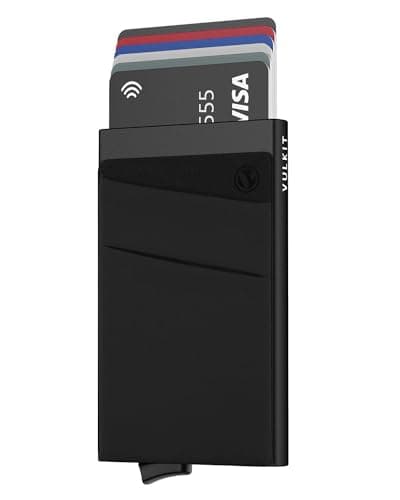
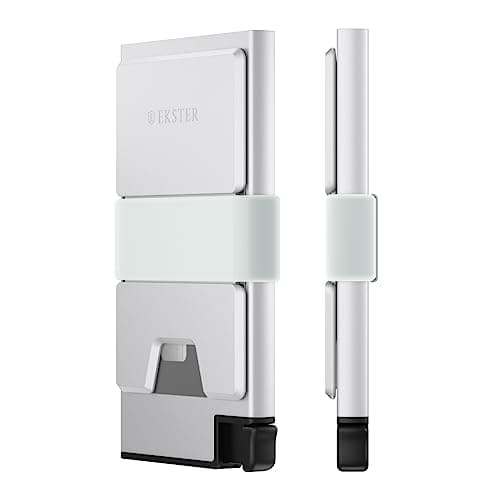
The short version: buy the Ekster Aluminum Cardholder. It is the thumb-lever card fan that made this format famous, in the version with no leather shell to wear out, and its maker publishes the number that matters — six cards in the fan, not the dozen this category is routinely credited with. It is the pick for someone who wants a mechanism rather than a hide. The budget pick is the VULKIT metal card case with a money pocket, which is all aluminium, costs about a sixth of the Ekster, and is the only wallet on this page that publishes its own closed thickness.
This is a leather site, so start with the obvious question: why rank metal at all? Because the honest answer to “what is the thinnest object that still carries a payment card and a folded note” is not leather, and pretending otherwise would be the sort of advice that sells a wallet and loses a reader. Our leather vs metal wallet comparison has argued the trade-off since August without a ranked shelf to send anyone to. This page is that shelf.
The rule that decided this page: the body has to be metal
Four of the best-selling “metal” wallets in this catalog are leather wrapped around an aluminium cage. They are good objects — the pop-up card holderspage ranks them properly — but they are leather wallets with a mechanism inside, and a reader searching for a metal wallet is usually asking for something a hide cannot do: a shell that will not stretch, will not absorb, will not scuff pale, and will survive being sat on for a decade. So the inclusion rule here is mechanical rather than editorial: the outside of the wallet has to be metal. That is why the leather-shelled Ekster Parliament, which is our own rank-one pick on the pop-up page, is deliberately absent from this one.
The finding: capacity in this aisle is two numbers pretending to be one
Every metal card case has a fan— the cards the mechanism actually pushes out in one motion — and most have a backplate or strap that holds more cards behind the case, where you have to dig for them. Sellers add the two together and print the total. The Ekster Aluminum Cardholder Pro ranked third here is the clearest example in the catalog: it is widely sold on a fourteen-card figure, and the number of cards in the quick-access slot is about seven. The standard Aluminum Cardholder publishes six in the fan and costs twenty dollars less, which is why it is ranked first and the Pro is ranked below it. If the fan is the reason you want the thing, the cheaper one gives up very little.
What the alloy claim is worth
One listing here names its alloy: 6063-T5 aluminium, which is an extrusion alloy given an age-hardening temper after it is formed. That is a real, checkable claim and it is more than almost any wallet in our catalog says about its own material. The others describe their metal in marketing terms. Our ranking rewards the specific claim, because a named alloy is the metal equivalent of a named leather grade, and this site has spent a year arguing that the seller who writes the spec down is the seller worth buying from.
The spec nobody publishes is spring life. Not one listing in this aisle — ours included — states a cage material, a spring rating or a cycle count, and the single most common complaint about cheap card fans is that the action goes stiff after a couple of years. That is a known unknown rather than a measured difference, and we are not going to invent a number to fill it. What we can say is that the two Eksters are machined and the sub-$20 case is stamped, and that stamped parts are where this format usually fails.
Cash is the thing metal is worst at
A US banknote is 6.14 x 2.61 in (156 x 66.3 mm) and a payment card is 85.60 x 53.98 mm, so every metal case in existence has to fold your cash in half twice to stow it, usually under an elastic band or a clip on the outside. Three of the four picks here handle notes that way. The VULKIT is the exception that earns its place: its money pocket is part of the case, which is the one genuinely novel thing in the budget end of this aisle. If you carry real cash daily, read leather money-clip walletsinstead — the format was designed for exactly that and it does not cost $99.
Advice that earns us nothing
If your only objection to your current wallet is thickness, measure before you spend. Most people who move to metal are carrying four cards they have not used since last year; take those out of the wallet you already own and the problem usually disappears for free. And if you want the mechanism but not the material, the leather-shelled version costs less than the all-metal one in this catalog, not more — so “metal” here is a preference, not an upgrade.
Buying notes
RFID is not the reason to buy metal
Every pick here claims RFID blocking, and so does nearly every leather wallet we rank, including ones under $20. Contactless cards work in the 13.56 MHz band and shielding them is cheap; it is not a premium feature and it has not been one for years. If shielding is your whole reason for shopping, read are RFID wallets worth it before you spend $99 on it, and best RFID wallets under $50 if the answer is yes.
Metal and cards: what actually goes wrong
Magnetic stripes are not harmed by aluminium, and modern chip-and-contactless cards are not either. What does happen is mechanical: a hard edge against a card edge, thousands of times. Cases that fan cards past a metal lip wear the plastic at the corner first. Our do card holders damage cards guide covers what to watch for.
If you are cross-shopping metal against leather
The real difference is not slimness — a good leather sleeve is within a millimetre of a metal case at the same card count. It is ageing. Metal stays exactly as it was until it is scratched, and then it stays scratched. Leather gets better for about three years and then slowly worse. Pick the curve you prefer; our full-grain wallets page is the other end of that choice, and card holders under $50 ranks the aisle where the two materials meet on price.
Advice that earns us nothing
The sub-$20 case on this page publishes a thickness and a capacity and takes a folded note. The $119 one publishes a capacity that counts cards you cannot fan. Buy the cheap one first and find out whether you actually like carrying metal before you spend six times as much on the same idea.