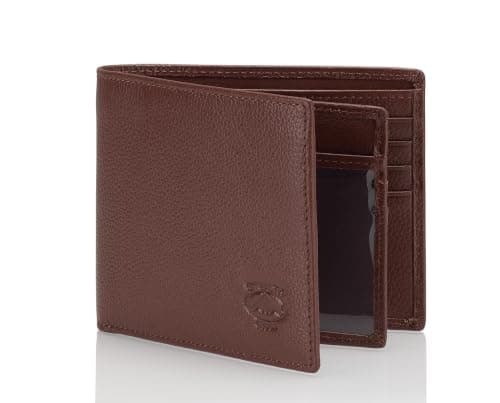
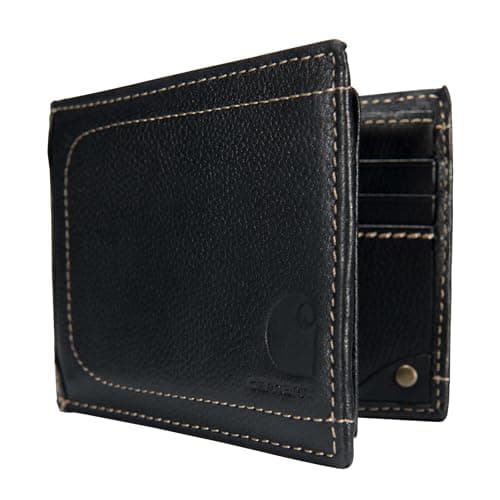
The short version: buy the Carhartt Pebble Leather Passcase— the only wallet in this category whose listing states full grain behind the texture word, in a bifold with a passcase, at well under half the price of the dearest pick here. The budget pick is the Stealth Mode Pebble Top-Grain Napa Bifold, which is also the second-most informative listing on the page — cheapest and second-best is not a combination that happens often. And the finding this page exists to publish: the two most expensive pebbled wallets in our catalog state less about themselves than the cheapest one does. Price buys a label in this category, not information.
Why a texture needs a ranking rule of its own
“Pebbled” describes a raised, rounded grain pattern on the surface of the hide. It is not a grade, not a tannage and not a defined term — and critically, it is frequently embossed rather than natural, because pressing a grain pattern into a sanded hide is part of the standard corrected-grain finishing process. Our pebbled leather guide is the long version of that mechanism, and the two pages split cleanly: the guide explains what the word does and does not mean; this page ranks which one to buy.
So the texture tells you nothing about quality on its own, and a pebbled finish is the ideal surface on which to hide a hide that was buffed. Which leaves exactly one defensible way to rank the aisle: what does the listing state behind the word? Of the five wallets here, one states full grain (Carhartt), one states top-grain napa (Stealth Mode), and three state no grade at all (ARIAT, Michael Kors, Polo Ralph Lauren). We have recorded each at the level its own listing claims and no higher, which is the rule that governs the whole of our leather guide.
The measurement: price and information run in opposite directions
This is worth setting out as a table in prose, because it is the most useful thing on the page and nobody else in the niche publishes it. Ordered cheapest to dearest, here is what each listing title commits to:
- Stealth Mode, around $35— states the grade (top-grain napa), the texture, twelve card slots, an ID window and RFID blocking. Five pieces of information.
- Carhartt, around $43 — states the grade (full grain), the texture, the format (bifold with passcase) and “multiple card slots”. Four pieces, and the strongest grade claim in the category.
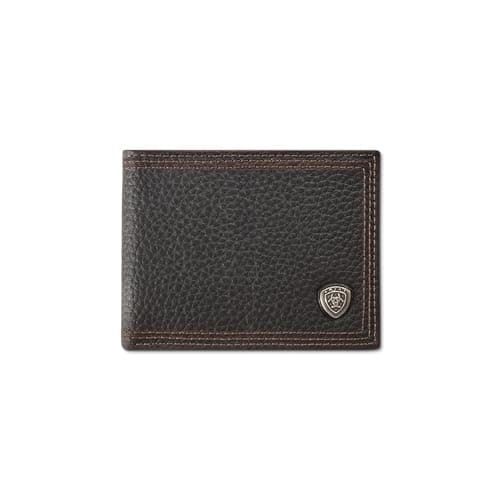
- ARIAT, around $55— states the texture, the format and a removable pass case. No grade, no count, no RFID.
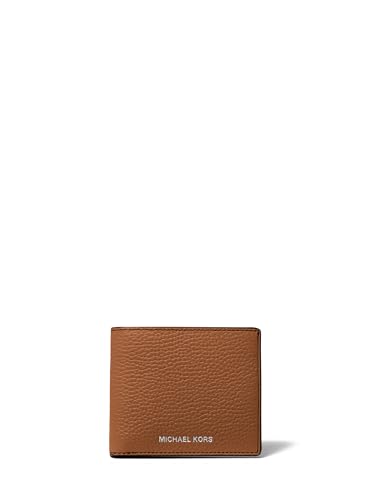
- Michael Kors, around $68— states the texture, the format (billfold), a model name and a colorway. No grade, no count, no RFID, no dimensions.
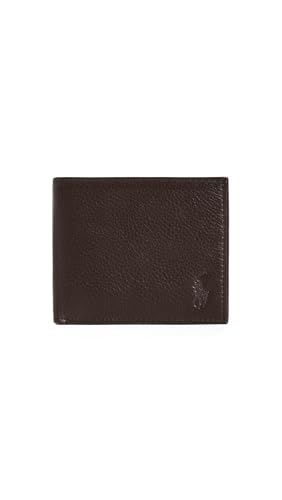
- Polo Ralph Lauren, around $130 — states the texture and the color. No grade, no count, no RFID, no dimensions — and no format. Its title does not tell you whether it is a bifold. It is the sparsest listing of any wallet in our registry, at the highest price of any pebbled one in it.
Read that list bottom to top and the information grows as the price falls. That is not an argument that the designer wallets are badly made — we have not handled them and we do not claim to have. It is an argument that at the designer end of this category you are buying a label, and the seller is not pretending otherwise. If the label is what you want, that is a legitimate purchase and two picks here serve it. If leather is what you want, the ranking is the other way up.
What pebbled genuinely does well
Two things, and they are the reason the texture is everywhere in the wallet aisle rather than a styling fad.
It hides wear. A raised, irregular grain breaks up reflected light, so a scuff that would show as a bright line across a smooth polished panel disappears into the pattern. This is the opposite strategy from crazy horse, which welcomes the mark and lets it buff back out. Pebbled keeps looking new; crazy horse keeps looking lived-in. Both are honest answers to the same problem and which you want is temperament rather than quality.
It grips. A textured surface does not slide out of a back pocket or off a car seat the way a glazed one does. Minor, and real.
What pebbled does not do is patina in the way enthusiasts mean. A pressed or heavily-finished surface has a coating sitting on top of the grain, and oxidation and hand oils cannot get at the fibre underneath. If dramatic ageing is what you are shopping for, this is the wrong texture and vegetable-tanned is the right one.
The five, and who each one is for
1. Carhartt Pebble Leather Passcase— for almost everyone reading this. A workwear brand’s own catalog wallet, a stated full grain, a bifold with a passcase and multiple card slots. The only pick that answers the question the texture raises.
2. Stealth Mode Pebble Top-Grain Napa Bifold— the budget pick, and the most spec-dense listing on the page. Twelve slots, an ID window, RFID blocking and a stated top-grain napa. The caution is the twelve slots: a wallet with twelve slots ends up holding twelve cards, which is the mechanism behind every complaint about bulk on this site.
3. ARIAT Shield Rowdy Pebbled Bifold— for a removable pass case from a real western-wear catalog. States the texture and the layout and no grade, which is why it sits below two cheaper wallets that do.
4. Michael Kors Hudson Pebbled Billfold— for the reader who wants the name. A designer house’s own billfold with gift and resale recognition a marketplace wallet will never have. The listing names a model and a format and stops there.
5. Polo Ralph Lauren Pebbled Leather Wallet— for the label, full stop. The strongest name on the page and the least informative listing in our whole catalog. We have ranked it last and told you exactly why; if the name is the point, nothing above it competes.
One more thing about the designer rows, because they are what most of the search demand for this texture actually asks for: we excluded the designer pebbled wallets from this category once before, on supply, and we are not going to keep doing that. These two are in stock with live prices and they belong on the page. What we will not do is rank them above wallets that tell you more for less.
Pebbled breaks up reflected light so wear does not read; nappa does the opposite, trading a softer hand for a surface that shows its life. If the feel is what you are buying, see best nappa leather wallets.
Buying notes
How to tell embossed from natural, roughly
You usually cannot from a listing, which is the honest answer. In the hand, a natural pebble is irregular — the pattern varies in size and spacing across the panel and does not repeat. An embossed one is regular, and if you look along the edge of a fold you may see the pattern flatten where the press did not reach. Our spotting guide covers the checks that genuinely work on a wallet you are holding.
Nobody here publishes a thickness
Not one of the five states a closed thickness, which matters most on the twelve-slot pick. At ID-1 thickness each payment card is 0.68 to 0.84 mm, and our own per-slot figure is roughly 0.035 to 0.040 in of bulk once the leather around it is counted — so twelve filled slots is around half an inch of cards before the wallet itself. Our bifold thickness guide does the sum.
A pebbled wallet is the right pick for a back pocket
If your wallet lives in a back pocket and gets sat on, abraded against denim and dropped on gravel, the texture is doing real work for you. That is a genuinely better reason to buy pebbled than the way it looks in a photograph, and it is why the texture is so common on workwear wallets. See also most durable leather wallets.
Advice that earns us nothing
If you are choosing between a $43 wallet that names its grade and a $130 one that names its brand, and you want leather, buy the cheaper one and keep the $87. The texture is identical in kind on both, neither publishes a thickness, and only one of them tells you which layer of the hide you are getting. We would make more money on the other recommendation.