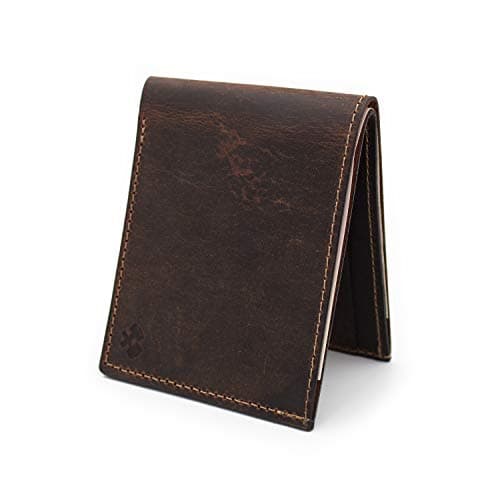
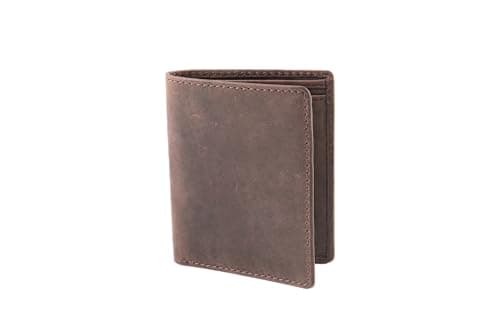
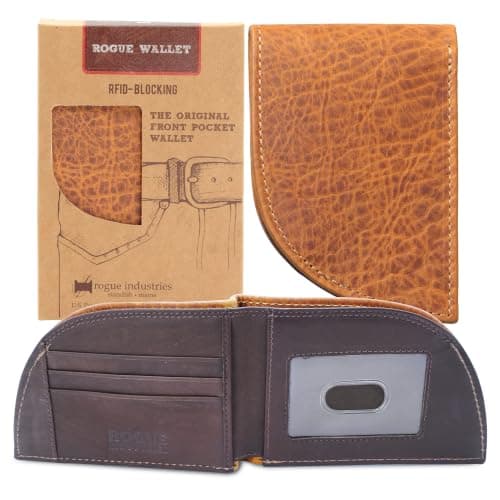
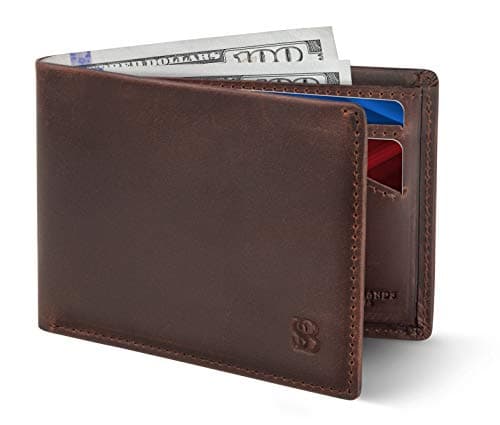
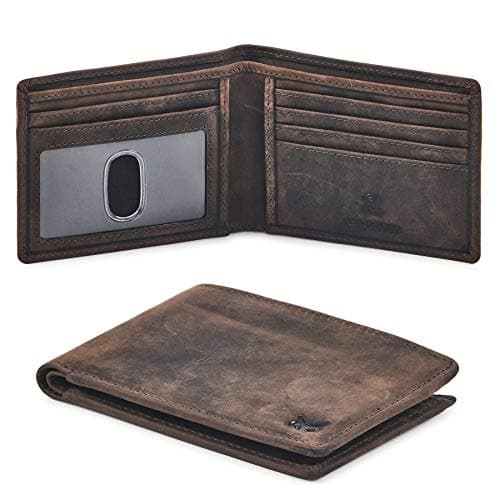
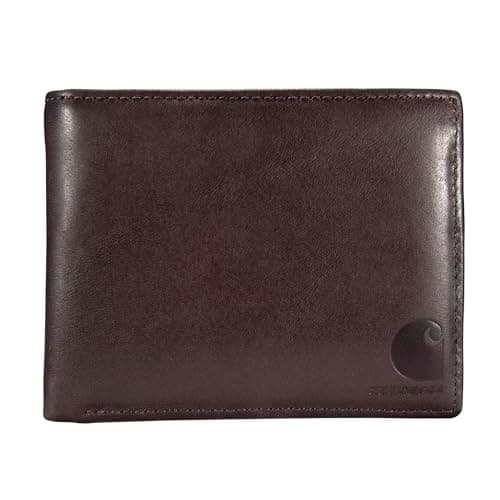
The short version: brown is the right choice if you want a wallet that looks better in three years than it does in the box, because brown is the only color in which patina is visible. It is also the color with the worst naming problem in the trade. The six wallets on this page describe their own color as Oil Tan Brown, Bootlegger Brown, Vintage Brown, Brown, Texas Brown Elite and Coffee— and not one of those words is defined by any standard, specification or industry body. So the ranking here ignores the shade name entirely and ranks on the thing that actually decides how your brown will move: the finish and the tannage.
Why the shade name tells you nothing
A tannery sells leather by article and finish. A brand buys it, names the colorway whatever reads well in a listing, and the name travels no further than that one product line. “Cognac” from one maker is darker than “chestnut” from another and lighter than “cognac” from a third. There is no registry, no reference chip, and no obligation on anyone to be consistent — which is why the question we get most about brown is whether two brown items from the same brand will match, and the answer is that they frequently do not.
Three things follow from this, and they are the practical core of the page:
- Never buy brown to match something else. Not a belt, not a bag, not shoes. If matching matters to you, buy both items from the same maker in the same colorway at the same time, or accept the mismatch in advance. A brown wallet photographed next to brown shoes is the single most misleading image in this category.
- Expect unit-to-unit variation. Brown leather is dyed, and dye lots drift. On pull-up and oil-tanned leathers the variation is larger still, because the finish is part of the color. This is a feature of the material rather than a failure of the seller.
- Read the finish word, not the color word. Oil-tanned, crazy horse, vegetable-tanned and pigment-finished brown behave in four completely different ways. That difference is knowable before you buy. The shade is not.
The four browns, and how each one ages
Oil-tanned. Leather stuffed with oils and waxes. It starts matte, takes a scratch and then loses it when you rub the oils back across the mark, and it darkens with handling. It is the most forgiving brown there is, and it is why the top pick on this page is a wallet whose product name contains the words Oil Tan.
Crazy horse.A waxed pull-up finish, usually on a lower grade of hide than the marketing implies. Flex it and the color lifts to a lighter shade along the crease, which is the distinctive look people buy it for. It marks constantly and the marks keep changing, so it looks worn-in within weeks — wonderful if that is the goal, irritating if you wanted it to stay neat. Our crazy horse roundup ranks the format specifically.
Vegetable-tanned. The tannage that patinas most dramatically and the one that needs the most looking after. It starts light, darkens unevenly with sun and skin oils, and ends up a color no listing can show you because you will have made it yourself. Our veg-tan page is the one to read if that is what you are here for. The strongest veg-tan brown in our catalog is a HISCOW card holder in cognac; it is not ranked below because it is a slim card case rather than a wallet, and because stock on it has been thin every time we have checked.
Pigment-finished.A pigmented topcoat in a brown shade. It is the most stable and the least interesting: it will look the way it looks today for years, and when it finally fails it cracks rather than fades. Most sub-twenty-dollar brown wallets are this, and for a lot of people that is the correct purchase — our budget leather wallets page is honest about it.
The inclusion rule, and the listings it cut
We read the live Amazon title of all 153 products in our catalog on 23 November 2026. 150 returned a current listing, and 48 state a brown word in the title itself — brown, coffee, cognac, chestnut, whiskey, bourbon or havana. That is the pool. Four exclusions are worth publishing, because each one is a different way the category misleads:
- The wallet whose “brown” is the thread.A Levi's trifold in our catalog states its colorway as “Brown Stitch”. The brown is the stitching. It is an honest title and it is not a brown wallet, and it is the clearest single proof that the shade word is doing no work in this category.
- The two best brown-looking wallets that never say brown.A RUNBOX full-grain crazy horse bifold and an ALBEPPE Tuscan vegetable-tanned full-grain bifold are two of the better leather claims in our entire catalog, and neither title states a color at all — crazy horse and veg-tan are finishes, not colors. We will not supply a color the seller did not. Both are ranked on the pages for their tannage, and both are almost certainly brown.
- The two-tone listing.One bifold states a “Black/Brown Colour Combination”. That is a design, not a brown wallet.
- The contradiction.One badge wallet states black in its title and brown in the same title's suffix. Excluded from both color pages for the same reason.
What survived is six wallets from nine dollars to sixty-five, four of which state a grade and three of which name the finish in the product name itself. For a color page, that is an unusually solid evidence base, and it exists because brown sellers talk about leather in a way black sellers do not have to.
How to buy a brown wallet, in four decisions
1. Decide whether you want the color to move
This is the only decision that really matters and it splits the page cleanly. If you want a wallet that develops — darkens, marks, and looks like yours — buy oil-tanned, crazy horse or veg-tan and accept that it will not look new for long. If you want a brown wallet that stays the brown in the photograph, buy a pigment-finished one and spend the savings elsewhere. Both are legitimate; what is not legitimate is paying veg-tan money and then being annoyed when the color changes.
2. Ignore the shade name and read the grade
Full grain is the claim worth paying for; top grain is sanded and refinished; “genuine leather” is a floor, not a grade. Our grade explainersets out why. On this page, four of six state something, and the two cheapest state the least — the budget pick's title says only “Real Leather” with a crazy horse finish, and we have recorded it at exactly that level.
3. Expect the first month to be the worst month
A brown wallet that marks easily looks blotchy before it looks aged, because the first few scuffs have nothing to blend into. This is the stage at which most people decide they bought the wrong wallet. It resolves: our guide to breaking in a leather wallet covers the handling that evens it out, and how to care for a leather wallet covers the conditioning interval. On veg-tan specifically, sun exposure does more in a week than a year in a pocket.
4. Buy the format first, then the brown
No shade of brown rescues a wallet that is the wrong shape for your pocket. If you carry a lot of cards, start at wallets with ten card slots. If you want the thinnest thing that still takes cash, start at slim wallets. If you want the best wallet on the site regardless of color, that is best leather wallets. Color is the easiest constraint to satisfy and the worst one to lead with.
Three questions this page cannot answer for you
- How dark is it, exactly? Nobody publishes a color reference and photography lies in both directions. Assume a shade either side of what you see.
- Will it match my belt? Probably not. See above.
- How thick is it closed? Not one of the six publishes a loaded thickness, which is the same gap we find in every wallet category we rank. The per-slot arithmetic is the workaround.