The short version: “Italian leather” is a statement about where a hide was tanned, not about what it is. It sits on a completely different axis from the grade ladder, which is why the most common question in this cluster — Italian leather or full-grain?— has no answer as asked. A hide can be Italian and full-grain, Italian and a corrected split, full-grain and American, or neither. The phrase is also not legally protected the way Made in Italy is for a finished article, so on a marketplace listing it most often means the seller would like you to think of Florence. There is one version of the claim you can genuinely check, and we will show you what it looks like.
Two different questions, one adjective
Everything written about leather quality lives on one of two axes, and almost every shopping mistake in this category comes from collapsing them into one.
What the leather is.This is the grade ladder — full-grain, top-grain, genuine, bonded — and it describes which layer of the hide you are holding and how much of the natural grain survived finishing. It is the axis that predicts how a wallet ages, and our full-grain vs top-grain vs genuine guide is the whole ladder in one place. Tannage — vegetable or chrome— is a second question on the same axis: what was done to the hide.
Where the leather came from.This is provenance: the country, the region, sometimes the named tannery. “Italian leather” is a provenance claim. Horween Chromexcelis also a provenance claim, and it is the useful kind, because it names a single tannery in Chicago and a specific recipe that tannery publishes. “Italian” names a country of roughly sixty million people with a tanning industry that spans the finest vegetable-tanned shoulder in the world and high-volume corrected upholstery leather.
So the honest translation of “full grain Italian leather” is two separate claims joined by a space, one about the layer and one about the country, and you should evaluate them separately. The listing that says only “Italian leather” has made the provenance claim and declined the one that predicts durability.
What the phrase is worth without a source
Here is the test we apply to every listing on this site, and you can apply it in about ten seconds. Ask: what on this page could be wrong? A claim that can be falsified costs the seller something. A claim that cannot is decoration.
“Handcrafted from the finest Italian leather” cannot be checked by you, by us, or by the marketplace. There is no tannery named, no certificate number, no country of manufacture, and no way to tell a Tuscan vegetable-tanned shoulder from a chrome-tanned split that passed through a warehouse near Milan. Compare that with the claims that do cost something:
- A named tannery.“Horween Chromexcel” is checkable: the tannery exists, publishes the process, and would object.
- A stated country of manufacture.“Handcrafted in Maine” is a compliance statement, which is why so few budget listings make one. The wallets whose listings do are ranked on made-in-USA leather wallets.
- A published dimension or capacity. Returns happen when these are wrong.
- A warranty with a covered failure named. It costs money when invoked, which is why our durability ranking is built on it rather than on the hide.
None of that makes an “Italian leather” wallet a bad wallet. Two of the three picks below are good value and we rank them on other pages. It makes the adjective worth nothing, which matters only if the adjective is the reason you are paying more. That is the whole practical conclusion of this page, and it is advice that earns us less rather than more.
The one Italian leather claim you can actually check
There is a real, verifiable version of this label and almost nobody shopping on a marketplace has seen it. In Tuscany, along the Arno between Florence and Pisa, a consortium of tanneries operates a certification mark for vegetable-tanned leather produced in Tuscany. Based at Ponte a Egola in San Miniato, the Consorzio Vera Pelle Italiana Conciata al Vegetale issues a numbered warranty label whose stated purpose is traceability in both directions: it identifies the tannery that supplied the leather andthe maker of the finished article. Member tanneries accept periodic audits against the consortium's production specification, carried out by an independent certification body rather than by the consortium itself.
Those are the features a real provenance claim has, and they are exactly the features a marketplace bullet lacks: an issuing body, a specification, an outside auditor, and a serial number on the finished article. If you want Italian leather as a specific thing rather than as a mood, that mark is the thing to look for — and you will generally find it on leather goods sold by the maker, with the label in the box, not in a title keyword string.
One honest limit on our own reporting: we have described what the consortium says its mark certifies, from the consortium. We have not audited it, we are not claiming every Italian tannery is a member, and we are not claiming non-member leather is worse. We are telling you what a checkable version of the claim looks like so you can tell it apart from the unverifiable version.
“Italian leather” versus the phrases people compare it to
These are the four comparisons that get searched, and three of the four are category errors. Saying so is more useful than answering them as posed.
Italian leather vs genuine leather.Not a comparison. “Genuine leather” is a grade, and a low one — it is the industry's most misleading term, because it sounds like authenticity and sits near the bottom of the ladder. A hide can be both at once, and plenty are: a listing reading “genuine Italian leather” has told you the grade is low and the country is Italy.
Italian leather vs full-grain. Not a comparison either, and this is the one that costs people money, because the two phrases are priced as if they were rungs on the same ladder. If you have to choose between a listing that says full-grain with no country and one that says Italian with no grade, take the grade. The grade predicts how the wallet wears; the country, on its own, predicts nothing.
Italian leather vs top-grain. Same structure. Top-grain is a grade and a good one for a wallet; Italy is a place.
Italian leather vs nappa.The only one of the four that compares two things of the same kind — and neither is a grade. Nappa names a soft, usually chrome-tanned finish, so “Italian nappa” is a place plus a finish and still says nothing about the layer. Our chrome-tanned guide covers what that finish does and does not do in a wallet.
What to look for instead, in order
If you came here to buy, this is the order we would read a listing in. It is the same order our how to choose a leather wallet guide uses, with provenance put in its place.
- A grade, stated. Full-grain or top-grain, in the bullets, not in the title keywords. If the only leather word on the page is a country, you have not been told the grade.
- A tannage, if it is given. Vegetable-tanned tells you it will darken and develop a patina; a heavy coated finish tells you it will not.
- Dimensions and a card count. Specific, falsifiable, and the numbers that decide whether you keep the wallet.
- Provenance, last. A named tannery or a certification mark is worth real money. A country adjective on its own is worth nothing and should not move the price.
The three wallets below are in our registry because they are decent buys on other axes. They are on this page because each uses the phrase differently, which is the clearest way to show what it does and does not tell you.
Three listings, one phrase, three meanings
We did not go looking for these. They are simply the listings in our 127-product registry whose own bullets use the words “Italian leather”, and the spread between them is the argument of this page made concrete.
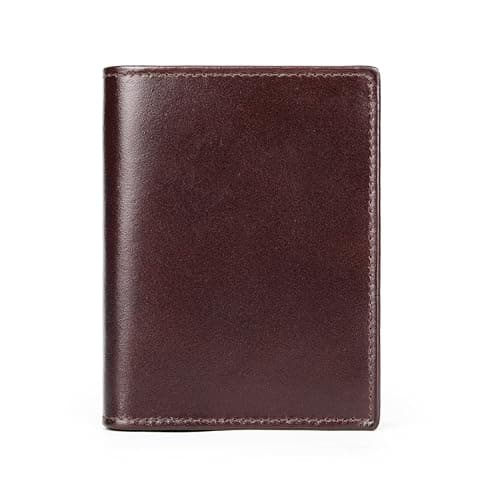
The Polare says “full grain Italian”— a grade plus a country, which is the most complete version of the claim, on a wallet priced where full-grain is unusual. We record it as claimed and score its leather below picks whose grade claims are more modest and more checkable, because nothing on the listing lets anyone verify either half.
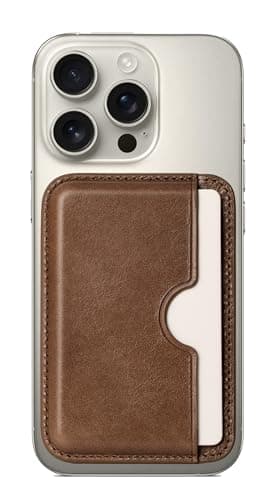
The NIUCUNZH says “top grain Italian”— a slightly more modest grade, same unverifiable country. What makes this listing instructive is the contrast inside it: the leather claim has nothing behind it, while the capacity claims are unusually specific and therefore falsifiable, right down to a published folded-and-empty size. The seller has been precise where precision can be checked and vague where it cannot, and that pattern is worth recognizing.
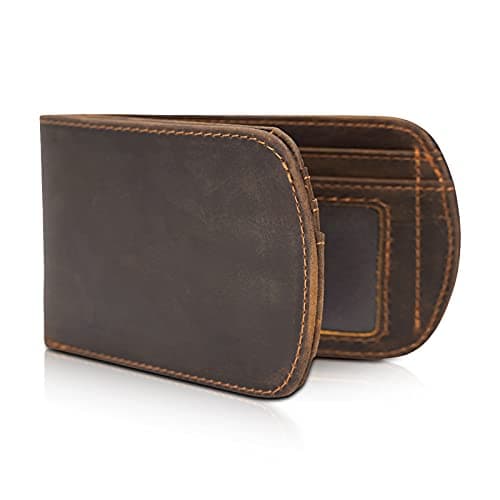
The Le Pelle says only “Italian leather”— a country and nothing else. No grade appears anywhere on the listing. That is the pure case, and it is why our spec table for it reads “Italian leather (no grade stated)” rather than inventing a rung on the ladder for it.
Three listings, one adjective, and the only one that also names a grade is the cheapest wallet to claim full-grain on this entire site. Draw your own conclusion; ours is that the adjective is doing marketing work rather than informational work.
Is Italian leather actually good?
As a country, Italy genuinely is a center of leather production, and the finest vegetable-tanned shoulders used by the best small makers in the world do often come from Tuscan tanneries. That is true and we are not debunking it.
The problem is a sampling one. The excellent Tuscan leather you have read about is sold by the square foot to makers who name their tannery, show you the mark, and charge accordingly. The “Italian leather” on a twenty-dollar marketplace wallet is not that leather in any sense you can establish, and the price tells you so. Reputation attaches to a country; quality attaches to a hide. The word rides the reputation into a product that may have nothing to do with it.
One adjacent case worth naming, because it is the same error with a different word: “ballistic nylon” is also a material name doing reputational work rather than informational work, and we take it apart the same way in leather vs nylon wallet.
The practical consequence: do not pay a premium for the word. If two wallets are otherwise equal and one says Italian, that is a tiebreaker worth approximately zero dollars. If one says full-grain and the other says Italian, buy the full-grain one. If one names a tannery or carries a consortium certificate, that is the one worth paying for, and it will not be on this page.
“Made in Italy” is a different claim, and a stronger one
Worth separating, because the two phrases appear together and mean different things. Italian leather describes a material input. Made in Italydescribes where the finished article was manufactured, and origin marking on a finished good is a regulated statement in a way that an adjective about a material is not. A wallet can legitimately be made in Italy from leather tanned elsewhere, and can equally be assembled in a third country from leather tanned in Italy — which is the far more common arrangement on a marketplace.
So if origin is what you care about, read for the assembly claim rather than the material adjective. On this site, the pages where that claim is the ranking rule are made-in-USA leather wallets and the brand page, and the honest finding on both is the same: the number of listings willing to state a country of manufacture is much smaller than the number willing to imply one.
A note on Florence, since the searches ask
“Florentine leather” and “Florence leather wallet” are busy queries, usually from people who bought something on holiday or are about to. We have no way to evaluate an individual market stall, and we are not going to pretend otherwise. What we can tell you is the structural point that applies everywhere: the thing to look for is a mark, a tannery name or a receipt from a named maker — the same evidence we ask for on a marketplace. A leather smell and a city are not evidence; the smell is a finish and can be added.
Prices, and what we earn
Every price on this page is pulled from the retailer and timestamped, and we do not print prices in our writing because they move. If a figure cannot be verified you will see “check current price” rather than a number we are guessing at. We earn a commission if you buy through our links, which is why the most important sentence on this page tells you not to pay extra for the adjective three of our own picks are using.