The short version: the wallet to buy is the ALBEPPE Tuscan Veg-Tanned Bifold— the only pick here whose listing names an Italian region and a tannage rather than just the country, which makes it the only one of the four whose claim you can partly check. The budget pick is the Le Pelle MagSafe card wallet, the cheapest Italian-leather object in our catalog and, by a quiet irony, the most honest listing of the four: it says “Italian leather” and then declines to claim a grade. And here is the finding that should change how you shop this phrase: “Italian leather” is a statement about geography. It tells you nothing about the grade of the hide, the tannage, or who assembled the wallet.
What the words actually mean, in order of usefulness
There are three different claims circulating in this aisle and they are not interchangeable. Ranked from most to least informative:
- A region plus a tannage— “Tuscan vegetable-tanned”. Tuscany is where the vegetable-tanning trade concentrated, and vegetable tanning is a process with published characteristics: tannins that occur naturally in the bark and leaves of many plants, hides immersed for several weeks in vats of increasing concentrations of tannin, against less than a dayfor the equivalent stage in chrome tanning. That is a claim with consequences you can feel — a firmer hide that darkens rather than scuffs.
- A grade plus the country— “full grain Italian”, “top grain Italian”. The grade is the part that matters and the country is decoration. Two picks here do this, and in both cases the grade is stated with nothing behind it: no tannery, no mill, no country of assembly.
- The country alone— “Italian leather”. This is the weakest version, and it is the most common. It is compatible with a corrected-grain hide that was split, buffed, embossed and pigmented, because none of those operations stop being Italian.
So the ranking rule for this page writes itself: we rank on how much of the claim the seller is willing to commit to in print, and we score the leather metric on the grade actually stated rather than on the adjective. Our Italian leather guide is the longer version of this argument, and the grade ladder explains what each rung does and does not promise.
The model name is not an origin claim
One trap is worth naming because we nearly fell into it ourselves while building this page. Our catalog holds a trifold called the TRUSADOR Verona. Verona is in Italy. The listing claims full-grain leather and never claims Italian leather, Italian hides or Italian manufacture. It is not on this page, and the reason is the rule: naming a wallet after an Italian city is a branding decision, not a statement about where the hide was tanned. The same goes for any wallet called a Milano, a Firenze or a Capri. If the origin matters to you, the only evidence that counts is the seller saying so about the material.
What an Italian claim does and does not get you here
Look at the price column before you read anything else. Three of these four wallets cost under $26 and the fourth is under $55. That is the real story of this category at the volume end of the market: the Italian adjective is not priced as a premium, because it is not scarce. If the word carried a verifiable supply chain behind it, it would cost what Horween costs — and our Horween roundup is where you can see what a named tannery does to a price.
What the claim does get you, reliably, is a particular feel. The Italian finishing tradition at this price level leans soft and smooth rather than firm and dry, which is why two of the four picks are card-first objects where suppleness is the point. The exception is the ALBEPPE, which is firm from new because vegetable tanning makes it so, and which is the one wallet here that will look visibly different in two years.
The four, in one paragraph each
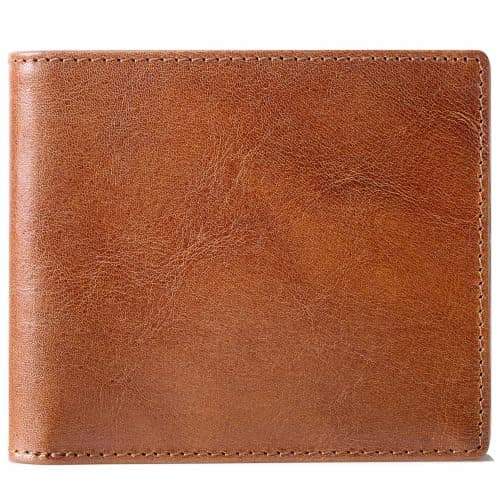
ALBEPPE Tuscan Veg-Tanned Bifold— for the reader who wants the Italian claim to mean something. Region, tannage, plain bifold, no gimmicks. It is the dearest pick here and the only one whose claim narrows to a process.
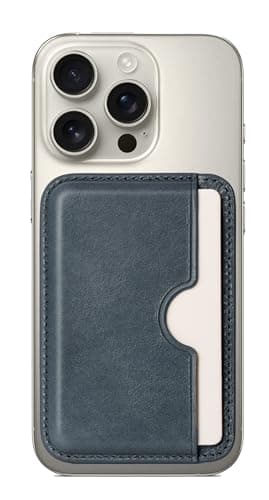
Le Pelle Italian Leather MagSafe Card Wallet— the budget pick, and the cheapest way into the category. It holds two cards on the back of a phone and states a published 0.26 in thickness, which is more precision than the other three manage on any measurement. Its leather cell reads “Italian leather (no grade stated)” because that is exactly what the listing says.
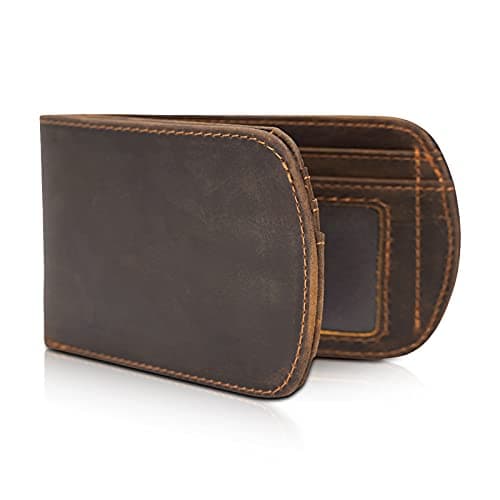
Polare Slim Curve Front Pocket RFID Bifold— the one that makes the biggest claim: “luxury full grain Italian leather”, at about $26. It also has a curved body cut for a front pocket, six slots, an ID window and an RFID claim, which is a lot of wallet for the money. We record the grade as claimed and score it below the picks whose claims are more modest.
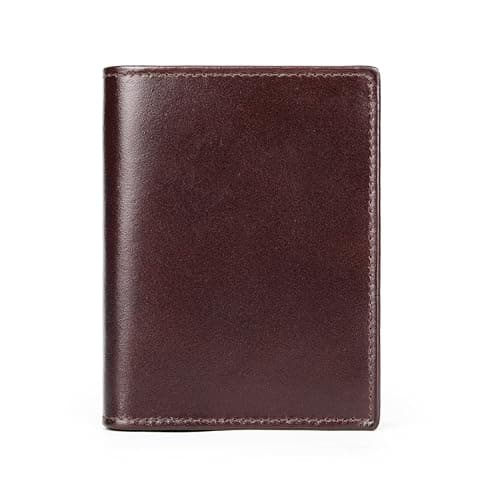
NIUCUNZH 16-Slot Vertical Bifold— ranked last, and the reason is not the wallet. It claims “top grain Italian leather” and publishes a genuinely useful folded-and-empty size, but its feature copy — down to a typo in “bill comparments” — appears near-verbatim under at least two other brand names. You are buying a layout several sellers source, and an Italian claim that travels with it.
How to shop the phrase without getting taken
Ask what the seller would have to retract
A good test for any leather claim is: if this were false, what exactly would be false? “Vegetable-tanned in Tuscany” is a falsifiable sentence. “Italian leather” is almost unfalsifiable — a hide tanned in Italy and finished anywhere satisfies it, and so does a hide bought from an Italian broker. The more specific the sentence, the more the seller has staked.
Separate the hide from the sewing
None of these four listings states a country of assembly. That is normal in this aisle and it is worth knowing: Italian leather and Italian manufacture are different claims, and at these prices the second one is almost never being made. If “made in Italy” is what you actually want, this page cannot give it to you and we are not going to imply otherwise. Our made-in-USA roundup is the only provenance category where our catalog can evidence the manufacture rather than the material.
Advice that earns us nothing
If you are choosing between two wallets and one of them says “Italian”, ignore the word and compare the grade, the card count and the published dimensions instead. On this page that method would send you to the Polare for layout and the ALBEPPE for hide, and the adjective would not have moved you at all. That is the honest state of the category and it is the reason we rank it the way we do.
Where the money actually goes
If you want to understand why one of these wallets can be $19 and another $55 with the same country on the label, the mechanism is the tannage and the working capital behind it rather than the postcode. We lay the whole cost stack out in why leather wallets cost what they do.