The short version:shell cordovan is not a grade, not a tannage, and — this is the part that surprises people — not grain leather at all. It is made from the superficial fascia, the “shell,” in the lower layers of a horse'shide, taken from the animal's rear. To reach it, the butt is split after tanning and the grain side is removed. So every other page in this leather guide is about how much of the grain survived; this one is about the leather you get when the grain is deliberately cut away and thrown out. And there is a second answer you deserve up front: at the prices this site covers, you cannot buy one. We went looking, and we will show you what we found.
It sits entirely off the grade ladder
Our grade guide is built on one idea: full-grain contains the entire grain layer with no removal of the surface, top-grain allows the surface to be sanded, and the grades below that are made from the layers underneath. The whole ladder is a measure of how much grain you still have.
Shell cordovan breaks the frame. The grain is not sanded, corrected or partially kept — it is split off and discarded to expose a different tissue beneath it. Which means the most-searched comparison in this cluster, “shell cordovan vs full-grain,” is the same kind of category error as asking whether a wine is red or French. They are not competing positions on one scale. A full-grain wallet is the best version of keeping the grain; shell cordovan is a different material reached by removing it.
This is the second time this leather guide has landed on that shape of answer. Last week we published the same finding about “Italian leather,” which answers where and not what, so it is not an alternative to full-grain either. The pattern worth taking away: most leather words that sound like grades are not grades, and the only way to know what you are buying is to find the word that actually describes the layer.
Why it behaves differently in a wallet
Because shell cordovan is connective tissue rather than skin, two properties follow that you can feel in a wallet.
It has no pebbling. The reference literature puts it precisely: being made of connective tissue, shell cordovan is smooth and lacks the pebbled effect of leather derived from the outer skin. That sentence is worth sitting with, because it tells you where the familiar grainy texture of leather comes from in the first place — the outer skin. Take that layer away and the texture goes with it. (The other half of that sentence has its own page: pebbled leather, where the same texture is frequently stamped back on to hides that lost theirs.)
It does not crease; it rolls.Shell cordovan is described as having a unique non-creasing characteristic, and this is the single most relevant fact for a wallet buyer. A conventional leather wallet develops sharp fold lines where the spine bends, and those lines are where leather eventually cracks. Shell cordovan instead develops rounded waves — the look enthusiasts call rolling — in the place a crease would form. We are reporting the documented property, not a laboratory result: nobody publishes a flex count for any wallet leather, including this one.
Where the name comes from, and what it is not
The name traces to Córdoba, Spain, a historic center of leather production. It does not mean the leather is Spanish today, and it does not mean a wallet described as “cordovan” is this material. Three things get confused, and this is the practical heart of the page:
- Shell cordovan— the equine fascia described above. A specific material.
- Cordovan, the color— a deep oxblood brown, used across the shoe and leather trade as a shade name. Any leather can be dyed it, and plenty of cheap leather is.
- Cordovan, the vague prestige adjective— used on listings exactly the way “premium” is, attached to nothing checkable.
If you have been reading enthusiast forums and then went shopping, you were looking for the first and will almost certainly be sold the second.
What we actually found when we searched for one
We did not want to guess at availability, so we ran the search through the retail catalog API this site uses to resolve every product it ranks. On 26 October 2026, a catalog search for “shell cordovan wallet” returned four listings, and not one of them is shell cordovan:
- The top result is a bifold described as “Cordovan Leather” and, in the same title, as genuine leather— which is a stated grade, and a low one. Cordovan here is the color.
- The other three are wallets from an established maker in Italian and hand-stained leathers, surfacing because “Cordovan” is one of their colorways.
A second search for “horween shell cordovan card holder” returned zero results.
That is a measurement of one catalog on one day, not a claim about the whole world — small makers sell shell cordovan wallets directly, and they are real. But it is the honest answer to the shopping question, and it is the answer this niche does not publish: search the biggest retailer on earth for a shell cordovan wallet and what you are offered is a color. If a listing at a marketplace price says cordovan and does not say horse, assume the shade.
Why it costs what it costs
We are going to be disciplined here, because this is where leather writing usually drifts into numbers nobody sourced. What we can say from the material itself:
The usable piece is small and specific.It is not the whole hide, not even the whole butt — it is one layer in one region, reached by splitting a tanned hide and discarding the grain. Every step of that is yield loss.
The raw material is equine. Horsehide is a byproduct of a far smaller industry than cowhide, so supply is structurally limited in a way that no amount of demand fixes quickly.
What we are not going to tell you is how many months the tannage takes, how many shells come off one animal, or how many tanneries in the world make it. Those figures circulate widely, we could not verify them from a source we would cite, and a wallet site repeating them adds another layer of confident hearsay to a subject that already has plenty. If you see those numbers quoted without a source, treat them the way we are treating them.
What to buy instead, and why these three
If what drew you to shell cordovan was “the best leather a wallet can be made from,” the realistic substitute is not a different exotic — it is Horween Chromexcel, from the same old-line American tanning tradition, in wallets you can actually order. Chromexcel is grain leather, so it will crease where cordovan would roll, and it is a pull-up leather that lightens on the bends and darkens with handling. It is the closest thing in this category to the experience people are chasing, and we rank it on our Horween roundup and explain it in detail in the Chromexcel guide.
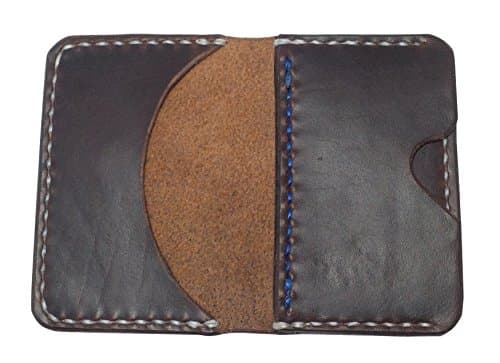
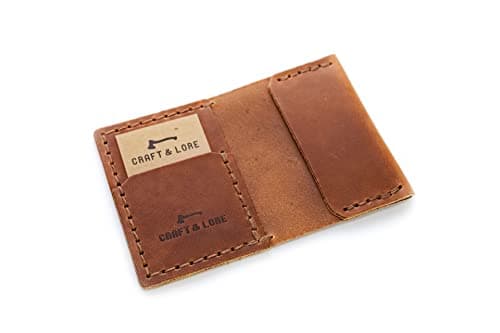
The three picks below are the wallets on this site whose listings name the tannery rather than gesturing at the look. That is the whole inclusion rule, and it is why the list is short: padding it would mean including wallets that merely claim a similar finish, which is exactly the substitution this page is warning you about.
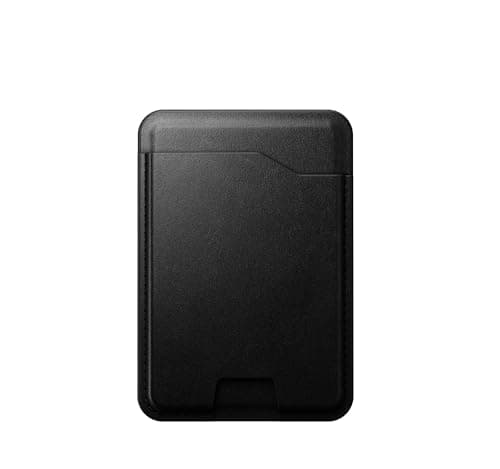
And if the appeal was the non-creasing behavior specifically, there is a cheaper answer that earns us nothing: buy a wallet that does not fold. A card holder has no spine to crease, so the failure mode you were trying to buy your way out of does not exist. Our card holder ranking is the place to start, and the third pick below is the version of that argument that lives on a phone.
Shell cordovan vs Chromexcel, as far as the published facts go
This is the busiest comparison in the cluster after “what is it,” and both materials are associated with the same tannery, which is why people assume they are two grades of one thing. They are not.
Different animal, different layer.Shell cordovan is equine fascia from beneath the grain. Chromexcel is a cowhide finished with the grain intact — our Chromexcel guide covers its hot-stuffed oil-and-wax treatment, which is what gives it the pull-up effect.
Different failure line. Chromexcel creases at the fold like any grain leather, and those creases are a feature for most of its life and a weak point at the end of it. Shell cordovan rolls instead. If you are the kind of owner who notices the spine of a bifold, that is the difference you would actually see.
Completely different availability, which is the practical answer: one of them is in wallets you can order today from listings that name the hide, and the other is not, at least not here.
“Reverse shell cordovan”, since the searches ask
It appears in the autocomplete data and it is worth one honest paragraph. The term is used in the footwear trade for shell cordovan worked with the other face outward, which gives a rougher, suede-like surface rather than the glassy one the material is famous for. We have found no wallet in this category offering it, we have no published source for how it behaves in a folded wallet, and so that is the whole of what we are prepared to say about it. A leather goods site that answered the question further would be making it up.
If a listing says cordovan, how do you tell?
Four checks, in the order they are worth doing:
- Does it say horse?Shell cordovan is equine. A listing describing cowhide or “genuine leather” in the same breath as cordovan is telling you cordovan is the shade.
- Does it name a tannery? The material is strongly associated with specific tanneries, and makers who have it say so, because it is the most expensive thing about the product.
- Does the price make sense? We do not print prices in our writing, but you can apply the test yourself: if a cordovan wallet is priced like the budget picks elsewhere on this site, the word is doing color work.
- Does it also claim a grade?This is the giveaway, and it is the one the top search result failed. Shell cordovan has no grain, so pairing “cordovan” with “genuine leather” or “full grain” in one title is describing two incompatible things.
Advice that earns us nothing
Do not chase it in this price range. The honest route to shell cordovan is a small maker selling direct, usually at several times what the wallets on this site cost, and that is a decision about a hobby rather than about carrying cards. We are not going to pretend we can sell you the thing you came here for.
If the real goal is a wallet that ages beautifully, the grade does more than the exotic.A stated full-grain, vegetable-tanned wallet from a listing you can verify will outperform a mystery “cordovan” wallet on every axis that matters, at a fraction of the price. That is the argument of our full-grain roundup.
And if the goal is no creases, stop buying leather and start buying format. A card holder cannot crease at a spine it does not have.
Prices, and what we earn
Prices here come from the retailer and are timestamped; where one cannot be verified you will see “check current price” rather than a figure we are guessing at. We earn a commission if you buy through our links — on a page whose headline conclusion is that the product you searched for is not one we can sell you.