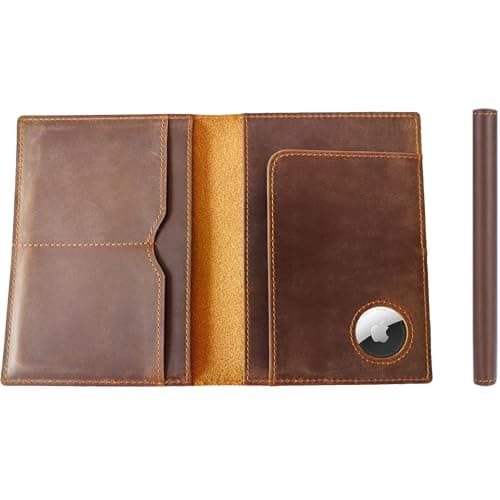
Here is the problem with shopping this category, and it is structural rather than a complaint about any one seller. Every passport booklet on earth is the same size.The identity page is standardized at the ID-3 format — 125 x 88 mm, about 4.92 by 3.46 inches — and ICAO's travel-document specification describes three document types corresponding to those same ISO card sizes. So when a listing promises it “fits your passport,” it is making the one claim in the entire category that cannot be wrong. It is true of the $9 cover and the $100 organizer equally, and it separates nothing.
Which is why this page is ranked on a different rule: how much of the decision the seller actually puts in writing. There are five things worth knowing before you buy one of these — the leather grade, how many passports it holds, how big it is, whether it blocks RFID, and whether it has a tracker pocket — and no listing in this category states all five. The best pick on this page states three. The most expensive pick states two. That spread is the real story, and it is the only one we can tell honestly, because we have not handled these wallets and we are not going to pretend we have.
The three numbers worth doing before you shop
1. A passport is bigger than your money in the direction that matters
A US Federal Reserve note is 156 x 66.3 mm at every denomination. A passport identity page is 125 x 88 mm. Work the difference and you get the most useful sentence on this page: a passport is 31 mm shorter than a banknote and about 22 mm taller.
Two consequences follow, and they explain the shape of everything in this category. First, a holder cut to the passport is too short for a flat banknote, which is why most passport covers either fold your cash or ignore cash entirely — and why the ones that advertise a full-length bill compartment have to be noticeably larger than the document they are named after. Second, a passport is taller than a wallet, which is why a passport holder never doubles as an everyday carry. If that is what you actually want, you want a travel wallet, which is a different object and has its own ranking.
2. A payment card and a passport are not the same shape either
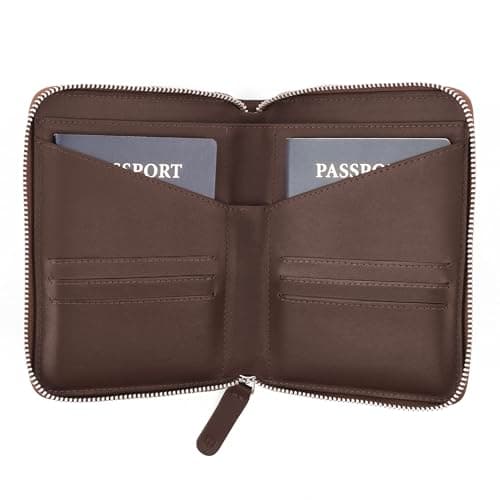
The card slots inside these things are cut for the ID-1 format, 85.60 x 53.98 mm. A passport is roughly 47% longer and 63% taller than that. So the interior of a passport holder is two different geometries sharing one cover, and that is where the layouts diverge: a single sleeve for the booklet plus a couple of ID-1 slots, or a document organizer where the passport bay is one compartment among several. Neither is better — but the second one is a folder in your bag and the first one goes in a jacket, and nobody is happy who bought the wrong one.
3. Count your passports before you count anything else
This is the spec that genuinely separates the products, and it is the one the search data shows people care about most: “for 2 passports” and “for a family of 4” are among the busiest phrases in this category. The published counts on this page run from a single-booklet cover to a stated four-to-eight, and a holder bought one size too small is simply the wrong purchase— there is no stretching a passport bay.
How we picked, and what we refused to infer
The inclusion rule:the listing must state something checkable beyond “fits your passport” — a leather grade, a passport count, or a published size. That rule is doing real work: it excluded most of the category, which is full of listings whose only claims are a color and an adjective.
The ranking rule: how many of the five decision specs the seller publishes, weighted by our standard rubric. A listing that says full grain, RFID and tracker pocket outranks one that says leather and nothing else, even when the second one is prettier in the photographs, because the first one has made claims that cost it something if they are wrong.
What we refused to do.Our usual source for a spec is a listing's feature-bullet block, and on these particular listings we could not retrieve it — the rendered pages run past 1.6 million characters and cut off before the bullets. So every spec below comes from the seller's own title, quoted verbatim in our catalog, plus the retailer's live availability and price. Anything the title does not state is published as a dash.That is why you will see gaps in the table rather than plausible-looking numbers: a dash means the seller has not said, and we are not filling it in for them. It also means some of these products may well hold more cards or more passports than we credit them with — we simply cannot tell you so.
We also have not handled any of these. Every score is a judgment from documented research per our methodology, which is the same standard we apply across the site. No drop test, no wear time, no award.
On RFID, and the thing we are not going to claim
This is the one place where a blocking claim on a travel product is more defensible than the equivalent claim on a wallet. A modern biometric passport carries an RFID chipwhich stores data including the holder's photograph, and that is described in the same travel-document specification as the booklet size. So unlike the magnetic-stripe anxiety we take apart in our demagnetizing guide, there genuinely is a chip in the document.
What we are not going to tell you is which radio standard that chip uses. Our RFID guide covers the 13.56 MHz proximity-card standard that contactless payment cards and most access badges run on, and it is widely assumed that passport chips are in the same family. The source we were able to verify does not say so, so we are not asserting it. What we can say plainly is the part that matters for shopping: an RFID claim on a passport holder is pointed at a real chip rather than an imaginary one, nobody in this category publishes a frequency or a test standard, and none of these sellers states one either. Treat the claim as a reasonable feature and not as a measurement.
The tracker pocket is the one genuinely new thing in this category
“With AirTag” and “with tracker” now appear across this category's search data at a volume that did not exist a few years ago, and for once the trend is pointed at a real problem. A passport is the single hardest thing in your luggage to replace: a card is cancelled and reissued in days, and a passport is an appointment, a fee and a wait. If a tracker belongs anywhere in a leather good, it belongs here.
Two honest caveats before you pay extra for it. The pocket is a pocket, not a tracker— every one of these listings sells you a place to put a tracker you buy separately. And a tracker in a passport holder tells you where the holder is, which is only the same as where your passport is if the passport is inside it. Our AirTag wallet roundup covers how the pockets differ and which ones actually grip the disc.
Advice that earns us nothing
If you travel internationally once a year, buy the cheapest one here.A passport cover does one job well — it stops the booklet getting scuffed, soaked or bent in a bag — and the cheapest leather cover on this page does that job as completely as the one that costs five times more. The expensive picks earn their price only through use, and a holder that comes out of a drawer twice a year is not in use.
If you are buying it for the tracker, buy the tracker first. A tracker in the bag your passport lives in solves most of the problem for less money than a new leather holder, and you can test whether you will actually keep the battery topped up before you commit to the matching accessory.
And a passport holder will not make your passport last longer in the way that matters. Passports expire on a date. A cover protects the cover; it does not buy you pages or years.
Three ties, and how we broke them
Six products and three pairs of identical scores, which happens when a rubric built for wallets is applied to an object that is not one. Each break is on this page's own rule — what the listing publishes — and each is stated so you can disagree with it.
STAR VISTA above Polare, both at the same overall. The Polare publishes more capacity; the STAR VISTA publishes more claims— a grade, an RFID lining and a tracker holder, which is the only listing here to state all three. Most people reading a page called “best leather passport holder” are carrying one passport, so the pick that serves that reader leads. If you are buying for a household, the Polare is your number one and we would not argue.
WANDERINGS above Travelambo, both at the same overall and both at the budget end. The WANDERINGS publishes a size in its own title — 4 by 5.5 inches — and the Travelambo does not. On a page whose entire argument is that published specs beat adjectives, a seller who tells you how big the thing is wins the tie.
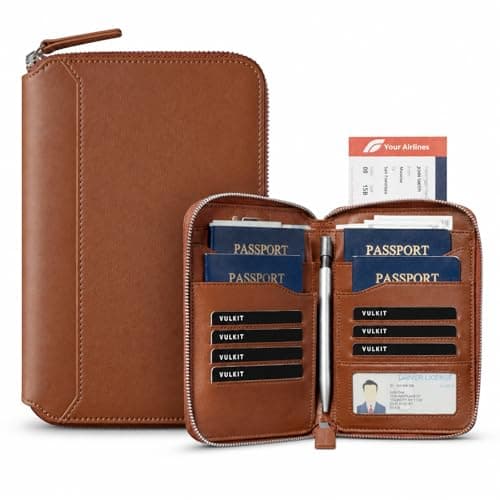
VULKIT above Travaci, both at the same overall. The Travaci costs roughly three times as much and publishes no more than the VULKIT does — a grade and a count against a count and a closure. The VULKIT also publishes its capacity as a range, four to eight, which is the more honest shape for a claim that genuinely depends on how thick the booklets are. We would rather reward that than a round number.
Which one is actually for you
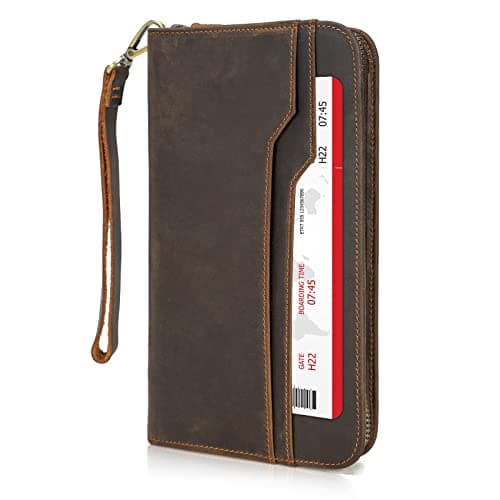
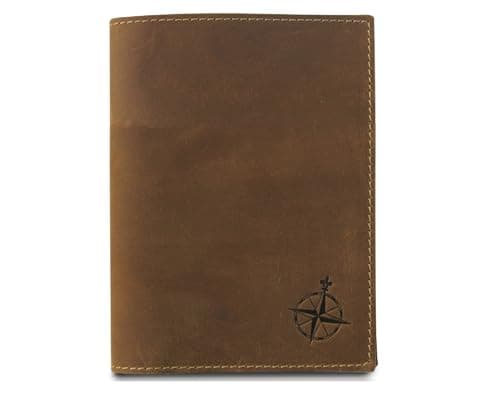
One passport, carried in a jacket. The slim full-grain bifold cover at the top. It is the only listing that claims the grade, the lining and the tracker pocket together, and a cover is all a solo traveler needs.
Two passports. There is a real gap in the middle of this category and exactly one pick addresses it with an exact number. It is expensive for what it publishes, and it is the right shape, which is an uncomfortable combination we are reporting rather than resolving.
A family or a group. The six-passport organizer, or the zip model if the closure matters more than the grade. A fold does not stop a boarding pass sliding out of a bag; a zip does. That is the whole decision between those two.
One trip, and you are not sure you will use it again.The cheapest pick. Genuine leather is a two-to-three-year material — our grade guide explains exactly what that means — and for an item used twice a year, two to three years of material is several trips more than you need.
What nobody in this category publishes
Worth naming, because the gaps are consistent enough to look like a category-wide habit rather than an oversight by any one seller.
A closed thickness. Not one of the six. The same gap we found across the pop-up cardholders and the MagSafe wallets, and the one spec that decides whether something fits an inside jacket pocket.
A card count, mostly. Four of the six state no number of card slots at all, which is strange on products whose photographs clearly show them.
Any origin. Not one listing states a country of manufacture. If that matters to you, the only pages on this site where it is the ranking rule are made-in-USA leather wallets and, for the other direction, our page on what “Italian leather” is worth — which is the same lesson as this page in a different word: a material adjective is not a specification.
What the tracker pocket fits.“AirTag slot” appears in titles across the category without a single published dimension for the slot.
Care, briefly, because a passport holder lives differently
A wallet is in your pocket every day and gets conditioned by being handled. A passport holder spends eleven months in a drawer and three weeks in a humid bag, which is close to the worst storage pattern for leather. Two things actually help, both free: do not store it sealed in a plastic bag, where any trapped moisture has nowhere to go, and do not store it with the passport inside if the leather got damp on the trip. Our storage guide covers the rest, and our page on whether leather is waterproof covers what a soaking actually does.
Prices, and what we earn
Every price here comes from the retailer and is timestamped; where one cannot be verified you will see “check current price” rather than a number we are guessing at. We do not print prices in our writing because they move. We earn a commission if you buy through our links — and the first piece of advice on this page is to buy the cheapest one if you travel once a year, which is the opposite of what pays best.