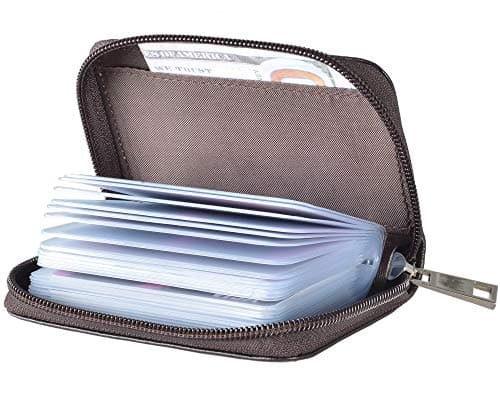
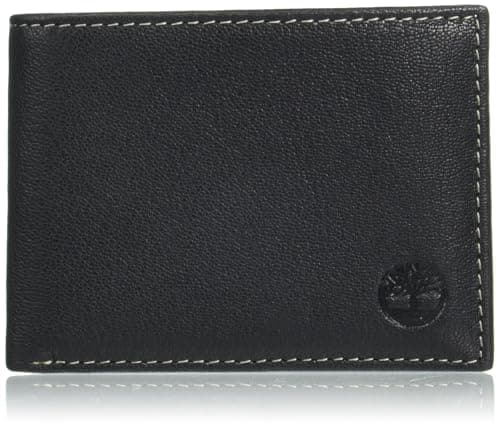
The short version: buy the Timberland RFID passcase with the removable ID holder. It is the listing on this page that publishes the most and charges nearly the least — a removable ID holder, six card slots, two bill pockets and an RFID claim, all stated in the title. It is for the reader who has accepted that “genuine leather” is the floor and wants the most wallet built on top of it. The budget pick is the Easyoulife 26-slot card holder at under ten dollars, which names its leather andadmits that the card slots themselves are PVC — a level of candour almost nothing at this price shows.
First, the thing the phrase actually means, because the whole page turns on it. “Genuine leather” is not a grade and it is not a compliment. It is the bottom rung of the ladder that still contains cowhide: a split hide, usually with a polymer finish sprayed or pressed on top of it. Above it sits top grain (the surface sanded and buffed) and above that full grain (the grain layer left intact). Our full grain vs top grain vs genuine explainer has covered what each word commits a seller to since launch. What it could not do is tell you which genuine-leather wallet to buy, because it does not rank anything. This page does.
The finding: price and information run in opposite directions again
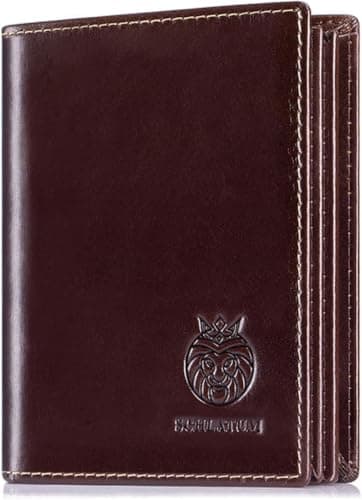
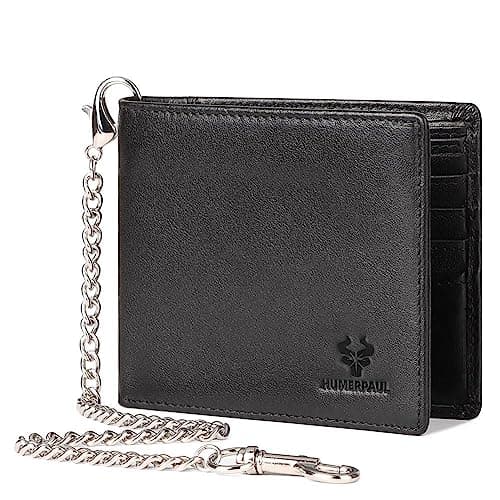
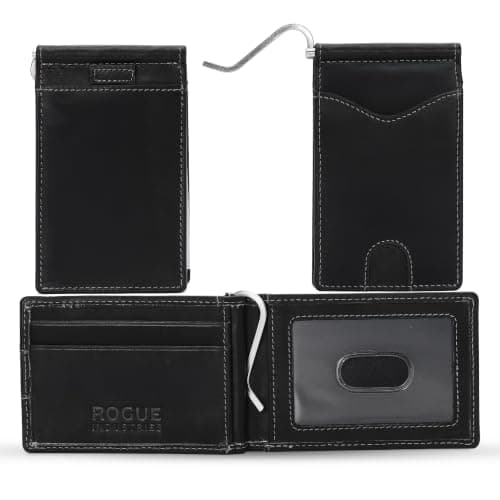
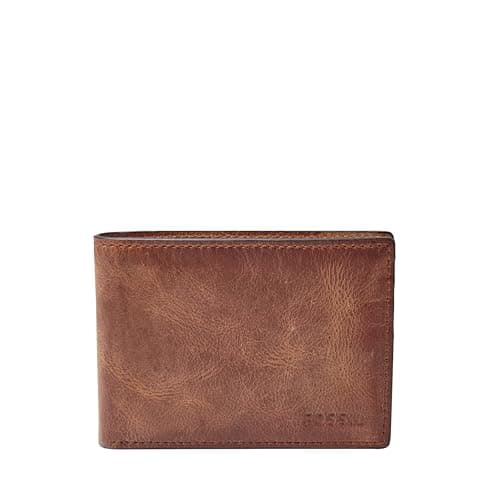
We have now measured this twice on this site, on two unrelated categories, and it held both times. Listed cheapest to dearest, here is what each listing on this page commits to beyond the leather word. Under $10, Easyoulife: 26 slots, an RFID claim, and an explicit statement that the slots are PVC. Around $20, FOUTOUKEEP: thirteen card slots, two ID windows, a 4.53 in body and a chain that is stated to detach. Around $20, Timberland: a removable ID holder, six slots, two bill pockets, RFID. Around $24, SCHLATUM:fifteen slots, two cash compartments, a flip-out ID, and the words “genuine cowhide” that stay genuine cowhide with no full-grain adjective smuggled in later. At $40, Rogue: an RFID lining, an ID pocket, and no card count at all. At over $50, Fossil:three slots, two slide pockets, an ID window and a published half-inch closed thickness — the highest price on the page attached to the smallest published capacity.
That is the page in one paragraph. The cheapest listing here is the most informative and the dearest is near the bottom of the ranking, and the reason is not that Fossil and Rogue make bad wallets — we rank both elsewhere and think well of them. It is that a recognised name does not have to describe itself to sell, and a marketplace seller does.
What genuine leather actually does over five years
It wears flat. A finished split has no intact grain to burnish, so the surface you buy is roughly the best surface it will ever have; what follows is gradual abrasion through the finish, and at the fold line it eventually cracks rather than creases. That is the honest failure mode, and it is why we call these two-to-four-year wallets rather than heirlooms. What genuine leather does not do is fall apart in a year, which is what the internet tends to claim. If you want the surface that improves instead of degrading, the page you want is vegetable-tanned leather wallets, and if you want the grade one rung up at a similar price, top-grain leather wallets.
Who should buy on this page, and who should not
Buy here if the wallet is going to live hard and be replaced: a work wallet, a travel spare, a wallet for a pocket that also carries keys, a second wallet for cash. Buy here if the feature list is the point — fifteen slots, two ID windows, a detachable chain — because features are cheap on this rung and expensive on the rung above it. Do not buy here if you intend to carry one wallet for a decade, and do not buy here expecting patina; the finish sits between your hands and the fibre, so the oils never reach it.
Advice that earns us nothing
If you are choosing between a $52 genuine-leather wallet from a name you know and a $30 full-grain one from a name you do not, buy the full grain and keep the difference. The grade is the one spec on a wallet that cannot be added later, and on this page the money above $40 buys a logo rather than a hide. Our budget leather wallets page has the cheap end of that argument and leather wallets under $25 has the hard ceiling version.
Buying notes
Read the bullet, not the title
The single most useful habit in this aisle: a listing that says “full grain” in the title and “genuine leather” in bullet one has told you it is genuine leather. We publish the lower claim every time and rank accordingly — one pick here is on this page for exactly that reason. Our how to spot fake leather guide covers the rest of the tells.
Slots are not cards
A payment card is 85.60 x 53.98 mm and about 0.76 mm thick, and a filled slot adds roughly another 0.9 mm of leather and stitching around it. A 26-slot case filled to 26 cards is a fist-sized object. Buy slot counts as headroom, never as a target — how many cards should a wallet hold makes the case for carrying fewer.
Care is different on a finished hide
Conditioner works by soaking into fibre. A sprayed finish slows that to almost nothing, so the routine for genuine leather is cleaning and sparing conditioner rather than feeding it like veg-tan. Over-conditioning a finished wallet mostly leaves a tacky film. See how to care for a leather wallet.
Advice that earns us nothing
If the wallet you own still closes and the stitching is sound, a $20 genuine-leather replacement is not an upgrade — it is a sideways move with a new-wallet smell. Clean and condition the one you have for about ten dollars and spend the rest on something that is actually a rung up.