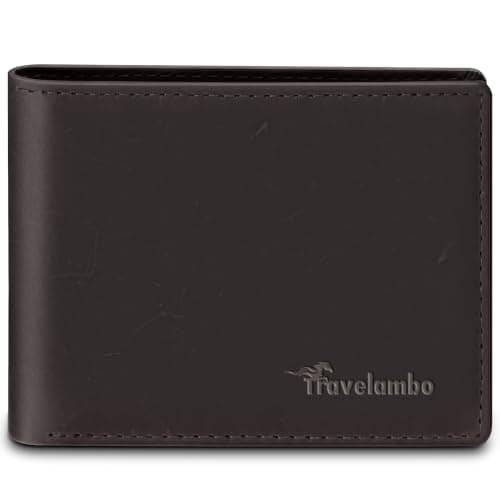
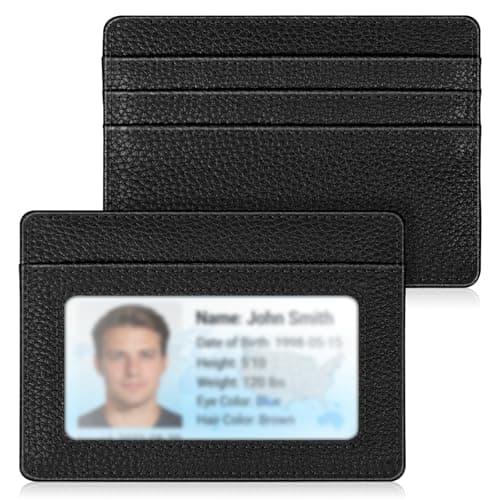
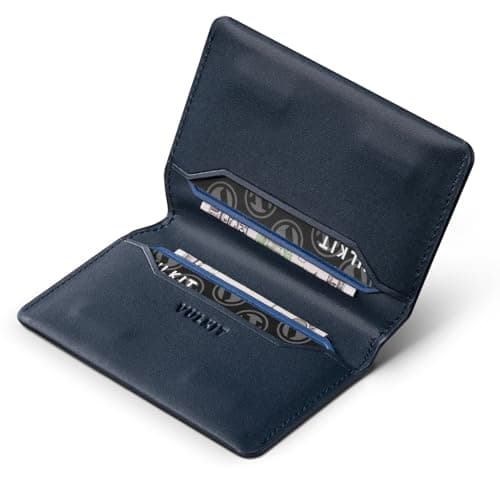
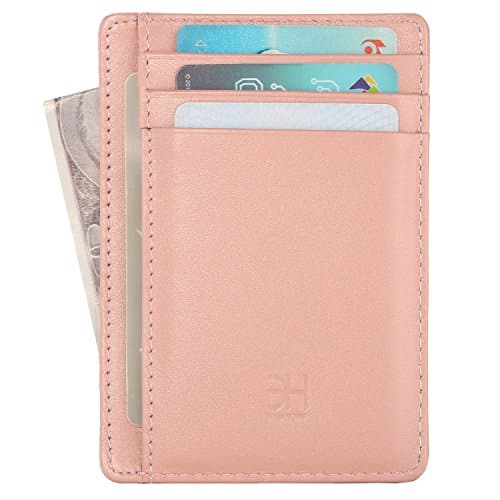
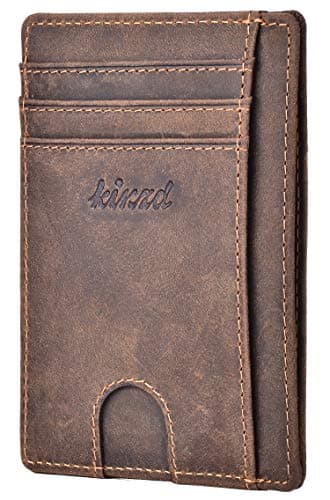
The top pick is the kinzd Slim Front Pocket Wallet: it is the only holder here that pairs stated RFID blocking with an ID window and a published eight-to-ten-card capacity, which makes it the one that replaces a wallet rather than supplementing one. If you want to spend as little as possible to get the feature, Travelambo and Fintie both state it at a fraction of the price. Before any of that, though, read the next paragraph, because the honest verdict on this entire category is that RFID blocking should be a tiebreaker and never a reason.
Buy the holder, not the shielding
Contactless fraud by wireless skimming is a vanishingly rare way to lose money compared with card-not-present fraud, and the industry moved to tokenized contactless payments years ago specifically so that a captured transmission is not reusable. We go through the evidence in full in are RFID wallets worth it, and the conclusion there is the conclusion here: shielding is close to free on a modern leather holder, so there is no reason to refuse it, and no reason to pay a premium or accept a worse wallet to get it. Every pick below earns its place on leather, layout and capacity first. RFID is the thing they happen to share.
The rule for getting on this page
Three conditions, all mechanical. The product must be made of real leather — which is the whole remit of this site and immediately rules out the metal cages. It must be a card holder with no full-length cash compartment, which rules out every bifold. And its own listing must state RFID or NFC blocking; we do not infer shielding from a brand's other products or from the presence of a metal part.
Those three together are what makes this page distinct from the main RFID roundup, and the distinction is worth being explicit about because the overlap would otherwise be unfair to you. That page ranks the best RFID wallets of any format and leads with the aluminum Ridge and the Ekster Parliament — both excellent, neither a leather card holder. This page is the subset of that question for someone who has already decided on leather and already decided against a billfold. If you have not made either decision yet, start on the main roundup.
How the shielding actually works, and what it cannot do
The mechanism is a conductive layer — usually a thin metallic film or foil laminated between the leather and the lining — that attenuates the 13.56 MHz field contactless cards answer on. Three things follow from that, and no listing in this category mentions any of them.
First, it only works when the card is inside the shielded layer. A card riding in an outside ID window or an unlined external slot is not protected, which matters because two picks here have exactly that. Second, shielding is frequency-specific: a layer tuned to block 13.56 MHz does nothing to a magnetic stripe, which is read by physical contact, and nothing to the chip. Third, and most practically, a shielded wallet will block your own transit card and office fob while they are inside it. That is not a defect, it is the product working. If you tap to get into a building every day, a holder that keeps one card accessible outside the shield is a feature rather than a flaw.
What none of them do is protect the thing most likely to go wrong. If you are worried about losing the wallet itself, a tracker is a better purchase than a thicker foil — see the AirTag wallet roundup.
What the leather claims on this page are worth
Mixed, and we would rather print that than tidy it. Of the five picks, exactly one publishes an actual grade: the VULKIT nappa holder. Three say “genuine leather”, which sounds like a guarantee and is in fact the lowest named rung on the ladder — a bonded or split layer with a finished surface. One says only “leather”. None names a tannery or a tannage.
That is normal at this end of the market and it is the reason the grade explainer exists. It is also why none of these is ranked as a lifetime purchase: a genuine-leather sleeve carried daily is a two-to-five-year object, and the lifespan guide sets out what you get at each grade. If you want a card holder that outlives the decade, the full-grain and vegetable-tanned options on the full-grain roundup are a better use of the money, and most of them do not claim RFID at all.
Capacity, honestly
A payment card is 0.76 mm thick under ISO/IEC 7810, and an empty leather slot costs you roughly as much thickness as a card does — which makes the published slot count an argument against a holder at least as often as for it. Two of these publish a capacity range rather than a single figure, which is the more honest format, and one publishes a slot count and a card claim that do not agree with each other. The table above prints the lower of the two in every case. The arithmetic behind all of this is worked through in how many cards fit in a card holder.
Where the cash goes
Nowhere, on four of these five, and that is the format's defining compromise rather than an oversight. If you need a note to travel with the cards, either fold one behind the stack — the technique is in how to carry cash with a card holder — or buy from the card holders that actually hold cash instead.