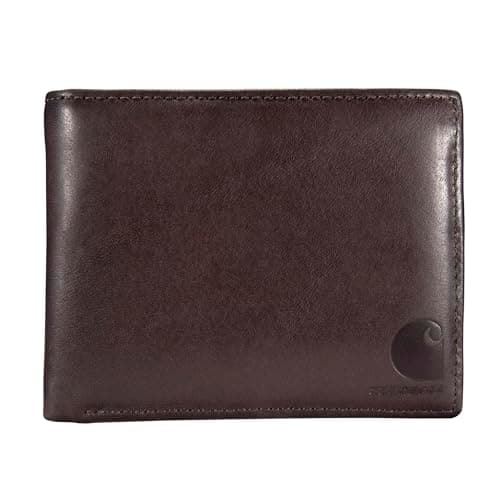
Bellroy and Carhartt sit at opposite ends of what a leather wallet can be. The Bellroy Note Sleeveis an engineered slim bifold — thin, environmentally- certified top-grain leather, a pull-tab for quick card access, a three-year warranty, and a finish made to look sharp under a jacket. The Carhartt oil-tan leather wallet is a rugged workwear billfold built to be beaten up: oil-tanned leather that is meantto scuff and darken, a removable passcase for an ID, and the kind of durability the brand's boots and jackets are known for. There is a big price gap between them, and the real question is not which is better made but which character you want — refinement or ruggedness. Here is the head-to-head, then both, priced live.
| Factor | Bellroy Note Sleeve | Carhartt Oil-Tan Wallet |
|---|
| Character | Refined, design-led slim bifold | Rugged, rustic workwear billfold |
| Leather | Env-certified top-grain | Oil-tanned leather |
| Card access | Up to 11 cards, quick-access pull tab | 6–8 cards, removable passcase for an ID |
| Cash | Folds bills inside, slim spine | Folds bills inside, traditional billfold |
| RFID | Optional RFID edition | Not marketed as RFID — check the variant |
| Ages / patina | Wears in cleanly, holds its shape | Scuffs and darkens — earns character |
| Price | Premium | Accessible / budget-to-mid |
Choose the Bellroy if...
...you want a slim, refined wallet that looks the part and disappears in a front pocket. The Note Sleeve is thinner than a traditional bifold, folds around your cash without a bulky spine, and lifts everyday cards into reach with its pull tab. The environmentally-certified top-grain leather and a three-year warranty justify the premium for a lot of people, and an RFID edition is there if you want contactless protection. It is the wallet for someone who dresses it up as often as down and cares how it reads in the hand.
The trade is money and vibe. It costs several times a Carhartt, and its clean, engineered look is the opposite of rustic — if you want a wallet that wears its scars, this is not it. See the full Bellroy review, or the wider field in best bifold wallets.
Choose the Carhartt if...
...you are rough on gear and want a wallet that only looks better for it. Oil-tanned leather is engineered to take scuffs and darken with handling, so a job site, the outdoors, or a hard week in a back pocket adds character rather than damage. The removable passcase pops out for an ID, the billfold hides your cash the traditional way, and Carhartt's workwear durability means it shrugs off abuse that would mark a dressier wallet. And it costs a fraction of the Bellroy.
Two honest caveats. First, it is deliberately un-dressy — workwear leather for the field, not the boardroom. Second, it is not marketed as RFID-blocking, so if contactless protection matters to you, confirm it on the exact variant before buying. Read the full Carhartt review, and if you are curious why oil-tan behaves the way it does, our oil-tanned leather guide explains it.
It is really a leather-character decision
Underneath the brand names, this is a choice between two leather philosophies. The Bellroy's top-grain is finished to look consistent and clean, aging subtly while holding its shape — the refined path. The Carhartt's oil-tan is meant to move, scuff and darken, so no two wallets look alike after a year — the rugged, rustic path. Neither is "better" leather in the abstract; they are built for opposite lives. Decide whether you want a wallet that stays sharp or one that earns its patina through hard use, and the winner is obvious. If aging is what fascinates you, the oil-tanned leather guide is the deeper read.
Capacity and everyday carry
On paper the two sit closer than their looks suggest, but they lean in different directions. The Note Sleeve holds up to eleven cards and folds cash inside a slim spine, with a pull tab that lifts your everyday cards into reach — it is engineered to carry a full stack without getting fat. The Carhartt is a traditional billfold sized for six to eight cards, with a removable passcase that pops out for an ID or a work badge. If you carry a lot of cards, the Bellroy wins on capacity-per-thickness; if you mostly want a rugged home for a handful of cards, some cash and an ID you can hand over, the Carhartt's passcase is a genuinely useful trick the slim Bellroy simply does not offer.
Where each one belongs
It helps to picture where the wallet spends its day. The Note Sleeve is at home in a front trouser pocket, a suit jacket or a bag's slim pocket — it is built to stay thin and read sharp, so it suits an office, a dinner out, or anyone who simply dislikes bulk. It is the wallet you are happy to set on a restaurant table.
The Carhartt belongs on a job site, in a glovebox, on a trail, or in the back pocket of well-worn jeans. Oil-tan leather is made to take a beating, so the environments that would scar a dressier wallet only make this one look more like itself. It is the wallet you stop worrying about the moment you own it. Neither is wrong in the other's setting, but each is clearly happiest in one of them, and that single mental image — boardroom or field — is often the quickest way to settle the choice.
Value over the long run
Price is the most obvious gap here, and up front it is real: the Bellroy is a premium wallet and the Carhartt is an accessible one. But value is more than the sticker. The Note Sleeve pairs better leather with a three-year warranty and a design meant to be kept, so its cost spreads over years of use. The Carhartt earns value from the other end — it is cheap enough to buy without deliberation and tough enough that oil-tan wear is a feature rather than a countdown to replacement. Paying up for the Bellroy makes sense if you want one refined wallet for a long time; spending little on the Carhartt makes sense if you want a rugged tool you are relaxed about abusing. For this pair, the money question really does resolve back into refinement versus ruggedness.
What about RFID
One practical note worth repeating: the Bellroy offers an RFID edition if contactless protection matters to you, while the Carhartt is not marketed as RFID-blocking, so you should confirm it on the exact variant rather than assume it. For most people RFID is a nice-to-have rather than a deciding feature, but if it is on your list, the Bellroy has a clear, guaranteed path to it and the Carhartt does not. That alone will tip a few buyers toward the Note Sleeve regardless of the refinement-versus-ruggedness debate.
The short answer
Want slim, refined and dress-anywhere, with a warranty and optional RFID? Bellroy Note Sleeve. Want a rugged, affordable workwear wallet that darkens and scuffs into character? Carhartt. Spend more for refinement or less for ruggedness — that single call settles it. Both live in our bifold wallets hub if you want to see the wider field.